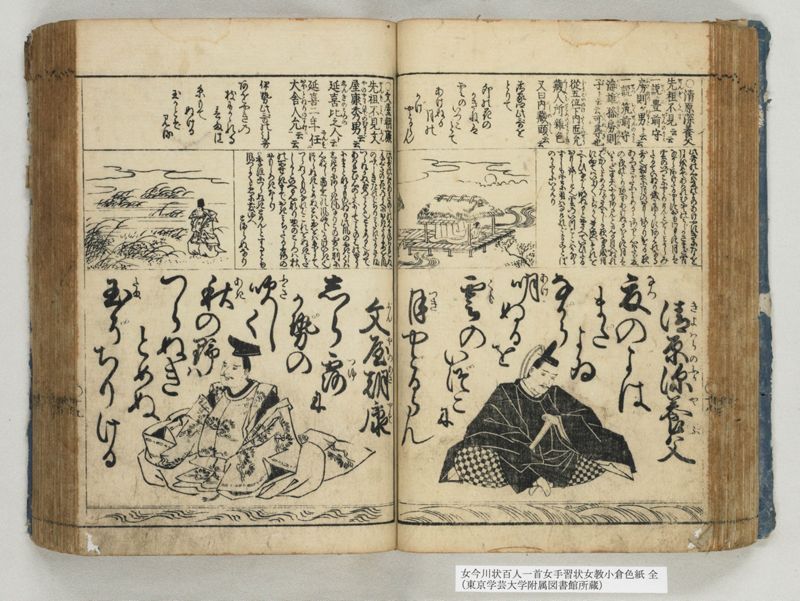
翻刻
【右丁 上段】
○清原深養父
先祖(せんぞ)《振り仮名:不_レ見|みへず》云云
一 説(せつ)ニ豊前守(ぶぜんのかみ)
房則(ふさのり)が男(むすこ)ト云云
一 説(せつ)ニ筑前守(ちくぜんのかみ)
海雄(かいをの)孫(まご)房則(ふさのりの)
子(コ)ト云云《振り仮名:可_レ尋|たつぬべき》也
従五位下(じうごいのけ)内匠允(たくみのぜう)
蔵人所(くらんどところの)雑色(ざうしき)
又曰 内藏頭(くらのかみ)云云
為家卿此哥を
とりて
卯の花の
かきねは
雲の
いつこ
とて
あけぬる
月の
かげ
やとるらん
【同 中段】
此哥の心は夏のよのあけやすきになを
月をめであはれむ空のみじかさまだ宵
ながらあけたるやうにおもわるゝに月は
雲のいづこにやとりけんとをしみうらみ
たるていなり誠にゆうにあはれなる
哥也詞書に月のおもしろかりける夜
あかつきがたによめるとあり心はたゞ夏
の夜のとりあへずあけぬるほとに月は
いまだ半天にもあらんと見る月入ぬれ
ばかくよめるたゞさへみじか夜なるを月
に向てはいよ〳〵みぢかく覚ゆべしそれを
又よひながら明ぬるとおさへていひたる
おもしろしと也雲のいつことはかなら
ずしも雲に用はなけれどもことば
のかゝりにいえり
【同 下段】
清原深養父(きよはらのふかやぶ)
夏(なつ)のよは
まだ
よゐ
ながら
明(あけ)
ぬる
を
雲(くも)の
いづこに
月(つき)やどるらん
【左丁 上段】
○文屋朝康
先祖(せんぞ)《振り仮名:不_レ見|みへず》文(ぶん)
屋康秀(やのやすひでの)男(むすこ)云云
延喜(ゑんぎの)比之(ころの)人 ̄ト云
延喜二年 任(にんず)_二
大舎人允(おほとねりのすけ) ̄ニ_一云云
伊勢此哥の引哥
あをやきの
枝にかゝれる
春雨は
糸もて
ぬける
玉かとぞ
見る
【同 中段】
此哥の心はあきのゝのえもいはれぬ
千ぐさの花のうへにおきたる露を風
の吹しきたればちりみだれたるさま
つらぬかぬ玉のごとく也とよめる也めで
あはれむ心のたへにしてことのはのゆう
にまことなるものなり此風のふきしくは
しきりにあらき風なりこの哥は別に
心なし当意の風吹たるけいき也
つらぬきとめぬとは玉をば糸にて
つらぬくものなればこれをぬきみだ
しかといへる心なり総【惣】のこゝろは秋
の所せきまでおきみちたる露の
おもしろきなり
○季注につらぬきとめんとするとも
風つよく急に散ゆへ
とまらぬなり
【同 下段】
文屋朝康(ぶんやのあさやす)
しら露(つゆ)に
かぜの
吹(ふき)し
く
秋(あき)の野は
つらぬき
とめぬ
玉(たま)ぞちりける
現代語訳
【右丁 上段】
○清原深養父
先祖(詳細は見えず)
一説によれば豊前守房則の息子という
一説によれば筑前守海雄の孫、房則の子という(調べるべきである)
従五位下内匠允
蔵人所の雑色
また内蔵頭ともいう
為家卿がこの歌を取って
卯の花の
垣根は
雲の
どこ
として
明けぬる
月の
影
宿るらん
【同 中段】
この歌の心は夏の夜の明けやすいのになお月を愛でて趣を感じる、空の短さ、まだ宵のうちに明けたように思われるのに、月は雲のどこに宿ったのだろうかと惜しみ恨んでいる様子である。誠に優雅で情趣ある歌である。詞書に「月の美しかった夜、暁方に詠んだ」とある。心はただ夏の夜のあっという間に明けてしまうほどに、月はまだ中天にもあろうと見る、月が沈んでしまったのでこのように詠んだ。ただでさえ短い夜なのを、月に向かってはいよいよ短く感じられるだろう。それをまた宵のうちに明けてしまうと押さえて言ったのが面白い。「雲のいづこ」とは必ずしも雲に用はないけれども、言葉のかかりに言ったのである。
【同 下段】
清原深養父
夏の夜は
まだ
宵
ながら
明けぬるを
雲の
いづこに
月宿るらん
【左丁 上段】
○文屋朝康
先祖(詳細は見えず)文屋康秀の息子という
延喜の頃の人という
延喜二年に大舎人允に任ぜられたという
伊勢がこの歌の引歌として
青柳の
枝にかかれる
春雨は
糸もて
貫ける
玉かとぞ
見る
【同 中段】
この歌の心は秋の野の言いようもない千種の花の上に置いた露を、風が激しく吹いてきたので散り乱れた様子が、糸を通していない玉のようであると詠んだものである。愛でて情趣を感じる心が絶妙で、言葉の優雅さが真に素晴らしいものである。この「風の吹きしく」は激しく荒い風である。この歌は特別な趣向はなく、その場の風が吹いた景色である。「つらぬきとめぬ」とは、玉は糸で貫くものなので、これを貫き通さないかと言った心である。全体の心は秋の所狭しと置き満ちた露の美しさである。
○季注に「貫き止めようとしても風強く急に散るゆえ止まらないのである」
【同 下段】
文屋朝康
白露に
風の
吹きしく
秋の野は
つらぬき
とめぬ
玉ぞ散りける
英語訳
【Right Page - Upper Section】
○Kiyohara no Fukayabu
Ancestry (details unclear)
According to one theory, son of Buzen Governor Fusanori
According to one theory, grandson of Chikuzen Governor Kaio, son of Fusanori (this should be investigated)
Junior Fifth Rank Lower, Assistant Director of the Bureau of Skilled Artisans
Miscellaneous functionary of the Chamberlains' Office
Also called Director of the Imperial Treasury
Lord Tameke took this poem and composed:
The deutzia flowers'
hedge fence -
in which cloud
somewhere
does
the moon that has
set at dawn
take
shelter?
【Same Page - Middle Section】
The meaning of this poem is that summer nights dawn easily, yet still admiring the moon and feeling its pathos, the shortness of the sky - it seems as though dawn has come while it's still evening, wondering where in the clouds the moon has taken shelter, expressing regret and resentment. This is truly an elegant and moving poem. The preface says "composed toward dawn on a night when the moon was beautiful." The meaning is simply that in the brief time a summer night takes to dawn, seeing that the moon should still be in mid-heaven, but since the moon has set, he composed this. Even an already short night feels even shorter when facing the moon. It's interesting how he emphasizes that it dawns while still evening. "In which cloud" doesn't necessarily have to do with clouds, but is said as a verbal connection.
【Same Page - Lower Section】
Kiyohara no Fukayabu
Natsu no yo wa
mada
yoi
nagara
ake nuru wo
kumo no
izuko ni
tsuki yadoru ran
【Left Page - Upper Section】
○Bunya no Asayasu
Ancestry (details unclear), son of Bunya no Yasuhide
A person from the Engi era
Appointed Assistant Director of Palace Attendants in Engi 2
Lady Ise composed this as an allusive poem:
The spring rain
hanging on the branches
of green willows
looks like jewels
strung
with thread
【Same Page - Middle Section】
The meaning of this poem is that the dew placed on the indescribable thousand varieties of flowers in the autumn field, when the wind blew violently, scattered in disorder like unstrung jewels. The heart that admires and feels pathos is exquisite, and the elegance of the words is truly wonderful. This "wind blowing violently" refers to intense, rough wind. This poem has no special conceit but depicts the scene of wind blowing at that moment. "Not strung and held" means that since jewels are strung with thread, this expresses the idea of not being strung through. The overall meaning is the beauty of autumn dew lying thickly everywhere.
○According to seasonal notes: "Even trying to string and hold them, because the wind is strong and they scatter quickly, they cannot be held."
【Same Page - Lower Section】
Bunya no Asayasu
Shiratsuyu ni
kaze no
fuki shiku
aki no no wa
tsuranuki
tomenu
tama zo chiri keru