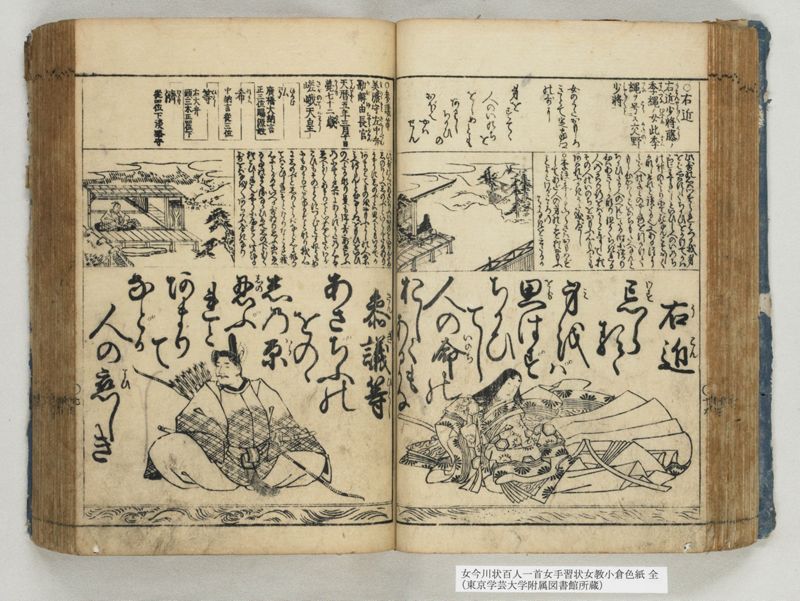
翻刻
【右丁 上段】
○右近
右近少将(うこんせう〳〵)藤(とう)ノ
季縄(すへつな)【「なは」の誤】ノ女(むすめ)此 季(すへ)
縄(つな)【ママ】ヲ号(こう)_二ス交野(かたのゝ)
少将(しやう〳〵と)_一
女のうたおもしろ
きとて定家卿
の哥に
身を
すてゝ
人のいのち
を
をしめとも
ありし
ちかひ
の
おぼえ
やは
せん
【同 中段】
此哥の心はわすられはつる我身
をば思はすしてちかひをかけてかは
らじわすれしといひし人のいのち
の神のたゝりにて死なんこそおしく
かなしけれと読たる也又ある注に
たゞ人の千々のやしろを引かけて
もし心かはらばいのちもたへなんと
ちかひたる人のへんじたる時に読り
心はあきらかなり但かくちぎれる
人のかはり行をばうらみずして猶
その人のいのちをおもふ心もつとも
あはれふかきうた成べし
○季注わすらるゝつらさはおもはず
してあだ人の身の上を猶おもふ
ことよとわがこゝろの
はかなきを云たるか
【同 下段】
右近(うこん)
忘(わす)ら
るゝ
身(み)をば
思(をも)はず
ちかひ
てし
人の命(いのち)の
おしくも
あるかな
【左丁 上段】
○参議等
美濃守(みのゝかみ)左中弁(さちうべん)
勘解由(かげゆ)長官(ちやうぐわん)
天暦(てんりやく)五年三月十日
薨(かうず)七十二 歳(さい)
嵯峨天皇(さがのてんわう)
弘(ひろむ)
《割書:広橋大納言|正三位賜源姓》
希(ねかふ)
《割書:中納言従三位》
等(ひとし)
《割書:右大弁|頭三木正四位下》
済(わたす)
《割書:従四位下淡路守》
【同 中段】
此哥の心はあさぢふはおのをいはんため
しのはらへしのぶといはんためなり
かやうにしのぶとは思へともいかでか
あまりてものをおもふよしの人めに
みへ侍らんと心ならぬをもひをいひ
のべたるなり是も序哥也あさぢふ
の小野ゝ名所にあらずうたの心は
忍へとも〳〵あまりてといふ心也たゞわが
こひもそのごとくにつゝむとすれともめ
にもあまりて見ゆるぞとなり我心
にしのぶとしりたらばなど心に余り
てはこひしきぞとなりなとかと我
心にとがめていへる哥なり思ふには忍
る事のまくるならひにてしのべども〳〵
猶こひしき也かやうにやすく聞ゆる
哥をばなを〳〵あちはふべきなり
【同 下段】
参議等(さんぎひとし)
あさぢふの
をのゝ
しの原(はら)
忍(しの)ぶ
れと
あまり
て
などか
人の恋(こひ)しき
現代語訳
【右丁 上段】
○右近
右近少将藤原季縄の娘。この季縄を交野少将と号する。
女性の歌が面白いとして定家卿の歌に
身を
捨てて
人の命
を
惜しめとも
ありし
誓い
の
覚え
やは
せん
【同 中段】
この歌の心は、忘れ果てられた我が身のことは思わずに、誓いをかけて「変わらない、忘れない」と言った人の命が、神の祟りで死んでしまうのが惜しく悲しいと詠んだものである。また、ある注に、ただ人の千々の社を引きかけて、もし心変わりしたら命も絶えるだろうと誓った人の返事をした時に詠んだとある。心は明らかである。ただし、このように約束を破る人の変心を恨まずに、なおその人の命を思う心は、最も情趣深い歌となるべきである。
○季注では、忘れられる辛さは思わずに、薄情な人の身の上をなお思うことよ、と我が心のはかなさを言ったのか、とある。
【同 下段】
右近
忘れられる
身をば
思わず
誓いてし
人の命の
惜しくも
あるかな
【左丁 上段】
○参議等
美濃守、左中弁、勘解由長官
天暦五年三月十日薨去、七十二歳
嵯峨天皇の子
弘(広橋大納言、正三位にて源姓を賜る)
希(中納言従三位)
等(右大弁、正四位下)
済(従四位下淡路守)
【同 中段】
この歌の心は、「あさじふ」は「小野」を言うため、「しのはら」は「しのぶ」と言うためである。このように忍ぶとは思っているけれども、どうして余りにも物思いの様子が人目に見えてしまうのだろうかと、心ならない思いを言い述べたものである。これも序歌である。「あさじふの小野」は名所ではない。歌の心は「忍べども余りて」という心である。ただ我が恋もそのように包み隠そうとするけれども、目にも余って見えるぞということである。我が心に忍ぶと知ったならば、なぜ心に余って恋しいのか、などと我が心に咎めて言った歌である。思うには忍ぶことの勝るのが習いで、忍んでもなお恋しいのである。このように易しく聞こえる歌をばなおいっそう味わうべきである。
【同 下段】
参議等
あさじふの
小野の
しの原
忍ぶれど
あまりて
なぜか
人の恋しき
英語訳
【Right Page - Upper Section】
○Ukon
Daughter of Ukon no Shōshō (Minor Captain of the Right Palace Guards) Fujiwara no Suetsuna. This Suetsuna was called Katano no Shōshō.
As the woman's poem was interesting, in Lord Teika's poem:
Abandoning
myself,
should I pity
another's
life, though
the oath
once made
remains
in memory?
【Same Page - Middle Section】
The meaning of this poem is that without thinking of my own body that has been completely forgotten, I feel sad and sorry that the life of the person who swore "I will not change, I will not forget" might die from divine punishment. Also, according to one annotation, this was composed as a reply when someone invoked countless shrines and swore that if their heart changed, their life would end. The meaning is clear. However, not resenting this person who breaks such promises and changes heart, but still thinking of that person's life - this should be a poem of the deepest pathos.
○According to seasonal notes: Rather than thinking of the pain of being forgotten, still thinking of the welfare of a fickle person - is this expressing the transience of my own heart?
【Same Page - Lower Section】
Ukon
Wasuraruru
mi wo ba
omowazu
chikaite shi
hito no inochi no
oshiku mo
aru kana
【Left Page - Upper Section】
○Sangi Hitoshi
Mino Governor, Assistant Middle Controller of the Left, Director-General of the Office of Records
Died on the 10th day of the 3rd month of Tenryaku 5, aged 72
Son of Emperor Saga:
Hiromu (Hirohashi Grand Counselor, granted the Minamoto surname at Senior Third Rank)
Nozomu (Middle Counselor, Junior Third Rank)
Hitoshi (Assistant Controller of the Right, Junior Fourth Rank Lower)
Watasu (Junior Fourth Rank Lower, Awaji Governor)
【Same Page - Middle Section】
The meaning of this poem is that "asajifu" is used to refer to "ono" (small field), and "shinohara" is used to refer to "shinobu" (endure/conceal). Though I think I am concealing my feelings this way, why does my lovesickness show so obviously to others? This expresses unwilling emotions. This is also a preface poem (jo-ka). "Asajifu no ono" is not a famous place. The heart of the poem is "though I endure, it overflows." It's simply that though I try to conceal my love likewise, it shows excessively even to the eye. If you know that I conceal it in my heart, then why does it overflow in my heart with longing? - this is a poem that reproaches one's own heart. In matters of love, it is natural for concealment to prevail, yet even while concealing, the longing remains. Such poems that sound simple should be savored all the more deeply.
【Same Page - Lower Section】
Sangi Hitoshi
Asajifu no
ono no
shinohara
shinobu redo
amarite
nado ka
hito no koishiki