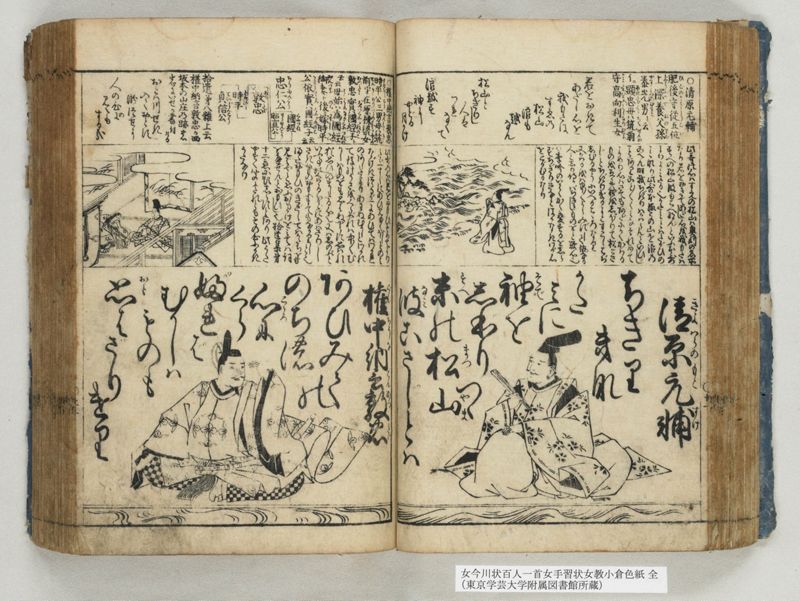
翻刻
【右丁 上部】
○清原元輔
肥後守(ひごのかみ)従五位(しうごい)
上(じやう)深養父(ふかやぶの)孫(まご)
泰光(やすみつの)男(むすこ) ̄ト云
イ ̄ニ顕忠(あきたゞ)母(はゝ)ハ筑前(ちくぜんの)
守(かみ)高向利生(たかむかふとしなり)女(むすめ)
君をおきて
あだし心を
我もたは
すゑの
松山
浪も
越
なん
松山と
ちぎりし
人は
つれ
なく
て
浪越す
袖に
やどる
月かけ
【同 中段】
此哥の心はすえの松山は奥州の名所
なり君をおきてあだし心を我もたは
すへの松山波もこへなんといふ本哥
よりよみたる也かたみとはたがひの
ことなり此哥本縁この山を浪の
こへん時我ちぎりはかはらんといひし
ことありこと〳〵くみなそれにて
よめり心はさてもあだにかくかはる
ものを互に袖をしぼりて松こさ
じとちぎりけるよとすこしはぢ
しむるやうにいへるこゝろなり
又かはるをは中〳〵うらみずして仇なる
人としり侍らばちきらしものをと歎心也
○季吟のいわくかく変するをしら
ずちぎりきなとはかなきわが心
をとがむるなり
【同 下段】
清原元輔(きよはらのもとすけ)
ちぎり
きな
かた
みに
袖を
しぼり
つゝ
末(すへ)の松山(まつやま)
波(なみ)こさじとは
【左丁 上段】
○権中納言敦忠
時平公(ときひらこう)三 男(なん)母(はゝ)ハ筑(ちく)
前守(せんかみ)在原棟梁(ありわらのとうりやうの)女
敦忠(あつたゝ)《振り仮名:実ハ|じつハ》国経(くにつねの)子(こ) ̄ト
云云 母(はゝ)始(はしめ)ハ為(なる)_二国経(くにつねの)
御妻(おんつま) ̄ト【一点脱】後(のち)ニ嫁(かす)_二時平(しへい)
公(こう) ̄ニ_一依(よつて)実(じつ)ハ国経(くにつねの)子(こ)《割書:云|云》
忠仁公(ちうにんこう)ー《割書:国経(くにつね)|昭宣公(せうせんこう)》
敦忠(あつたゞ)
時平(ときひら)
貞信公(ていしんこう)
拾遺第八雑上云
権中納言敦忠か西
坂本の山庄の跡の
岩にいせか書付ける
おとは川せき
入ておとす
滝つせに
人の心に(の)
見えも
する哉
【同 中段】
此哥の心は君をおもひそめてより
たゞ一すじにあひ見まくほしとのみ
なげきつるが一よあひてはわかれ
のあしたよりあわぬむかしとわかれ
て後のうさをくらぶれは中〳〵む
かしはものをも思はぬやうに思はれ
猶思ひのましたる心也又はしのぶと
いふ事のくはゝるほどにあはさりし
さきはものおもふまてもなかりしと也
またおもひのきざしてはかたちをも
見ばやと思ふおもかけをみては詞
を通ぜんとおもひし也拾遺集第
十二恋に題しらすとあり此うた
やすく聞えたれともその心ふかき
うたなり
【同 下段】
権中納言敦忠(ごんちうなごんあつたゞ)
あひみて
の
のちの
心(こゝろ)に
くら
ぶれば
むかしは
ものも
思(おも)は
ざり
けり
現代語訳
【右丁 上部】
○清原元輔
肥後守従五位上、深養父の孫、泰光の息子という。顕忠の母は筑前守高向利生の娘。
君を置きて
あだし心を
我も持たば
末の
松山
波も
越え
なん
松山と
契りし
人は
つれ
なく
て
浪越す
袖に
宿る
月影
【同 中段】
この歌の心は、末の松山は奥州の名所である。「君を置きてあだし心を我も持たば末の松山波も越えなん」という本歌から詠んだものである。「かたみ」とは互いのことである。この歌の本縁は、この山を波が越える時、我が契りは変わるだろうと言ったことがある。ことごとく皆それで詠んでいる。心は、それにしても軽薄にこのように変わるものを、互いに袖を絞って「波は松を越すまい」と契ったよと、少し恥じ入るように言った心である。また変わることは決して恨まずに、浮気な人と知っていたならば契らなかったものをと嘆く心である。
○季吟が言うには、このように変心することを知らずに契ったことよ、はかない我が心を咎めるのである。
【同 下段】
清原元輔
契り
きな
かた
みに
袖を
絞り
つつ
末の松山
波越さじとは
【左丁 上段】
○権中納言敦忠
時平公の三男。母は筑前守在原棟梁の女。敦忠は実は国経の子という。母は初めは国経の御妻であったが、後に時平公に嫁いだ。よって実は国経の子という。
忠仁公(国経、昭宣公)
敦忠
時平
貞信公
拾遺集第八雑上に言う。
権中納言敦忠が西
坂本の山荘の跡の
岩に伊勢が書き付けた
音羽川堰き
入れて落とす
滝つ瀬に
人の心の
見えも
する哉
【同 中段】
この歌の心は、君を思い初めてからただ一筋に逢い見たいとのみ嘆いていたが、一夜逢ってからは別れの朝より、逢わない昔と別れた後の辛さを比べれば、むしろ昔は物を思わないようにも思われる、なお思いの増した心である。また忍ぶということが加わるほどに、逢わない前は物思いするまでもなかったということである。また思いの兆してからは容貌をも見たいと思い、面影を見ては言葉を交わそうと思ったのである。拾遺集第十二恋に「題知らず」とある。この歌は易く聞こえるけれども、その心の深い歌である。
【同 下段】
権中納言敦忠
逢い見て
の
後の
心に
比
ぶれば
昔は
物も
思わ
ざり
けり
英語訳
【Right Page - Upper Section】
○Kiyohara no Motosuke
Governor of Higo, Senior Fifth Rank Upper Grade, grandson of Fukayabu, son of Yasumitsu, it is said. Akitada's mother was the daughter of Takamuka Toshiari, Governor of Chikuzen.
If I were to abandon you
and harbor a fickle heart,
then even the waves
of Sue no
Matsuyama
would
cross
over
The person who
promised at
Matsuyama
has become
cold,
and
waves cross over
my sleeves
where lodges
the moon's reflection
【Same Page - Middle Section】
The meaning of this poem: Sue no Matsuyama is a famous place in Ōshū. This is composed based on the original poem "If I were to abandon you and harbor a fickle heart, then even the waves of Sue no Matsuyama would cross over." "Katami" means "each other." The origin of this poem has the saying that when waves cross this mountain, our pledge would change. Everyone composed based on this. The heart is: how fickle and changeable things are - we wrung our sleeves together and promised "the waves shall not cross the pine mountain," expressing this somewhat shamefully. Also, rather than resenting the change, it laments "if I had known you were such a fickle person, I would not have made such a pledge."
○According to Kigin, not knowing it would change like this, we made our pledge - this reproaches our own fleeting hearts.
【Same Page - Lower Section】
Kiyohara no Motosuke
We promised,
didn't we,
each
to the
other,
wringing
our sleeves,
that
the waves of Sue no Matsuyama
would not cross over
【Left Page - Upper Section】
○Provisional Middle Counselor Atsutada
Third son of Lord Tokihira. His mother was the daughter of Ariwara no Tōryō, Governor of Chikuzen. Atsutada was actually Kunitsune's child, it is said. His mother was first Kunitsune's wife, but later married Lord Tokihira. Therefore he was actually Kunitsune's child.
Lord Chūnin (Kunitsune, Lord Shōsen)
Atsutada
Tokihira
Lord Teishin
Shūi-shū Volume 8, Miscellaneous Part 1 says:
Provisional Middle Counselor Atsutada
at the ruins of his mountain villa
at Nishi-Sakamoto,
Ise inscribed on a rock:
Otowa River dammed
up and falling
at the rapids,
a person's heart
can also be
seen
【Same Page - Middle Section】
The meaning of this poem: Since I began loving you, I have only lamented with the single desire to meet you, but after spending one night together, from the morning of parting, if I compare the sadness of not meeting in the past with the sorrow after our separation, the past seems as if I thought of nothing at all - this shows how my feelings have grown even stronger. Also, as the element of concealment is added, before we met there was nothing to even worry about. Also, since feelings began to sprout, I wanted to see your appearance, and seeing your image, I wanted to exchange words. In Shūi-shū Volume 12, Love Section, it says "topic unknown." Though this poem sounds simple, it is a poem of deep feeling.
【Same Page - Lower Section】
Provisional Middle Counselor Atsutada
After we
met
and then
compared to my heart
now,
in the past
I thought
of nothing
at all