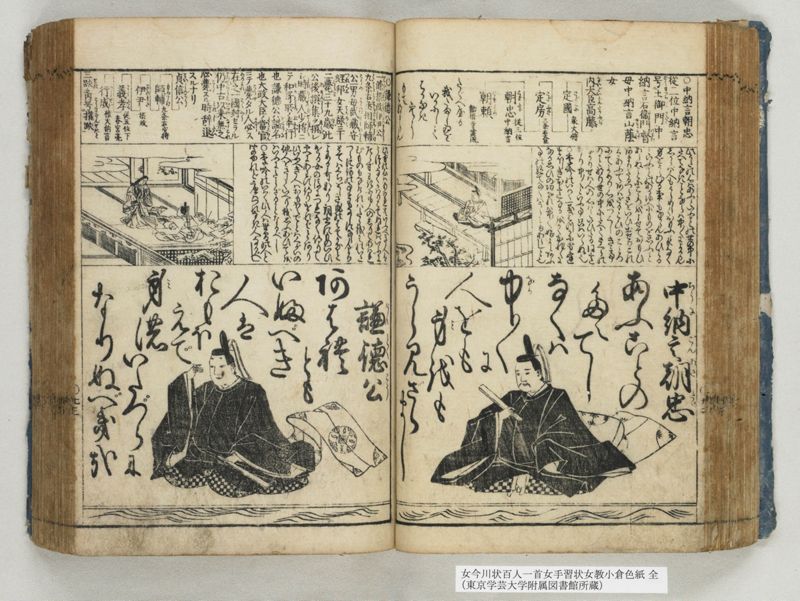
翻刻
【右丁 上段】
○中納言朝忠
従二位中納言
号(ごうす)_二土御門(つちみかどゝ)_一 中
納言右衛門 督(のすけ)
母中納言 山蔭(やまかげ)
女
内大臣(ないだいじん)高藤(たかふぢ)
定国(さだくに)《割書:泉大将》
定房(さだふさ)《割書:三条右大臣》
朝忠(ともたゞ)《割書:従三位|中納言》
朝頼(ともより)
《割書:勸修寺当流》
たぐへやる
我たましゐを
いかにして
はかなき
空に
もて
はなるらん
【同 中段】
此うたの心はあふといふことの世の中に
たへてなきことならは中〳〵によからん
しからば人もうらめしくおもふともなく
身をうらむる事もなからんあひみる
といふことのあるゆへにものを思ふと
あらぬことにこゝろをよせておもひ
あまりたるつらさをいひ出せりこれ
はあふてあはざるこひのこゝろ
にてよめり心をつくしきて
のことなり世の中にたへてさくらの
なかりせは人の心はといひたる同意
なり中〳〵といふ事只はいらぬ也
○季吟のいわく一義はつかにも逢
まほしき本意なるをかくかれ〳〵に
なる思ひの切なれは中〳〵始にあふ
事の絶てなくはうらみもあらしと也
【同 下段】
中納言(ちうなごん)朝忠(あさたゞ)
あふことの
たえてし
なくは
中(なか)〳〵
に
人をも
身(み)をも
うらみざら
まし
【左丁 上段】
○謙徳公
一条摂政(いちでうせつしやう)伊尹公(これまさこう)
九条(くてう)右丞相(うせう〴〵)師輔(もろすけ)
公(こうの)一男 母(はゝは)武蔵守(むさしのかみ)
経邦(つねくに)女 天禄(てんろく)三十
二 薨(こうす)三十九 歳(さい)此
公 御撰集(ごせんしう)ヲ撰(ゑらば)レ
シ時(とき)蔵人少将(くらんどせう〳〵)ニ
テ和哥所(わかところ)ノ奉行(ぶきやう)
也謙徳公ハ謚名(をくりな)
也大政大臣ノ当官(たうくわん)
ニテ薨(こうじ)タル人必(かなら)ス
在(あり)_レ之(これ)一 国(こく)封(ふう)セラル
仍(よつて)中古(ちうこ)以来(いらい)無(なし)_レ之(これ)
必 薨(こう)スル時(とき)辞退(じたい)
スルナリ
貞信公(ていしんこう)
師輔(もろすけ)《割書:九条右少将》
伊尹(これまさ)《割書:摂政》
義孝(よしたか)《割書:従五位下|春宮亮》
行成(かうせい)《割書:権大納言》
三 蹟(せき)之内 号(こうす)_二権蹟(ごんせきと)_一
【同 中段】
此哥の心はあはれ共いふべき人は
うつゝなくかはりはてぬればいふに
たらずわきにも人のしりてあはれ
むものもなけれはたゝ我みのいた
つらに何の事ともなしにならんより
とてはくちをしき身のはてかなと
よめる哥なり詞書にものいひ
ける女の後につれなく侍りて
更にあわず侍りければとあり
此いふへき人はおもほえでとはくがいの
他人をさしていへり我思ふあひてを
はいふにたらざることなるべし
○季吟のいわく此人は世間の人と
聞ゆれど底はつれなき人なるべし
【同 下段】
謙徳公(けんとくこう)
あはれ
とも
いふべき
人は
おもほ
えで
身(み)の
いたづらに
なりぬべき哉
現代語訳
【右丁 上段】
○中納言朝忠
従二位中納言
土御門中納言右衛門督と称される
母は中納言山蔭の娘
内大臣高藤
定国(泉大将)
定房(三条右大臣)
朝忠(従三位中納言)
朝頼(勧修寺当流)
連れ行く
我が魂を
いかにして
はかない
空に
持ち
離れるのだろう
【同 中段】
この歌の心は、逢うということが世の中に全くないことならば、むしろよいだろう。そうであれば人も恨めしく思うこともなく、身を恨むこともないだろう。逢い見るということがあるゆえに物を思うのだと、そうでないことに心を寄せて思い余った辛さを詠み出している。これは逢って逢わない恋の心で詠んだものである。心を尽くし切ってのことである。「世の中に全く桜のなかりせば人の心は」と詠んだのと同じ意味である。「むしろ」ということは、ただは入らないものである。
○季吟が言うには、一つの解釈は、わずかにでも逢いたいという本意であるのに、このように離ればなれになる思いが切ないので、むしろ初めから逢うことが全くなければ恨みもないだろうということである。
【同 下段】
中納言朝忠
逢うことの
絶えてし
なくば
むしろ
に
人をも
身をも
恨みざら
まし
【左丁 上段】
○謙徳公
一条摂政伊尹公
九条右丞相師輔公の長男。母は武蔵守経邦の娘。天禄三十二年薨去、三十九歳。この公が後撰集を撰ばれた時、蔵人少将で和歌所の奉行であった。謙徳公は諡名である。太政大臣の当官で薨去した人は必ずこれがある。一国が封ぜられる。よって中古以来これはない。必ず薨去する時に辞退するのである。
貞信公
師輔(九条右少将)
伊尹(摂政)
義孝(従五位下春宮亮)
行成(権大納言)
三蹟の内、権蹟と号する
【同 中段】
この歌の心は、哀れとも言うべき人は、うつつなく変わり果ててしまったので言うに足らず、他にも人が知って哀れんでくれる者もないので、ただ我が身の辛さに、何の事ともなしになってしまうよりは、といって口惜しい身の果てかなと詠んだ歌である。詞書に「物言いをした女が後につれなく侍りて、更に逢わず侍りければ」とある。この「言うべき人は思ほえで」というのは、他人を指して言ったものである。我が思う相手は言うに足らないことなのであろう。
○季吟が言うには、この人は世間の人と聞こえるけれど、実際は冷たい人なのであろう。
【同 下段】
謙徳公
哀れ
とも
言うべき
人は
思ほ
えで
身の
徒らに
なりぬべきかな
英語訳
【Right Page - Upper Section】
○Middle Counselor Asatada
Senior Second Rank Middle Counselor
Called Tsuchimikado Middle Counselor and Right Guards Commander
Mother was the daughter of Middle Counselor Yamakage
Inner Minister Takafuji
Sadakuni (Izumi General)
Sadafusa (Sanjō Right Minister)
Asatada (Junior Third Rank Middle Counselor)
Tomoyori (Kanshuji School)
How is it that
my soul being
led away
into this
fleeting
sky is being
taken apart?
【Same Page - Middle Section】
The meaning of this poem: if meeting were something that absolutely did not exist in this world, it would rather be better. In that case, people would not think resentfully, and there would be no cause to resent oneself. Because the act of meeting and seeing exists, we suffer from love - expressing the pain of excessive longing by focusing on what is not the case. This was composed with the heart of love that meets yet does not meet. It expresses complete exhaustion of the heart. It has the same meaning as "if cherry blossoms absolutely did not exist in this world, people's hearts would..." The word "rather" is not simply inserted without purpose.
○According to Kigin, one interpretation is that though the original intention is to meet even briefly, since the pain of being thus separated is so intense, it would be better if there had been absolutely no meeting from the beginning, then there would be no resentment.
【Same Page - Lower Section】
Middle Counselor Asatada
If meeting
had absolutely
never existed,
rather
then
I would not
resent either others
or myself
【Left Page - Upper Section】
○Lord Kentoku
Regent of Ichijō, Lord Koremasa
Eldest son of Lord Morosuke, Right Minister of Kujō. Mother was the daughter of Tsunekuni, Governor of Musashi. Died in Tenroku 32, aged 39. When this lord compiled the Gosen-shū, he was Kurōdo Shōshō and administrator of the Poetry Bureau. Kentoku-kō is a posthumous name. Those who die while holding the position of Daijō-daijin necessarily have this. They are granted a province. Therefore since the middle ages there have been none. They necessarily decline when they are about to die.
Teishin-kō
Morosuke (Kujō Right Junior General)
Koremasa (Regent)
Yoshitaka (Junior Fifth Rank Lower, Crown Prince's Assistant)
Kōsei (Provisional Major Counselor)
Among the Three Brush Traces, called Gon-seki
【Same Page - Middle Section】
The meaning of this poem: the person who should be called "pitiful" has changed so completely as if in a dream that they are not worth mentioning, and since there is no one else who knows and would pity me, rather than my body's pain becoming nothing at all, what a regrettable end for my body - this is the poem composed with such feelings. The headnote says "A woman I had been courting later became cold and would not meet me at all." This "person who should be spoken of, I cannot think of" refers to other people. The one I love is probably not worth speaking of.
○According to Kigin, this person seems to be someone from society, but in reality must be a cold person.
【Same Page - Lower Section】
Lord Kentoku
A person
who should be
called pitiful
I cannot
think of,
and my body
will become
useless