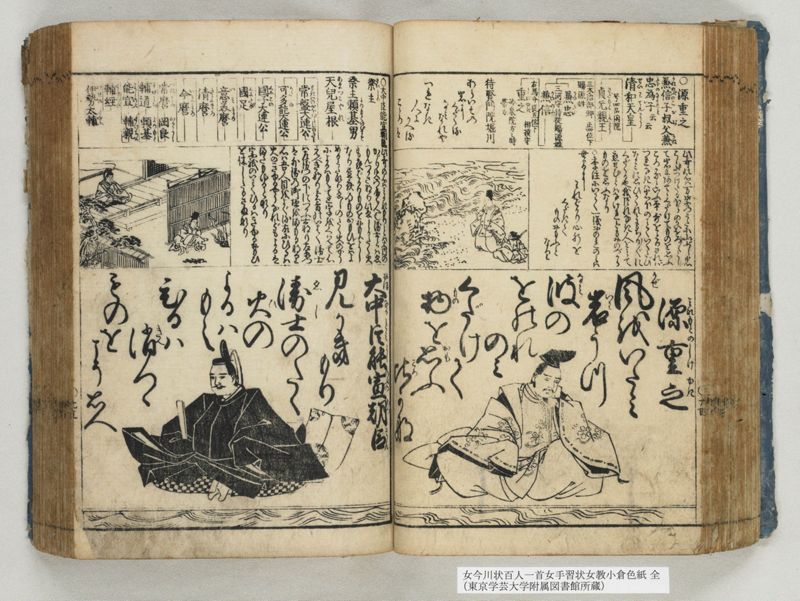
翻刻
【右丁 上段】
○源重之
兼信(かねのぶの)子(こ)叔父(おぢ)兼(かね)
忠(たゞの)為(なる)_レ子(こと)云云
清和天皇(せいわてんわう)
《割書:号四品閑院》
貞元親王(さだもとしんわう)
《割書:三木治部卿 正四位下|賜源姓》
兼忠(かねたゞ)
《割書:三河守侍従賜源姓》
兼信(かねのふ)
《割書:右馬介 従五位下》
重之(しけゆき) 《割書:相模守》
《割書:冷泉院方々時|帯刀》
待賢門院堀川
あらいその
岩に
くだくる
なみ
なれや
つれなき
人に
かへ【ママ】る
こゝろは
【同 中段】
此哥の心は万葉のうたに山ぶしの
こしにつけたるほらのかいをづ〳〵とし
て岩にあてゝくだけてものを思ふ
ころかなといふ本哥をとりされば
つれなきは岩ほのことくいくたび
なみの思ひかくれともちり〴〵に
くだくる也我つれなき人をみて
恋せむとはなけれどもおのづから
ものを思ふなり
○季注にいわく一儀おのれのみは
世間に
わればかり心折を
くだきて
ものおもふと
なり
【同 下段】
源重之(みなもとのしけゆき)
風(かぜ)をいたみ
岩(いわ)うつ
波(なみ)の
をのれ
のみ
くだけ
て
物(もの)を思(おも)ふ
比(ころ)かな
【左丁 上段】
○大中臣能宣朝臣
祭主(さいしゆ)
祭主 頼基(よりもとの)男(むすこ)
天児屋根(あまつこやね)
常盤大連公(ときはのおほむらじのきみ)
可多能(かたの)大連公
国子(くにこの)大連公
国足(くにたる)
意美麿(いみまる)
清麿(きよまろ)
今麿(いままろ)
常麿(つねまろ)ー岡良(おかよし)
輔道(すけみち)ー頼基(よりもと)
能宣(よしのぶ)ー輔親(すけちか)
輔経(すけつね)
伊勢太輔(いせのたゆふ)
【同 中段】
此哥の心はみかきもりとは大門の
かゞり火のやく人也衛士とはゑ
もんつかさなり此ゑしがたく火
も夜ばかりものをおもふよし
なり昼夜のものおもひをはよ
めるうたなりゑじのたく火のやう
によるはもえてと字をくはえて心
えべきなり其旨のいはく衛士
は左衛門の下につかふ士なり左衛門
は外衛の御垣をまもるなり
心は吾人目をよぐる故にひるは
火のきゆるやうなれどもよるは
またもゆるとなり
宗祇のいわくひるはきゆるおもひ
を休したるさまなり
【同 下段】
大中臣能宣(おほなかとみよしのぶの)朝臣(あつそん)
みかきもり
衛士(ゑじ)のたく
火(ひ)の
よるは
もえ
ひるは
消(きへ)つゝ
ものを
こそ思え
現代語訳
【右丁 上段】
○源重之
兼信の子、叔父兼忠の養子となったという
清和天皇
《割書:四品閑院と号す》
貞元親王
《割書:三木治部卿 正四位下|源姓を賜る》
兼忠
《割書:三河守侍従源姓を賜る》
兼信
《割書:右馬介 従五位下》
重之 《割書:相模守》
《割書:冷泉院の時|帯刀》
待賢門院堀河
荒磯の
岩に
砕ける
波
であろうか
つれない
人に
返る
心は
【同 中段】
この歌の心は、万葉集の歌に「山伏が腰につけた法螺貝を吹き鳴らして岩に当てて砕けて物思いをする頃だなあ」という本歌を取ったものである。つれない人は岩のようで、何度波の思いをかけても散り散りに砕けてしまう。私はつれない人を見て恋をしようとは思わないけれども、自然と物思いをしてしまうのである。
○季吟注によると、一つの解釈として「自分だけが世間で心を砕いて物思いをしている」ということである。
【同 下段】
源重之
風を激しみ
岩打つ
波の
己
のみ
砕けて
物を思う
頃かな
【左丁 上段】
○大中臣能宣朝臣
祭主
祭主頼基の息子
天児屋根命の子孫
常磐大連公
可多能大連公
国子大連公
国足
意美麿
清麿
今麿
常麿―岡良
輔道―頼基
能宣―輔親
輔経
伊勢太輔
【同 中段】
この歌の心は、「みかきもり」とは大門のかがり火を焚く人である。衛士とは衛門司のことである。この衛士が焚く火も夜ばかり物思いをするということである。昼夜の物思いを詠んだ歌である。衛士の焚く火のように夜は燃えて、「て」の字を加えて理解すべきである。玄旨によると、衛士は左衛門府の下に仕える士である。左衛門府は外衛の御垣を守るのである。
心は、私が人目を避けるゆえに昼は火の消えるようであるが、夜はまた燃えるということである。
宗祇によると、昼は消える思い、物思いを休めた様子である。
【同 下段】
大中臣能宣朝臣
御垣守
衛士の焚く
火の
夜は
燃え
昼は
消えつつ
物を
こそ思え
英語訳
【Right Page - Upper Section】
○Minamoto no Shigeyuki
Son of Kanenobu, said to have become the adopted son of his uncle Kanetada
Emperor Seiwa
《Note: Called Fourth Rank Kan'in》
Prince Sadamoto
《Note: Miki Jibu-kyō Senior Fourth Rank Lower|Granted the Minamoto surname》
Kanetada
《Note: Mikawa-no-kami Jijū, granted Minamoto surname》
Kanenobu
《Note: Uma-no-suke Junior Fifth Rank Lower》
Shigeyuki 《Note: Sagami-no-kami》
《Note: During Emperor Reizei's reign|Tachihaki (sword-bearer)》
Taikenmoni'in Horikawa
Are these the waves
that crash
against
the rocks
of the rough shore?
This heart that
returns to
someone
indifferent
【Same Page - Middle Section】
The meaning of this poem draws from a Man'yōshū poem about a mountain ascetic blowing a conch shell attached to his waist against rocks until it breaks during a time of contemplation. The indifferent person is like a rock, and no matter how many times the waves of longing crash against them, they scatter and break. Though I do not intend to fall in love by looking at this indifferent person, I naturally fall into contemplation.
○According to Kigin's commentary, one interpretation is "I alone in this world break my heart in contemplation."
【Same Page - Lower Section】
Minamoto no Shigeyuki
Because the wind is fierce,
the waves that strike
the rocks—
only I myself
am broken,
in this time of
contemplation
【Left Page - Upper Section】
○Ōnakatomi no Yoshinobu Ason
High Priest
Son of High Priest Yorimoto
Descendant of Amatsukoyane-no-mikoto
Tokiwa-no-ōmuraji-no-kimi
Katano-no-ōmuraji-no-kimi
Kuniko-no-ōmuraji-no-kimi
Kunitaru
Imaro
Kiyomaro
Imamaro
Tsunemaro—Okayoshi
Sukemichi—Yorimoto
Yoshinobu—Sukechika
Suketsune
Ise-no-Tayū
【Same Page - Middle Section】
The meaning of this poem: "mikakimori" refers to those who tend the watch fires at the great gates. "Eji" refers to the Guard Office. The fires these guards kindle also engage in contemplation only at night. This is a poem about contemplation during both day and night. Like the fires the guards kindle that burn at night, one should understand by adding the particle "te." According to Genshi, guards are warriors who serve under the Left Guard Office. The Left Guard Office protects the outer imperial fences.
The meaning is that because I avoid people's eyes, during the day it is like a fire going out, but at night it burns again.
According to Sōgi, during the day the thoughts are extinguished, appearing to rest from contemplation.
【Same Page - Lower Section】
Ōnakatomi no Yoshinobu Ason
The imperial fence guards,
the fires the sentries kindle—
at night
they burn,
during the day
they die out,
and I
do contemplate