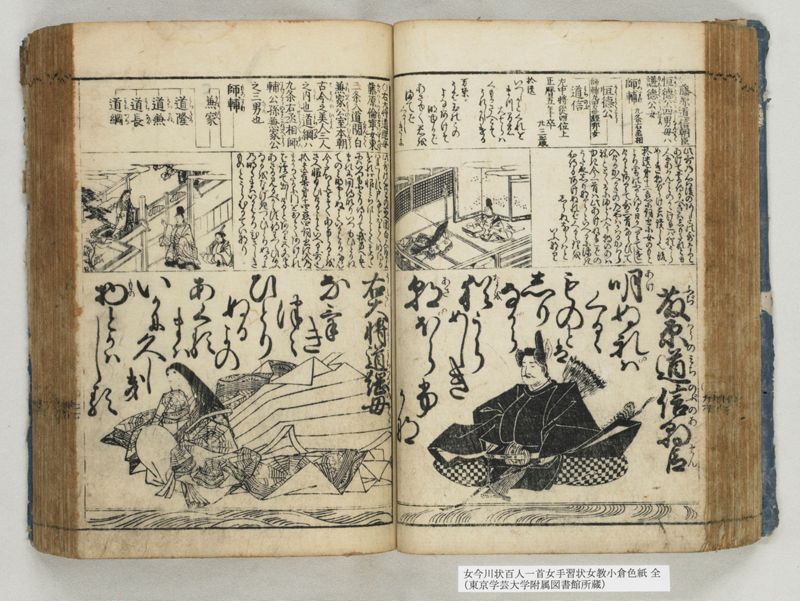
翻刻
【右丁 上段】
○藤原道信朝臣
恒徳公(かうとくこうの)四男(しなん)母(はゝ)ハ
謙徳公(けんとくこう)女(むすめ)
師輔(もろすけ)《割書:九条右丞相》
恒徳公(かうとくこう)
《割書:師輔九男母経邦女》
道信(みちのぶ)
《割書:左中将従四位上|正暦五年卒| 廿三歳》
拾遺
いつしかとくれを
まつ間の
大そらは
くもるさへこそ
うれしかりける
万葉
うば玉のこの
よなあけそ
明ゆかば
あさゆく君を
まてば
くるし
きに
【同 中段】
此哥の心は後のあしたの哥なり
あけて暮侍るべきはしりたれとも
人にあはんことのかたければ猶うら
めしき朝ぼらけとは読し也後
拾遺第十二恋に【「二」の誤ヵ】詞書に女のもと
より雪のふり侍る日かへりて遣し
けるとありて哥二首ならびて
入けるかへるさの道やはかはるかはら
ねととくるにまどふ今朝のあは
ゆき今一首はあけぬればの
うた也しりながらといへるに深き
心侍るあけぬればくるゝ理を
しらぬならはと
いふなり
【同 下段】
藤原道信朝臣(ふぢわらのみちのぶのあそん)
明(あけ)ぬれば
くるゝ
ものとは
しり
ながら
猶(なを)うら
めしき
朝(あさ)ぼらけ
かな
【左丁 上段】
○右大将道綱母
藤原倫寧(ふぢわらのともやすの)女(むすめ)東(ひかし)
三条入道 関白(くわんばく)
兼家公(かねいへこうの)室(しつ)本朝(ほんてう)
古今(ここん)之(の)美人(ひじん)三人
之 内(うち)也 道綱(みちつな)ハ
九条 右丞相(うせう〴〵)師(もろ)
輔公(すけこうの)孫(まご)兼家公(かねいへこう)
之三 男(なん)也
師輔(もろすけ)
兼家(かねいへ)
道隆(みちたか)
道兼(みちかね)
道長(みちなが)
道綱(みちつな)
【同 中段】
此哥の心はこの所へ関白大臣かよ
はれしに戸などおそく明侍り
ければ恨みられしこと也そなた
にはいつもふたり侍りて我方へは
まれに問侍なりいつもひとりね
てのみ明やらぬこといかばかりならん
今戸ちとをそくあけらるゝを
さへ恨給ひけるよといへる哥也
拾遺集第十四恋四詞書に入道
まかりたるに門をおそくあけゝれ
ば読て出しけるとあり五文字
あさる【ママ】見るべからず待わつらひ給ふ
なるをなげきつゝひとりぬるよ
の明るまはいかばかりひさしき
ものとうらむるていなり
【同 下段】
右大将道綱(うたいしやうみちつなの)母(はゝ)
なけ
き
つゝ
ひとり
ぬる
よの
あくる
まは
いかに久し
き
物(もの)とかは
しる
現代語訳
【右丁 上段】
○藤原道信朝臣
恒徳公の四男。母は謙徳公の娘。
師輔《九条右丞相》
恒徳公
《師輔の九男、母は経邦の女》
道信
《左中将従四位上、正暦五年死去、二十三歳》
拾遺集
いつになったら暮れを
待つ間の
大空は
曇るだけでも
嬉しいのであった
万葉集
この夜よ明けるな
明けてしまえば
朝に去っていく君を
待つのは
辛い
ことだから
【同 中段】
この歌の心は、後朝の歌である。明けて別れることは分かっているが、人に逢うことが難しいので、やはり恨めしい朝ぼらけだと詠んだのである。後拾遺集第十二恋(恋二の誤りか)の詞書に「女のもとより雪の降る日帰りて遣わしける」とあって、歌二首が並んで入っている。「帰るさの道やは変わる変わらねどとくるに惑う今朝の淡雪」、もう一首は「明けぬれば」の歌である。「知りながら」と言ったところに深い心がある。明ければ暮れる道理を知らないわけではないという意味である。
【同 下段】
藤原道信朝臣
明けてしまえば
暮れる
ものだとは
知って
いながら
なお恨めしい
朝ぼらけ
であることよ
【左丁 上段】
○右大将道綱母
藤原倫寧の女。東三条入道関白兼家公の室。本朝古今の美人三人の内の一人である。道綱は九条右丞相師輔公の孫、兼家公の三男である。
師輔
兼家
道隆
道兼
道長
道綱
【同 中段】
この歌の心は、この所へ関白大臣が通われたが、戸などを遅く開けたので恨まれたということである。あちらにはいつも二人いて、私の方へはめったに訪れない。いつも一人寝してばかりで明け暮れすることがどれほど辛いことだろう。今、戸を少し遅く開けられたことさえ恨まれたということを詠んだ歌である。拾遺集第十四恋四の詞書に「入道がいらしたのに門を遅く開けたので詠んで出した」とある。五文字「朝る」は見るべからず。待ち煩い給うのを嘆きつつ、一人寝る夜の明ける間はどれほど長いものかと恨む様子である。
【同 下段】
右大将道綱の母
嘆きながら
一人
寝る
夜の
明ける
間は
どんなに長い
ものだとか
知っているだろうか
英語訳
【Right Page - Upper Section】
○Fujiwara no Michinobu Ason
Fourth son of Duke Kōtoku. His mother was the daughter of Duke Kentoku.
Morosuke《Kujō Right Minister》
Duke Kōtoku
《Ninth son of Morosuke, mother was the daughter of Tsunekuni》
Michinobu
《Left Middle Captain, Senior Fourth Rank Upper, died in Shōryaku 5, age 23》
Shūi Collection
When would evening come—
while waiting, even
the great sky
clouding over
was cause for joy
Man'yōshū
O jewel-black night, do not dawn
if morning comes
waiting for you
who leaves at dawn
would be
painful
【Same Page - Middle Section】
The meaning of this poem is about the morning after meeting one's lover. Though one knows that dawn brings parting, because meeting someone is so difficult, still the dawn is resentful—thus it was composed. In the Goshūi Collection, Book 12, Love (possibly an error for Love 2), the preface states "sent from a woman's place on a snowy day upon returning," and two poems are included together. "Does the path home change or not? Bewildered by the melting light snow this morning." The other poem is this "akenureba" poem. There is deep meaning in saying "knowing this." It means "it's not that I don't know the principle that after dawn comes evening."
【Same Page - Lower Section】
Fujiwara no Michinobu Ason
Though I know
that dawn
brings evening,
still
how resentful
this daybreak
is
【Left Page - Upper Section】
○Mother of Right General Michitsuna
Daughter of Fujiwara no Tomoyasu. Wife of Higashisanjō Lay Monk, Chancellor Kanei-kō. One of the three great beauties of ancient and modern Japan. Michitsuna was the grandson of Kujō Right Minister Morosuke-kō and the third son of Kanei-kō.
Morosuke
Kaneie
Michitaka
Michikane
Michinaga
Michitsuna
【Same Page - Middle Section】
The meaning of this poem is that when the Chancellor Minister came to visit this place, the gate was opened late and so she was reproached. At his other place there are always two women, while to my place he rarely comes to visit. Always sleeping alone, how painful the passing days and nights must be. This poem expresses how even opening the gate a little late was cause for reproach. In Shūi Collection, Book 14, Love 4, the preface states "when the lay monk came but the gate was opened late, she composed this and sent it out." The five characters "asaru" should not be regarded. While he waits impatiently, she grieves, and the poem expresses her resentment at how long the nights she spends sleeping alone until dawn must seem.
【Same Page - Lower Section】
Mother of Right General Michitsuna
Lamenting
while sleeping
alone,
the time until
night
dawns—
how could you know
what a long
thing it is