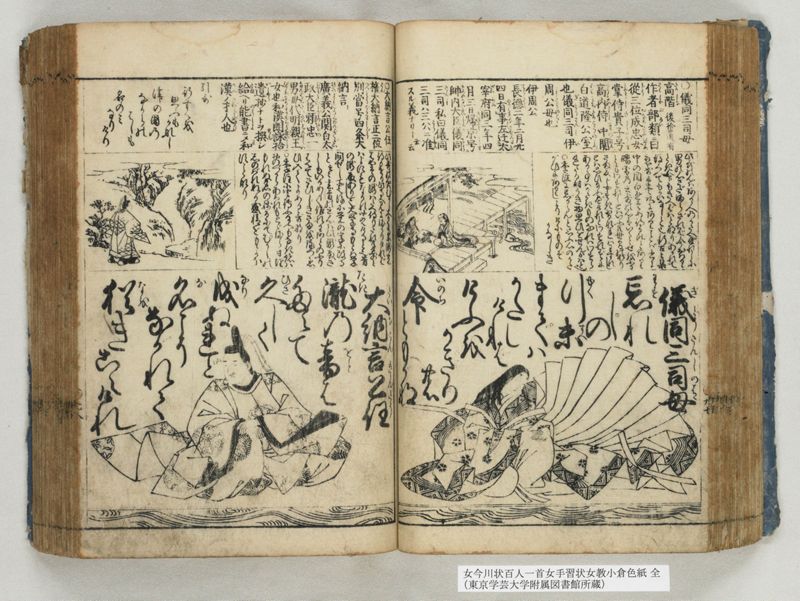
翻刻
【右丁 上段】
○儀同三司母
高階(たかしな)《割書:後拾遺有》
作者部類(さくしやぶるい)ニ曰
従三 位(ゐ)成忠(なりたゞの)女(むすめ)
掌侍(しやうし)貴子(きし)号(かうす)_二
高内侍(かうのないしと)【一点脱】中関(なかのくわん)
白(ばく)道隆公(みちたかこうの)室(しつ)
也 儀同三司(ぎとうさんし)伊(い)
周公(しうこうの)母(はゝ)也
伊周公
長徳(てうとく)二年二月廿
四日 有(ありと)_レ事(まつりこと)左遷(させんす)_二【迁は俗字】太(だ)
宰府(ざいふに)_一同三年四
月三日 帰京(ききやうす)号(こうす)_二
帥内大臣(そつのないだいじん)儀同(きとう)
三司(さんし)【一点脱】私曰儀同
三司ハ三 公(こう)ニ准(じゆん)
スル義ナリト云云
【同 中段】
此哥の心はある人のかたへ通れしに
男の心さだまらざれば今おはるゝ
とき命もきへばはとなりあかれて
後くへてもかいなしと也新古今集
恋哥に巻頭にありことば書に
中の関白通そめ侍る比とあり
踏雪の云哥の心はいくとせをふる
ともわすれしとはいふ共世間のあり
さま反じやすき習なれはわすれし
とは思ひ給ふべけれとわすれずに
ある事はかたきものなれはわすら
れたる時うき物思ひをせんよりはと也
○季注に忘るらんと思ふ心のうた
がひにありしよりけにものぞ
かなしき
【同 下段】
儀同三司(ぎどうさんしの)母(はゝ)
忘(わす)れ
じ
の
行末(ゆくすへ)
までは
かた
ければ
けふを
かぎり
の
命(いのち)
ともがな
【左丁 上段】
○大納言公任
権(ごん)大納言正二位
別当(へつとう)号(ごうす)_二 四条(しでう)大
納言 ̄ト_一
広義公(ひろよしこう)関白(くわんばく)太(だい)
政大臣(じやうたいしん)頼忠(よりたゞの)一
男(なん)母(はゝは)代明親王(たいめいしんわうの)
女(むすめ)也(なり)和漢朗詠(わかんらうゑい)拾(しう)
遺抄(いしやう)ナトヲ撰(せん)シ
給ヘリ能書(のうしよ)ニシテ和(わ)
漢(かん)ノ才人(さいじん)也(なり)
引哥
行すへを
思ふも
かなし
津の国の
なからの
はしも
名のみ
なり
けり
【同 中段】
此哥の心はむかし大かく寺に滝の
侍りける此寺へ見にまかりければ
はやその滝はたへ侍りたれ共名のみ
はよにもなかれ聞へけると也昔
の滝殿ありし也大学寺もとは学
問せし所也後に覚の字に改る
と云云其旨の云心は此滝殿さ
しもいかめしく作れりあとのふり
はへてさひしきさまを詠つゝ思
ひ入てよめる哥なり
○季注に聞伝ふる人もなき跡は
おのづからあはれもとゞまらす埋
もれぬ名の残るにてむかしの
しのばれぬる感情をもよほ
すことなり
【同 下段】
大納言公任(だいなごんきんたう)
滝(たき)の音(をと)は
たえて
久(ひさ)しく
成(なり)ぬれど
名(な)こそ
ながれて
猶(なを)き
こえけれ
現代語訳
【右丁 上段】
○儀同三司母
高階《後拾遺集にあり》
作者部類によれば、従三位成忠の娘、掌侍貴子、号は高内侍という。中関白道隆公の室である。儀同三司伊周公の母である。
伊周公
長徳二年二月二十四日、事件があり太宰府に左遷された。同三年四月三日帰京した。帥内大臣儀同三司と号した。私に曰く、儀同三司とは三公に准ずる義であるという。
【同 中段】
この歌の心は、ある人のところへ通っていたが、男の心が定まらないので、今お別れするとき、命も消えてしまえばそれまでのことで、別れた後に悔やんでも甲斐がないということである。新古今集恋歌の巻頭にあり、詞書に「中関白が通い始めた頃」とある。踏雪の云う歌の心は、何年を経ようとも忘れたとは言うけれども、世間のありさまは変わりやすい習いなので、忘れたとは思うでしょうけれども、忘れずにいることは難しいものなので、忘れられた時に辛い物思いをするよりはということである。
○季注に「忘れるだろうと思う心の疑いにあった時よりも、本当に物事が悲しい」
【同 下段】
儀同三司の母
忘れないで
いて
くれる
行く末
までは
難しい
ので
今日を
限りの
命で
ありたい
【左丁 上段】
○大納言公任
権大納言正二位、別当、号は四条大納言という。
広義公、関白太政大臣頼忠の長男。母は代明親王の娘である。和漢朗詠集、拾遺抄などを撰集された。能書家であり、和漢の才人である。
引歌
行く末を
思うのも
悲しい
津の国の
なからの
橋も
名のみ
である
ことよ
【同 中段】
この歌の心は、昔大覚寺に滝があった。この寺へ見に参ったところ、早やその滝は絶えてしまったけれども、名のみは世にも流れ聞こえているということである。昔の滝殿があったのである。大学寺は元は学問をした所である。後に覚の字に改めるという。その趣旨の心は、この滝殿があれほど立派に作られていても、その跡は古びてさびしい様子を詠みつつ、思いを込めて詠んだ歌である。
○季注に「聞き伝える人もない跡は、自然とあわれも留まらず、埋もれない名が残るので昔が偲ばれる感情を催すことである」
【同 下段】
大納言公任
滝の音は
絶えて
久しく
なったけれど
名こそ
流れて
なお
聞こえる
英語訳
【Right Page - Upper Section】
○Mother of Gidō Sanshi (Minister of the same rank as the Three Dukes)
Takashina《found in Goshūi Collection》
According to the Sakusha burui (Classification of Poets), she was the daughter of Senior Third Rank Naritada, Court Lady Kishi, called Kō no Naishi. She was the wife of Middle Chancellor Michitaka-kō and mother of Gidō Sanshi Izhou-kō.
Izhou-kō
On the 24th day of the 2nd month of Chōtoku 2, due to an incident he was demoted to Dazaifu. On the 3rd day of the 4th month of the 3rd year he returned to the capital. He was called Sotsu no Naidaijin Gidō Sanshi. I note that Gidō Sanshi means having the same rank as the Three Dukes.
【Same Page - Middle Section】
The meaning of this poem is that she was visiting someone, but because the man's heart was not steadfast, when they were parting she thought that if her life ended now it would be just that, and regretting after separation would be useless. It appears at the beginning of the love poems in the Shinkokin Collection, with the preface "around the time the Middle Chancellor began visiting." The meaning of Tōsetsu's poem is that though one may say they have forgotten after many years, worldly circumstances change easily by nature, so though one might think they have forgotten, not forgetting is a difficult thing, so rather than suffering painful thoughts when forgotten...
○In the seasonal notes: "More truly sorrowful than when there was doubt about forgetting"
【Same Page - Lower Section】
Mother of Gidō Sanshi
Since continuing
to
remember
until the
distant future is
difficult,
let this day
be the
limit of
my
life
【Left Page - Upper Section】
○Major Counselor Kintō
Provisional Major Counselor, Senior Second Rank, Director, called Shijō Major Counselor.
Eldest son of Hiroyoshi-kō, Chancellor and Grand Minister Yoritada. His mother was the daughter of Prince Taimei. He compiled the Wakan rōeishū (Collection of Japanese and Chinese Poems for Singing), Shūi-shō, and others. He was skilled in calligraphy and talented in both Japanese and Chinese literature.
Reference poem:
Thinking of
the future is
also sad—
Tsukoku's
Nakara
Bridge too
remains in
name
only
【Same Page - Middle Section】
The meaning of this poem is that long ago there was a waterfall at Daigaku-ji temple. When he went to see this temple, the waterfall had already ceased to flow, but its name still flows and can be heard in the world. There used to be a waterfall pavilion there. Daigaku-ji was originally a place of learning. Later it is said the character was changed to "gaku" (awakening). The meaning of this sentiment is that even though this waterfall pavilion was built so magnificently, he composed this poem with deep feeling while contemplating its aged and lonely appearance.
○In the seasonal notes: "Where there are no people left to tell of it, naturally the poignancy does not remain, but because the name that is not buried remains, it evokes feelings of nostalgia for the past."
【Same Page - Lower Section】
Major Counselor Kintō
The sound of the waterfall
has ceased
and it has been
long since,
but the name
continues to flow
and can still
be heard