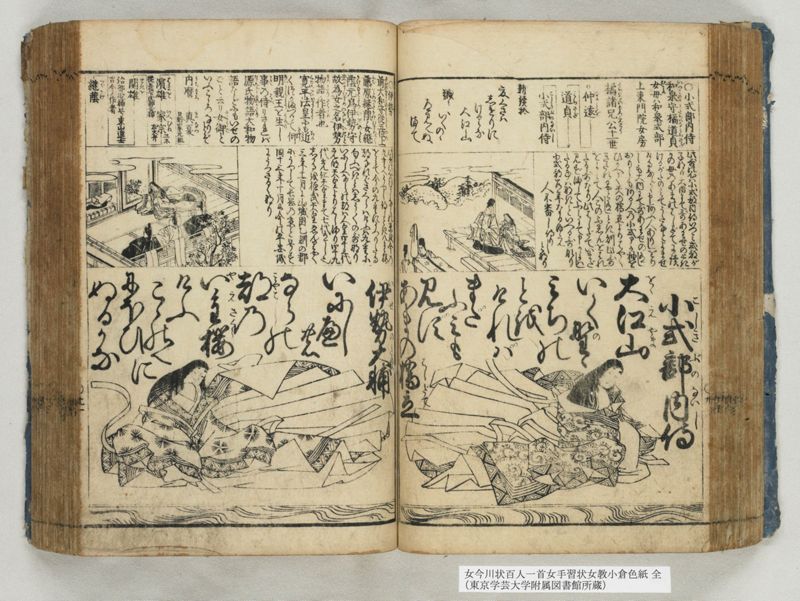
翻刻
【右丁 上段】
小式部内侍
和泉守(いつみのかみ)橘道貞(たちはなみちさだ)
女(むすめ)母ハ和泉式部
上東門院女房
橘諸兄公(たちはなのもろえこう)十一世
○仲遠(なかとを)
道貞(みちさだ)
小式部内侍(こしきぶのないし)
新続拾
夏くさは
しけりに
けりな
大江山
越ていくのゝ
道見えぬ
まて
【同 中段】
此哥の心は小式部内侍いつみ式部が
子なり大内にて哥あわせのとき
かの母のあまのはしだてに読
けるがたのみてうたなとよませ
けるなどゝ申あふ人ありしをり
しも大内にて哥あわせの有し
おりしもある人の小式部か袖を
ひかへて天の橋立よりはやく
きたれるやと有しとき則此哥
をよみて人このふしんをはれ
たる哥なり此はしだていまだ
見ずましてふみにて申かよはし
たる事はなきといへる哥なり
小式部若年なるゆえ
人不審し侍りし
となり
【同 下段】
小式部内侍(こしきぶのないし)
大江山(をゝえやま)
いく野(の)ゝ
みちの
とを
ければ
まだ
ふみも
見ず
あまの橋立(はしだて)
【左丁 上段】
○伊勢
前(さきの)大和守(やまとのかみ)従五位(じうごゐ)上
藤原継蔭(ふぢわらのつきかけ)【ママ】ノ女(むすめ)継(つく)
蔭(かけ)元(もと)為(たる)【二点脱】伊勢守(いせのかみ)【一点脱】
故(ゆへに)為(す)_二女之名(むすめのなを)伊勢(いせと)_一【「名」に付いている一点は誤】
物語作者也
寛平法皇(くわんへいほうわう)にも近(ちか)
くつかまつりて仰(きやう)
明親王(めいしんわう)を生(うめり)し
事(こと)の侍(はべ)りされば
源氏物語(げんじものがたり)大和物
語などにもいせの
ごと云り女御(にようご)と
いふこゝろなりとぞ
内麿(うちまろ)ー真夏(まなつ)
《割書:日野家元祖》
浜雄(はまを)ー家宗(いへむね)《割書:三木|左大弁》
《割書:従五位下民部少輔》
関雄(せきを)
《割書:治部少輔号東山進士|古今ノ作者》
継蔭(つぐかげ)
【同 中段】
此哥の心はむかしならの京を今の
九重へうつし侍しとき八重桜
をみて今の九重に うつりたる
都なればさくらはけふは九重に
匂ふべきとはしうくの哥なり
いにしへならの都は人皇四十三代
元明天皇よりはしまり四十九
代光仁天皇まて七代有し也
しかるを桓武天皇ゑんりやく
三年十一月に山城国乙訓の郡
にうつして長岡の京と号す
同十三年十月に今の平安城
にうつさるゝなり
【同 下段】
伊勢大輔(いせのたゆふ)
いにし
へ
の
ならの
都(みやこ)の
八重桜(やえさくら)
けふ
こゝのへ
に
にほひ
ぬるかな
現代語訳
【右丁 上段】
小式部内侍
和泉守橘道貞の娘。母は和泉式部。
上東門院の女房。
橘諸兄公の十一世の子孫
○仲遠
道貞
小式部内侍
新続拾遺集所収
夏草は
茂りに
けりな
大江山
生野を越えて行く
道も見えない
ほど
【同 中段】
この歌の意味は、小式部内侍は和泉式部の娘である。宮中で歌合わせがあった時、あの母が天橋立で詠んだ歌を頼みにして歌などを詠ませているなどと噂する人がいた時、ちょうど宮中で歌合わせがあった際、ある人が小式部の袖を引いて「天橋立から早く来たのか」と言った時、すぐにこの歌を詠んで人々のその疑念を晴らした歌である。この橋立をまだ見たこともないし、ましてや手紙でやり取りしたことはないと言っている歌である。小式部は若年であったので、人々が疑いを抱いていたのである。
【同 下段】
小式部内侍
大江山
生野への
道の
遠
ければ
まだ
文も
見ず
天の橋立
【左丁 上段】
○伊勢
前大和守従五位上藤原継蔭の娘。継蔭は元々伊勢守であったので、娘の名を伊勢とした。
物語の作者である。
寛平法皇にも親しく仕えて、敦明親王を生んだことがあった。そのため源氏物語や大和物語などにも「伊勢のごとき女御」というのは、このような意味であるという。
内麿ー真夏《日野家の元祖》
浜雄ー家宗《三木左大弁》
《従五位下民部少輔》
関雄
《治部少輔、東山進士と号す。古今集の作者》
継蔭
【同 中段】
この歌の意味は、昔の奈良の京を今の宮中に遷した時、八重桜を見て、今の九重に移った都なので、桜は今日は九重に匂うだろうという祝いの歌である。
昔奈良の都は、人皇四十三代元明天皇から始まり四十九代光仁天皇まで七代続いた。
ところが桓武天皇の延暦三年十一月に山城国乙訓郡に移して長岡京と号した。
同十三年十月に今の平安城に遷されたのである。
【同 下段】
伊勢大輔
いにし
え
の
奈良の
都の
八重桜
今日
九重
に
匂い
ぬるかな
英語訳
【Right Page - Upper Section】
Koshikibu no Naishi
Daughter of Izumi no kami Tachibana no Michisada. Her mother was Izumi Shikibu.
Lady-in-waiting to Jōtōmon-in.
Eleventh-generation descendant of Lord Tachibana no Moroe
○Nakatō
Michisada
Koshikibu no Naishi
Included in Shinzoku Shūishū
Summer grasses
have grown
so thick
on Mount Ōe—
crossing over to Ikuno,
the path cannot
be seen
【Same Page - Middle Section】
The meaning of this poem: Koshikibu no Naishi was the daughter of Izumi Shikibu. During a poetry contest at court, when there were people who gossiped that she relied on poems her mother had composed at Ama no Hashidate and had her compose poems for her, right during a poetry contest at court, when someone pulled at Koshikibu's sleeve and asked "Did you come quickly from Ama no Hashidate?", she immediately composed this poem and dispelled people's suspicions. This poem says she has never even seen this Hashidate, much less exchanged letters through there. Because Koshikibu was young, people harbored suspicions about her.
【Same Page - Lower Section】
Koshikibu no Naishi
Mount Ōe—
the path to
Ikuno is
so
distant
I have not yet
seen letters
from Ama no Hashidate
【Left Page - Upper Section】
○Ise
Daughter of former Yamato no kami, Junior Fifth Rank Upper, Fujiwara no Tsugikage. Since Tsugikage was originally Ise no kami, he named his daughter Ise.
She was an author of tales.
She also served closely under Emperor Kanpyō and bore Prince Atsaakira. Therefore, when the Genji Monogatari and Yamato Monogatari refer to "a consort like Ise," this is what they mean.
Uchimaro—Manatsu《Ancestor of the Hino family》
Hamao—Iemune《Miki Sadaiben》
《Junior Fifth Rank Lower, Assistant Minister of Popular Affairs》
Sekio
《Assistant Minister of Civil Administration, called Tōzan Shinji, author in the Kokinshū》
Tsugikage
【Same Page - Middle Section】
The meaning of this poem: When the old capital of Nara was moved to the present imperial court, upon seeing the double cherry blossoms, this is a celebratory poem saying that since the capital has moved to the present nine-fold palace, the cherry blossoms should bloom fragrantly in the nine-fold palace today.
The ancient capital of Nara lasted for seven reigns, from the 43rd sovereign, Empress Genmei, to the 49th sovereign, Emperor Kōnin.
However, in the third year of Enryaku under Emperor Kanmu, in the eleventh month, it was moved to Otokuni District in Yamashiro Province and called Nagaoka-kyō.
In the tenth month of the same thirteenth year, it was moved to the present Heian-kyō.
【Same Page - Lower Section】
Ise no Taifu
The double
cherry
blossoms
of ancient
Nara capital
today
in the nine-fold
palace
bloom
fragrantly