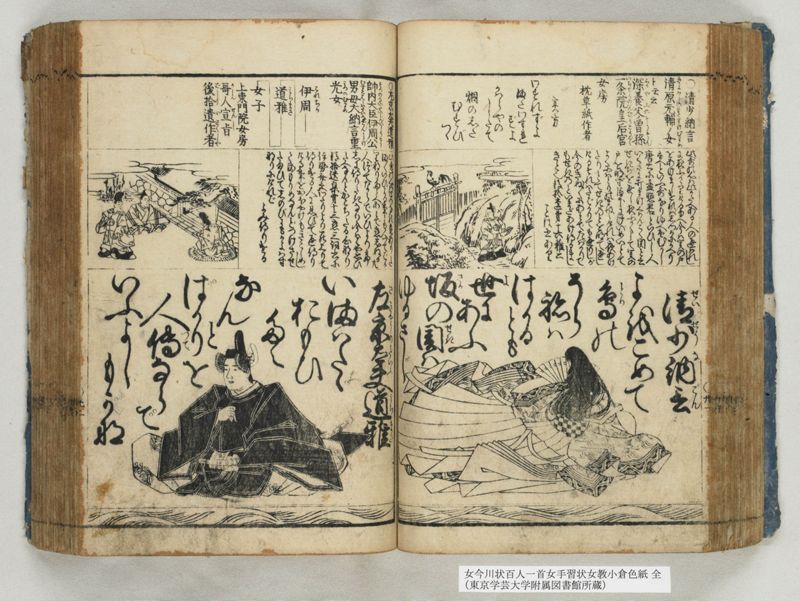
翻刻
【右丁 上段】
○清少納言
清原元輔(きよわらのもとすけ)ノ女(むすめ)
ト云云
深養父(ふかやぶ)ノ(の)曽孫(そうそん)
一条院(いちでうのいん)皇后宮(くわうこうぐう)
女房
枕草紙作者
実方
わすれずよ
またわすれ
ずよ
かはらやの
したて
烟のした
むすび
つゝ【注】
【同 中段】
此哥の心は此かたへある人の通はれし
に夜ふかりけるゆへ今は関の戸
をあけましければしつかにかへり
給へといふ哥なりゆへはむかし
唐土に孟照君といひし人
いくさに打まけくわんこく関と云
せきぢを通し夜ふかくして関の
戸を明ず臣下にけいめいとて
よくにはとりのまねしけれは夜あけ
たりとてせきのとを明て通し
けるそれはたばかりても通りしが
今のきぬ〳〵にあとでたばかりて
もせきのといまだあけ侍るまし
きと也後拾遺第十六雑二
ことは書あり
【同 下段】
清少納言(せいせうなごん)
よをこめて
鳥(とり)の
そら
ねは
はかる
とも
世(よ)に
あふ
坂(さか)の関(せき)は
ゆるさじ
【左丁 上段】
○左京大夫道雅
帥内大臣(そつのないたいじん)伊周公(いしうこう)
男(むすこ)母(はゝは)大納言(たいなごん)重(しげ)
光(みつの)女(むすめ)
伊周(これちか)
道雅(みちまさ)
女子
上東門院女房
哥人(かしん)宣旨(せんし)
後拾遺作者(ごしういさくしや)
【同 中段】
此哥の心はせつなる恋なりた
ま〳〵いひよる事も人つてばか
りなりたとへあえで恋しぬる共
人づてならでいひよりて
しに侍りたきなり今ははや思ひ
たへなんとかこちたる心なり
後拾遺集第十三恋三詞書に
伊勢斎宮わたりより罷上りて
侍りける人に忍びて通侍り
ける事をおほやけもきこしめし
てまもりめなんどつけさせ
たまひてしのびにもかよはす
なりにければ
よみ侍りける
【同 下段】
左京大夫(さきやうのだいふ)通雅(みちまさ)
いまはたゝ
おもひ
たえ
な
ん
と
ばかりを
人 伝(つて)なら
で
いふよし
もがな
【注 正しくは下の句が「かはらやのしたたく烟したむせびつゝ」】迪
現代語訳
【右丁 上段】
○清少納言
清原元輔の娘と言われている。
深養父の曽孫。
一条天皇の皇后宮の女房。
『枕草子』の作者。
実方
忘れずよ
また忘れ
ずよ
河原屋の
下焚く
煙の下
蒸せび
つつ
【同 中段】
この歌の意味は、この方のもとにある人が通っていたが、夜が更けてしまったので、今はもう関所の門を開けてしまっただろうから、静かにお帰りくださいという歌である。その故事は、昔中国に孟嘗君という人がいて、戦に負けて函谷関という関所を通る時、夜が更けて関の門が開かない。家臣に鶏鳴という、よく鶏の鳴き真似をする者がいたので、夜が明けたと思って関所の門を開けて通してくれた。それは偽りでも通ったが、今の「きぬぎぬ」の後では、偽りでも関所の門はまだ開けてくれないだろうということである。後拾遺集第十六巻雑二にこのことが詳しく書いてある。
【同 下段】
清少納言
夜を籠めて
鳥の
空
音は
謀る
とも
世に
逢坂の関は
許さじ
【左丁 上段】
○左京大夫道雅
帥内大臣伊周公の息子。母は大納言重光の娘。
伊周
道雅
女子
上東門院の女房
歌人として宣旨を受けた
後拾遺集の撰者
【同 中段】
この歌の意味は、切ない恋である。たまたま言い寄ることも人伝てばかりである。たとえ会えずに恋い死ぬとも、人伝てでなく直接言い寄って死にたいものだ。今はもう思い絶えてしまおうと嘆いている心である。後拾遺集第十三巻恋三の詞書に「伊勢斎宮のあたりから帰京していた人に密かに通っていたことを帝もお聞きになって、見張りなどをつけさせられて、密かにも通えなくなったので」詠んだとある。
【同 下段】
左京大夫道雅
今はただ
思い
絶え
な
ん
と
ばかりを
人伝てなら
で
言うよし
もがな
【注 正しくは下の句が「河原屋の下焚く煙下蒸せびつつ」】
英語訳
【Right Page - Upper Section】
○Sei Shōnagon
Said to be the daughter of Kiyowara no Motosuke.
Great-granddaughter of Fukayabu.
Lady-in-waiting to Empress Consort of Emperor Ichijō.
Author of "The Pillow Book."
Sanekata
Do not forget
do not forget
again
the smoke rising
from the fires
beneath Kawaraya
choking
us
【Same Page - Middle Section】
The meaning of this poem: Someone had been visiting this lady, but since the night had grown late, now the barrier gates would have opened, so please return quietly. The allusion comes from ancient China, where there was a man called Lord Mengchang who, having lost in battle, tried to pass through Hangu Pass late at night when the barrier gates would not open. Among his retainers was one called Keimei who could skillfully imitate a rooster's crow, so thinking dawn had come, they opened the barrier gates and let him pass. Though he passed through deception then, now after "kinuginu" (the morning after), even through deception the barrier gates would not yet be opened. This story is written in detail in Goshūishū, Volume 16, Miscellaneous 2.
【Same Page - Lower Section】
Sei Shōnagon
Though you confine
the night and
deceive with
a bird's
false
cry,
the barrier at
Ōsaka in this world
will not permit it
【Left Page - Upper Section】
○Sakyō no Daibu Michimasa
Son of Sochi Naidaijin Lord Korechika. His mother was the daughter of Dainagon Shigemitsu.
Korechika
Michimasa
A daughter
Lady-in-waiting to Jōtōmon-in
Received imperial decree as court poet
Compiler of Goshūishū
【Same Page - Middle Section】
The meaning of this poem: This is passionate love. Even occasional approaches are only through intermediaries. Even if I were to die of love without meeting her, I would want to approach her directly, not through others, and die. Now I lament that I should just give up these feelings entirely. In the headnote to Goshūishū Volume 13, Love 3, it says he composed this when "he had been secretly visiting someone who had returned from the vicinity of Ise Shrine, but when the Emperor heard of this and assigned guards and such, making it impossible to visit even in secret."
【Same Page - Lower Section】
Sakyō no Daibu Michimasa
Now I wish
there were some way
to say
"I will simply
abandon
these
feelings"
not through
an intermediary
【Note: The correct lower verse should be "smoke from fires beneath Kawaraya, choking below"】