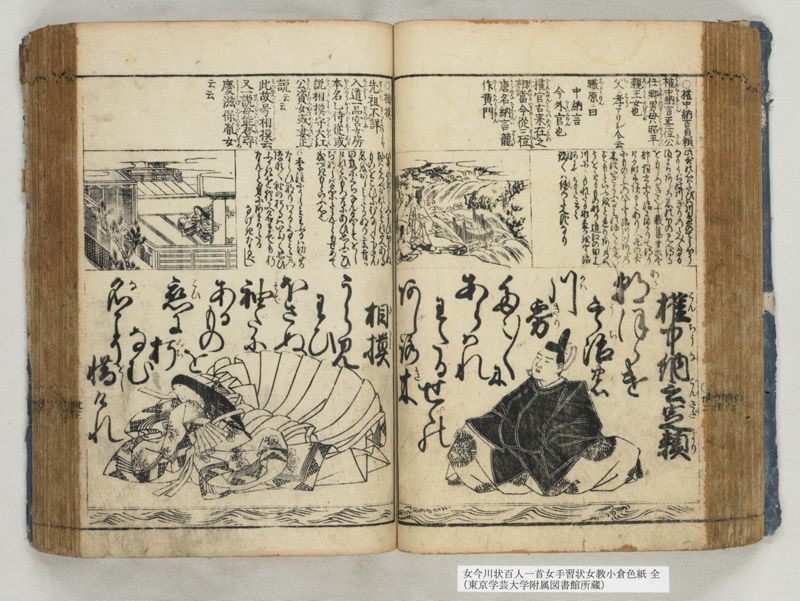
翻刻
【右丁 上段】
○権中納言貞【定の誤ヵ】頼
権中納言(ごんちうなこん)正二位 公(きん)
任卿(たうきやうの)男(むすこ)母(はゝ)ハ昭平(せうへい)
親王(しんわうの)女(むすめ)也
父(ちゝ)ニ孝(こう)アリシ人ト云
職原(しよくけん)ニ曰
中納言
今 外官(くわいくわん)也
権官(ごんくわん)古来(こらい)在(あり)_レ之(これ)
相(あい)_二当(あたる)今(いまの)従三位(しうさんみに)【一点脱】
唐名(からのな)納言(なごんは)竜(りう)
作(さく)黄門(くわうもん)
【同 中段】
此哥の心はたびは川辺のてうほう
なりうぢの川ぎりのたへ〳〵なる
まよりあじろ木のほの見へ侍る
をもしろき也千載集第六冬
部詞書に宇治にまかりて侍り
ける時に読るとあり人丸の哥
にものゝふの八十宇治川のあじろ
木にいざよふなみのゆくえしら
ずもといふをとれりあじろは
うをゝとるものなり近江の田上
川に□【「て」ヵ】もれたる氷魚を宇治
河にてとると云々
絶(たへ)〳〵は絶(たへ)つたへずなり
【同 下段】
権中納言定頼(ごんちうなごんさだより)
朝(あさ)ぼらけ
宇治(うぢ)の
川(かは)
霧(きり)
たえ〴〵に
あらはれ
わたるせゞの
あじろ木(き)
【左丁 上段】
○相模
先祖(せんぞ)不(ず)_レ詳(つまびらかなら)
入道(にふだう)一 品宮(ほんのみや)女房
本名(ほんめう)乙侍従(おとのじしう)或(ある)
説(せつに)相模守(さがみのかみ)大江(おほえ)
公資(きんすけの)女(むすめ)或(あるひは)妻(つま)正
説云云
此故(このゆへに)号(ごうすと)【二点脱】相模(さがみと)_一云
又一 説(せつに)母(はゝは)能登守(のとのかみ)
慶滋保胤(よししげやすのりが)女(むすめ)
云云
【同 中段】
此哥の心はうらみわびほさぬ
袖はくつべけれどそれさへある
ものをこひにむなしく下さん
名をおしみたるなり玄旨か
曰恋にくちなん名こそをし
けれとはもろ共にあひ思ふこひ
ぢならば名にたゝんこともせめて
成べきもといふ心也
○季注にうらみわぶるは切なる
ならひなりわかるゝなみだの
隙なく袖の朽るはいよ〳〵思ひ
ふかきを猶又名までも朽
なんこと身にあまりたる
なげきなるべし
【同 下段】
相模(さがみ)
うらみ
わび
ほさぬ
袖(そで)だに
ある
もの
を
恋(こひ)に
朽(くち)
なむ
名(な)こそ
惜(をし)けれ
現代語訳
【右丁 上段】
○権中納言定頼
権中納言、正二位公任卿の息子。母は昭平親王の娘である。
父に孝行であった人と言われている。
職原抄によれば、
中納言は
現在は外官である。
権官は古来からこれがある。
今の従三位に相当する。
唐名で納言は竜作、黄門という。
【同 中段】
この歌の意味は、旅は川辺の眺望である。宇治の川霧が絶え絶えになる間から、網代木がほのかに見えるのが趣深いのである。千載集第六巻冬部の詞書に「宇治に参った時に詠んだ」とある。人麻呂の歌に「もののふの八十宇治川の網代木にいざよふ波の行方知らずも」というのを取ったものである。網代は魚を捕るものである。近江の田上川で漏れた氷魚を宇治川で捕ると言われている。
「絶え絶え」は絶えて続かない、途切れ途切れの意味である。
【同 下段】
権中納言定頼
明け方に
宇治の
川
霧が
絶え絶えに
現れて
渡る瀬々の
網代木
【左丁 上段】
○相模
先祖は詳らかでない。
入道一品宮の女房。
本名は乙侍従。ある説では相模守大江公資の娘、あるいは妻が正説と言われている。
この故に相模と号すると言う。
また一説には、母は能登守慶滋保胤の娘と言われている。
【同 中段】
この歌の意味は、恨み嘆いて乾かない袖は朽ちるべきであろうが、それさえあるものを、恋によって虚しく朽ちる名を惜しんだのである。玄旨が言うには「恋に朽ちなん名こそ惜しけれとは、共に愛し合う恋路ならば名に立つこともせめて成るべきものを」という意味である。
○季注に「恨み侘びるは切ない習いである。別れる涙の絶え間なく袖が朽ちるのはますます思いが深いことを表し、なお名までも朽ちることは身に余るほどの嘆きであろう」とある。
【同 下段】
相模
恨み
侘びて
乾かぬ
袖だに
ある
ものを
恋に
朽ち
なむ
名こそ
惜しけれ
英語訳
【Right Page - Upper Section】
○Gon Chūnagon Sadayori
Gon Chūnagon (Provisional Middle Counselor), son of Shōnii Kintō-kyō. His mother was the daughter of Prince Shōhei.
He was said to be a person who showed filial piety to his father.
According to the Shokugenshō:
The Chūnagon (Middle Counselor) is
currently an outer court official.
The provisional position has existed since ancient times.
It corresponds to the present Jushōanmi (Junior Third Rank).
In Chinese nomenclature, nagon is called ryūsaku or kōmon.
【Same Page - Middle Section】
The meaning of this poem: Travel provides riverside vistas. It is aesthetically pleasing how the ajiro-wood (fish-trap stakes) appear faintly through the intermittent mist of the Uji River. In the headnote to Senzaishū Volume 6, Winter section, it says "composed when visiting Uji." This draws from Hitomaro's poem: "At the ajiro-wood of the eighty Uji Rivers where warriors gather, the waves that hesitate know not where to go." Ajiro are devices for catching fish. It is said that ice fish that escape from the Tagami River in Ōmi are caught in the Uji River.
"Taetae" means intermittently, appearing and disappearing.
【Same Page - Lower Section】
Gon Chūnagon Sadayori
At daybreak
the mist of
the Uji
River
appears intermittently
revealing
the ajiro-wood
in the crossing shallows
【Left Page - Upper Section】
○Sagami
Her ancestry is not clear.
Lady-in-waiting to Nyūdō Ippomiya.
Her real name was Oto no Jijū. According to one theory, she was the daughter or wife of Sagami no Kami Ōe no Kinsuke, which is considered the correct explanation.
For this reason, she was called Sagami.
According to another theory, her mother was the daughter of Noto no Kami Yoshishige Yasunori.
【Same Page - Middle Section】
The meaning of this poem: Though sleeves that never dry from resentment and grief should decay, even they remain, yet I lament the name that will decay meaninglessly through love. Genshi commented: "The line 'how precious is the name that would decay from love' means that if it were a mutual love affair, at least there would be some merit in having one's name become known for it."
○In Kinote's commentary: "Lamenting in resentment is the painful way of things. That sleeves decay from incessant tears of parting shows ever-deepening feelings, and that even one's reputation should decay must be grief beyond what one can bear."
【Same Page - Lower Section】
Sagami
Though these sleeves
that never dry
from resentment
and grief
still
remain,
how precious is
the name
that would
decay
from love