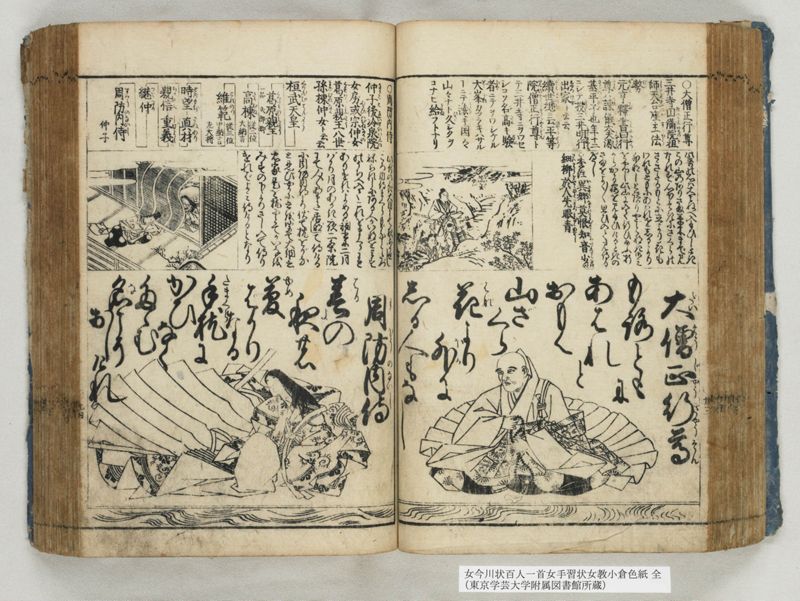
翻刻
【右丁 上段】
○大僧正行尊
三井寺 円満院(ゑんまんいんの)祖(そ)
師(し)天台座主(てんだいのざす)法(ほう)
務(む)
元享釈書(げんくわうしやくしよに)曰 行(きやう)
尊(そん)ハ諫儀(かんぎ)大夫 源(みなもとの)
基平(もとひらの)子(こ)也年十二
ニシテ投(たうして)_二 三井 明行(みやうきやう) ̄ニ_一
出家(しゆつけす)ト云云
続世継(ぞくよつき)ニ云 平等(ひやうとう)
院(いんの)僧正(そうじやう)行尊(ぎやうぞん)ト
テ三井寺ニヲワセ
シコソ名高(なたか)キ験(けん)
者(じや)ニテヲワシケル
大峯(をゝみね)カツラキハサル
コトニテ遠(とを)キ国々
山々ナト久(ひさ)シクヲ
コナヒ給(たま)フトナリ
【同 中段】
此哥の心は大みねへ入給ひしとき
この山のありさま草木まで見
なれず心ほそきにさくらの
さきたるもとに立より花も
われもともにあはれをしるより
外なしと読りやごとなき御み
をやつし此山に入て行ひ給ふ折
からかゝる桜を見給ひけるときの
さまをよく〳〵思ひ入て見侍る
べし
○季注 異郷(いきやう)莫(なかれ)_レ恨(うらむること)知音(ちいん)少(すくなきことを)
細柳(さいりう)於(をいて)_レ 人(ひとに)先(まづ)眼(まなこ)青(あをし)
【同 下段】
大僧正(だいそうじやう)行尊(ぎやうそん)
もろとも
に
あはれ
と
おもえ
山ざ
くら
花(はな)より
外(ほか)に
しる人もなし
【左丁 上段】
○周防内侍
仲子(なかご)後冷泉院(これいせいいんの)
女房 或(あるひは)宗仲(むねなかの)女
葛原親王(くすはらしんわう)八世
孫(まご)棟仲(むねなか)女ト云云
桓武天皇(くわんむてんわう)
葛原親王(くつはらのしんわう)
《割書:一品 式部卿》
高棟(たかむね)《割書:従二位|大納言》
維範(これのり)《割書:従三位|中納言》
《割書:左大将》
時望(ときもち)ー真材(さねあり)
親信(ちかのぶ)ー重義(しげよし)
継仲(つぐなか)
周防内侍(すわうのないし)
《割書:仲子》
【同 中段】
此哥の心は大内にて夜ふかせし
ころ内侍まくらもがなとたづ
ねられしにある人かいなをみす
のうちへ入てこれをまくらにと
ありけれはよめる詞書に二月
ばかり月のあかき夜二条院
にて人〳〵あまた居なして侍ける
に周防内侍より伏て枕をがな
と忍びやかに云を聞て大納言
忠家是を枕にとてかいなを
みすの下よりさし入て侍り
ければよみ侍けるとなり
【同 下段】
周防内侍(すほうのないし)
春(はる)の
夜(よ)の
夢(ゆめ)
ばかり
なる
手枕(たまくら)に
かひ
なく
たゝむ
名(な)こそ
おしけれ
現代語訳
【右丁 上段】
○大僧正行尊
三井寺円満院の祖師、天台座主法務。
『元亨釈書』によれば、行尊は諫議大夫源基平の子である。十二歳で三井寺の明行に投じて出家したという。
『続世継』には「平等院の僧正行尊といって三井寺におられたのは名高い験者でいらっしゃった。大峯、葛城はもちろんのこと、遠い国々の山々などで長く修行なさった」とある。
【同 中段】
この歌の意味は、大峯に入山なさった時のことである。この山の様子は草木まで見慣れず心細いが、桜の咲いている木の下に立ち寄り、花も我も共に哀れを知る他はないと詠んだのである。身分の高いお身を粗末な姿に変え、この山に入って修行なさった時、このような桜をご覧になった時の様子をよくよく思い入って理解すべきである。
○季注:異郷にあって知音が少ないことを恨むことなかれ。細柳は人に先んじて青々としている。
【同 下段】
大僧正行尊
もろともに
哀れと
思え
山桜
花より
外に
知る人もなし
【左丁 上段】
○周防内侍
仲子、後冷泉院の女房。あるいは宗仲の女。葛原親王の八世の孫、棟仲の女という。
桓武天皇
葛原親王(一品 式部卿)
高棟(従二位 大納言)
維範(従三位 中納言 左大将)
時望―真材
親信―重義
継仲
周防内侍(仲子)
【同 中段】
この歌の意味は、宮中で夜を更かした頃、内侍が「枕が欲しい」と尋ねられたところ、ある人が腕を御簾の中に入れて「これを枕に」としたので詠んだものである。詞書には「二月頃、月の明るい夜に二条院で人々が大勢座っていたところ、周防内侍がうつ伏せになって『枕が欲しい』と忍びやかに言うのを聞いて、大納言忠家が『これを枕に』と言って腕を御簾の下から差し入れたので詠んだ」とある。
【同 下段】
周防内侍
春の
夜の
夢
ばかり
なる
手枕に
甲斐
なく
立たん
名こそ
惜しけれ
英語訳
【Right Page - Upper Section】
○Daisōjō Gyōson
Founding master of Ennman-in at Miidera, Tendai-no-zasu Hōmu.
According to the Genkō Shakusho, Gyōson was the son of Kangi-dayū Minamoto no Motohira. At age twelve, he entered Miidera under Myōkyō and became a monk.
The Zoku Yotsugi states: "The Sōjō Gyōson of Byōdō-in, who resided at Miidera, was a renowned ascetic practitioner. He practiced for long periods not only at Ōmine and Katsuragi, but also in mountains of distant provinces."
【Same Page - Middle Section】
The meaning of this poem: When he entered Mount Ōmine for religious training, the appearance of this mountain was unfamiliar down to the very plants and trees, making him feel lonely. Standing beneath blooming cherry trees, he composed this poem saying that both the flowers and he himself could only share their pathos together, with no one else to understand. One should deeply contemplate the scene when this person of noble birth, having changed into humble attire, entered this mountain for ascetic practice and beheld such cherry blossoms.
○Seasonal commentary: Do not resent being in a foreign land with few kindred spirits. The slender willow turns green before all others.
【Same Page - Lower Section】
Daisōjō Gyōson
Together
let us feel
the pathos,
mountain cherry—
other than your blossoms
there is no one who understands
【Left Page - Upper Section】
○Suhō no Naishi
Nakako, lady-in-waiting to Emperor Goreizei. Alternatively, daughter of Munenaka. Said to be the great-great-great-great-great-great-granddaughter of Prince Kuzuhara, daughter of Munenaka.
Emperor Kammu
Prince Kuzuhara (First Rank, Shikibu-kyō)
Takamune (Junior Second Rank, Dainagon)
Korenori (Junior Third Rank, Chūnagon, Sadaishō)
Tokimochi—Saneari
Chikanobu—Shigeyoshi
Tsunenaka
Suhō no Naishi (Nakako)
【Same Page - Middle Section】
The meaning of this poem: Late one night at court, when the naishi was asked if she wanted a pillow, someone put his arm inside the curtain saying "use this as a pillow," so she composed this poem. The headnote states: "Around the second month, on a bright moonlit night at Nijō-in, when many people were sitting together, Suhō no Naishi lay down and quietly said 'I wish I had a pillow.' Hearing this, Dainagon Tadaie said 'use this as a pillow' and extended his arm from beneath the curtain, so she composed this poem."
【Same Page - Lower Section】
Suhō no Naishi
How precious is
the reputation
that will uselessly
arise from this
arm-pillow
that lasts only
as long as
a spring
night's
dream