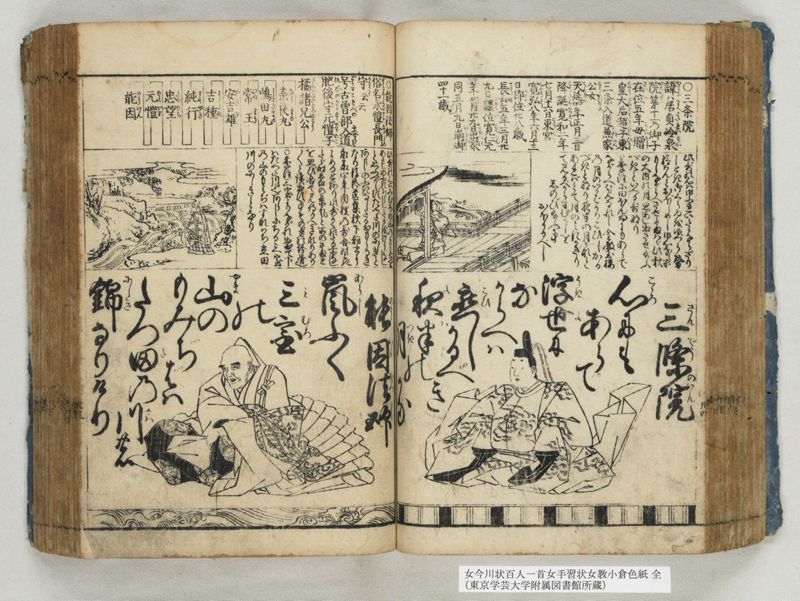
翻刻
【右丁 上段】
○三条院
諱(いみな)は居貞(すへさた)冷泉(れいせい)
院(いん)第十一の御子
在位(ざいゐ)五年 母(はゝは)贈(そう)
皇太后(くわうだいこう)超子(てうし)東(ひかし)
三条入道 兼家(かねいへ)
公(こうの)女(むすめ)
天延(てんゑん)四年正月三日
降誕(こうたん)寛和(くわんわ)二年
七月十六日 東宮(とうぐう)
寛弘(くわんこう)八年六月十三
日 即位(そくい)廿八歳
長和(てうわ)五年三月廿
九日 譲位(じやうい)寛仁(くわんにん)元
年四月廿九日 出家(しゆつけ)
同五月九日 崩御(ほうぎよ)
四十一 歳(さい)
【同 中段】
此哥の心は御ふれいたもならざり
しとき御くらゐをゆづらせ
給はんとおぼしめし御心ならず
もしながらへさせたまはゞ此秋
の大内の月思めし出させ給ふ
べきといへる哥なり
○季注に曰ほんゐにもあらで
ながらへは見なれし金殿玉楼
の月のいかばかりこひしかる
べきとなり夜半の月のみにかぎり
て見るべからすむかしを
しのび給ふ事
おほかるべし
【同 下段】
三条院(さんでうのいん)
心(こゝろ)にも
あらで
浮世(うきよ)に
な
からへは
恋(こひ)し
かるべ
き
夜半(よは)の
月(つき)かな
【左丁 上段】
○能因法師
俗名(ぞくみやう)永愷(ながやす)長門(ながとの)
守(かみと)云云
号(ごうす)_二古曽部入道(こそべのにふどうと)_一
肥後守(ひごのかみ)元愷(もとやすの)子(こ)
橘諸兄公(たちばなのもろゑこう)
奈良丸(ならまる)
島田丸(しまだまる)
常王(つねわう)
安吉雄(あきを)
吉種(よしたね)
純行(すみゆき)
忠望(たゞもち)
元愷(もとやす)
能因(のういん)
【同 中段】
此哥の心はみむろの山のもみぢを
あらしのふきちらしたるをけうなし
と思ふべからずたつた川のにしきと
あらしのふきなしたるおもしろき
なり後拾遺集秋下詞書に
永承四年内裡の哥合のとき
よめるとあり此哥かくれたる所なし
たゞ時節の景気と所のさまと
を思び【ママ】合て見侍るへきなりあり
〳〵と読出す事その身の粉骨也
○季注三室よりながれ出至て下
はたつた川也あらしにちる三室
の山のもみぢはすなはち立田
川のにしきとなり
【同 下段】
能因法師(のういんほつし)
嵐(あらし)ふく
三室(みむろ)
の
山(やま)の
もみぢ
ばは
たつ田(た)の
川(かは)の
錦(にしき)なりけり
現代語訳
【右丁 上段】
○三条院
諱は居貞、冷泉院の第十一皇子。
在位五年。母は贈皇太后超子、東三条入道兼家公の娘。
天延四年正月三日降誕、寛和二年七月十六日東宮、寛弘八年六月十三日即位(二十八歳)、長和五年三月二十九日譲位、寛仁元年四月二十九日出家、同五月九日崩御(四十一歳)。
【同 中段】
この歌の意味は、ご病気が治らなかった時、御位をお譲りになろうとお思いになり、お心ならずも、もし長生きなさったならば、この秋の宮中の月を思い出しなさることであろうという歌である。
○季注によれば、本意でもなく長生きしたならば、見慣れた宮殿の月がどれほど恋しいことであろうということである。夜半の月だけに限って見るべきではなく、昔をお偲びになることは多いであろう。
【同 下段】
三条院
心にも
あらで
憂き世に
ながらえば
恋しかるべき
夜半の月かな
【左丁 上段】
○能因法師
俗名は永愷、長門守という。
古曽部入道と号す。肥後守元愷の子。
橘諸兄公
奈良丸
島田丸
常王
安吉雄
吉種
純行
忠望
元愷
能因
【同 中段】
この歌の意味は、三室の山の紅葉を嵐が吹き散らしたのを興ざめと思ってはいけない。竜田川の錦として、嵐が吹き流した美しさなのである。『後拾遺集』秋下の詞書に「永承四年内裏の歌合の時に詠んだ」とある。この歌に隠れた所はない。ただ時節の風情と場所の様子とを思い合わせて見るべきである。ありありと読み出すことは、その身の粉骨である。
○季注:三室より流れ出て下は竜田川である。嵐に散る三室の山の紅葉は、すなわち竜田川の錦となる。
【同 下段】
能因法師
嵐吹く
三室の山の
もみじ葉は
竜田の川の
錦なりけり
英語訳
【Right Page - Upper Section】
○Emperor Sanjō
His personal name was Sueshizata, the eleventh son of Emperor Reizei.
Reigned for five years. His mother was the posthumously honored Empress Dowager Chōshi, daughter of Higashisanjō-nyūdō Kaneie.
Born on the third day of the first month of Ten'en 4, appointed Crown Prince on the sixteenth day of the seventh month of Kanna 2, ascended the throne on the thirteenth day of the sixth month of Kankō 8 (age 28), abdicated on the twenty-ninth day of the third month of Chōwa 5, became a monk on the twenty-ninth day of the fourth month of Kannin 1, died on the ninth day of the fifth month of the same year (age 41).
【Same Page - Middle Section】
The meaning of this poem: When his illness would not heal, he thought of abdicating the throne, and though it was not his heart's desire, if he were to live longer, he would surely long for the moon over the imperial palace in autumn.
○The seasonal commentary states: If one were to live long against one's true wishes, how dearly one would miss the moon over the familiar golden halls and jeweled towers. One should not limit oneself to viewing only the midnight moon—there would be many occasions for reminiscing about the past.
【Same Page - Lower Section】
Emperor Sanjō
Against my heart's
desire, should I
linger on
in this
sorrowful world,
how dear would be
the midnight moon
【Left Page - Upper Section】
○The Monk Nōin
His secular name was Nagayasu, called Governor of Nagato.
He took the religious name Kosobe-nyūdō. Son of Higo-no-kami Motoyasu.
Tachibana no Moroe
Naramaru
Shimadamaru
Tsuneō
Akio
Yoshitane
Sumiyuki
Tadamochi
Motoyasu
Nōin
【Same Page - Middle Section】
The meaning of this poem: One should not think it disappointing when the storm scatters the autumn leaves of Mount Mimuro. The beauty lies in how the storm transforms them into the brocade of the Tatsuta River. The headnote in the Goshūi-shū autumn section states it was "composed at a poetry contest at the imperial palace in Eishō 4." This poem has no hidden meanings. One should simply contemplate it by considering the seasonal atmosphere and the nature of the place. To vividly bring forth the scene requires one's utmost effort.
○Seasonal commentary: The water flows from Mimuro, and below it becomes the Tatsuta River. The autumn leaves of Mount Mimuro scattered by the storm become the brocade of the Tatsuta River.
【Same Page - Lower Section】
The Monk Nōin
The storm-blown
autumn leaves
of Mount Mimuro
have become
the brocade
of Tatsuta River