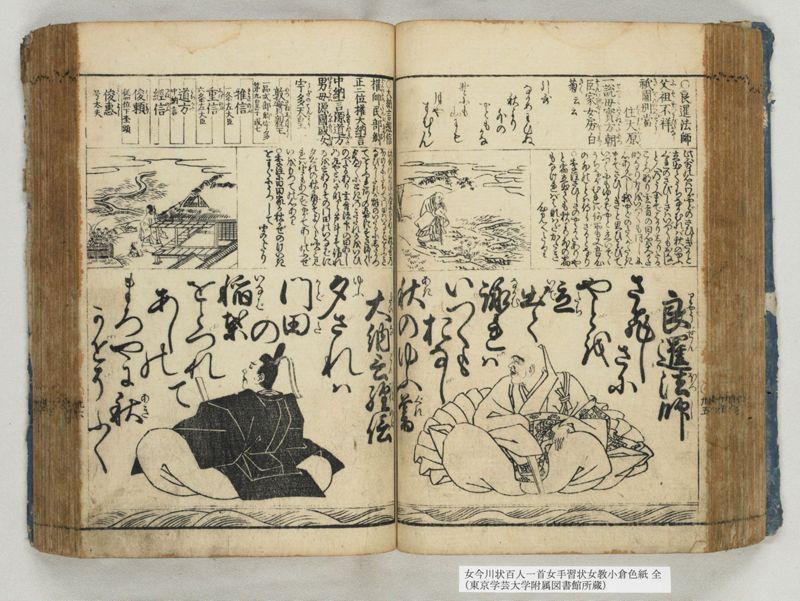
翻刻
【右丁 上段】
○良暹法師
父祖(ふそ)不(ず)_レ詳(つまびらかなら)
祇園(きをんの)別当(へつとう)
住(じうす)_二大原(おゝはら) ̄ニ_一
一 説(せつに)母(はゝは)実方(さねかた)朝(あつ)
臣(そん)家(いへの)女房(にようほう)白(しら)
菊(きく)云云
引哥
なかめわひぬ
秋より
外の
やとも
かな
野にも
山にも
月や
すむらん
【同 中段】
此哥の心はわがやどのさひしきかと
立出てうちなかむれば秋のゆふ
ぐれのさびしさはいづくもおなし
と人のうへまではかりしりたる
こゝろなり玄旨の曰心は大かた
明なりなをいづくも同しに
心あるべし我やどのたへがたき
までさひしきと思ひわびて
いづくにもゆかずやと立いでゝ
うちながむれば何所も又吾心
の外のことは侍らざるとなり
○季注さひしさのやるかたありや
と宿立出ても秋より外の宿
もなければはなはだかたき
心見へたり
【同 下段】
良暹法師(りやうぜんほつし)
さびしさに
やどを
立(たち)
出(いで)て
詠(ながむ)れば
いづくも
おなじ
秋(あき)のゆふ暮(ぐれ)
【左丁 上段】
○大納言経信
権帥(ごんのそつ)民部卿(みんぶきやう)
正二位権大納言
中納言 源道方(みなもとのみちかた)
男(むすこ)母(はゝは)源 国盛(くにもり)女(むすめ)
宇多天皇(うだのてんわう)
敦実親王(あつさねしんわう)
《割書:一品式部卿宇多|第九皇子或七》
雅信(まさのぶ)
《割書:一条左大臣》
重信(しげのぶ)
《割書:六条左大臣》
道方(みちかた)
《割書:中納言》
経信(つねのぶ)
俊頼(としより)
《割書:従四位下杢頭》
俊恵(としよし)
《割書:号太夫》
【同 中段】
此哥の心はゆふべになれば秋かぜの
ほのかにたちて門田はいなばをふき
なびかしたれか秋のいたるにしたがつ
てをとつれあしの丸やにすさまじく
夕へ〳〵にときのきたれるをいひ
のべたるなり其旨法印の曰あし
の丸やとはさながら蘆【芦は略字】計にて作れ
るを云なりその門田のいなばに
夕ぐれの秋かせそよ〳〵と吹と見
れば聞もあへずやがてあしのふぜ
いをもつての心あり
○季注に曰田家か秋かぜのけいき
をすぐにうつして
聞えたり
【同 下段】
大納言(だいなごん)経信(つねのぶ)
夕(ゆふ)されは
門田(かどた)
の
稲葉(いなば)
をとづれ
て
あしの
まろやに秋(あき)
かぜぞふく
現代語訳
【右丁 上段】
○良暹法師
父祖は詳らかではない。
祇園の別当、大原に住む。
一説によれば、母は実方朝臣家の女房白菊という。
引歌
眺めわびぬ
秋より
外の
宿も
かな
野にも
山にも
月や
住むらん
【同 中段】
この歌の意味は、我が宿の寂しさかと立ち出でて眺めれば、秋の夕暮れの寂しさはどこも同じだと、人の上まで推し量り知った心である。玄旨によれば、心は大体明らかで、なおどこも同じに心あるべしとのこと。我が宿の耐え難いまでの寂しさを思い悩んで、どこにも行かずやと立ち出でて眺めれば、何処もまた我が心の外のことではないということである。
○季注:寂しさの晴らし方があろうかと宿を立ち出でても、秋より外の宿もなければ、甚だ辛い心が見えた。
【同 下段】
良暹法師
寂しさに
宿を立ち出でて
眺むれば
いづくも同じ
秋の夕暮れ
【左丁 上段】
○大納言経信
権帥、民部卿、正二位権大納言。
中納言源道方の男子。母は源国盛の娘。
宇多天皇
敦実親王(一品式部卿宇多第九皇子或いは七)
雅信(一条左大臣)
重信(六条左大臣)
道方(中納言)
経信
俊頼(従四位下杢頭)
俊恵(号太夫)
【同 中段】
この歌の意味は、夕べになれば秋風がほのかに立って、門田は稲葉を吹きなびかせ、それが秋の到来に従って音連れ、葦の丸屋に涼しく夕べごとに時が来たことを言い述べたものである。その旨法印によれば、葦の丸屋とはそのまま蘆だけで作ったものを言う。その門田の稲葉に夕暮れの秋風がそよそよと吹くと見れば、聞くまでもなく、やがて葦の風情をもっての心がある。
○季注によれば、田家が秋風の景気を直接に写して聞こえている。
【同 下段】
大納言経信
夕されば
門田の稲葉
音づれて
葦の丸屋に
秋風ぞ吹く
英語訳
【Right Page - Upper Section】
○The Monk Ryōzen
His ancestry is unclear.
Head priest of Gion Temple, resided in Ōhara.
According to one theory, his mother was Shiragiku, a court lady in the household of Courtier Sanekata.
Reference poem:
Gazing wearily
beyond autumn
to other
dwellings
indeed
In fields and
mountains too
does the moon
dwell?
【Same Page - Middle Section】
The meaning of this poem: Wondering if it's the loneliness of my own dwelling, I step outside to gaze, and realize that the loneliness of autumn evening is the same everywhere - a heart that has come to understand even others' circumstances. According to Genshi, the meaning is generally clear, and one should have the same feelings everywhere. Troubled by the unbearable loneliness of my dwelling, wondering if I should go anywhere, I step outside and gaze, only to find that nowhere is beyond what my own heart feels.
○Seasonal commentary: Stepping outside my dwelling to find some relief from loneliness, but since there are no dwellings other than autumn ones, the heart's distress is evident.
【Same Page - Lower Section】
The Monk Ryōzen
In loneliness
I step outside
my dwelling to gaze—
everywhere the same:
autumn evening
【Left Page - Upper Section】
○Major Counselor Tsunenobu
Provincial Governor, Minister of Popular Affairs, Senior Second Rank Provisional Major Counselor.
Son of Middle Counselor Minamoto no Michimasa. His mother was the daughter of Minamoto no Kunimori.
Emperor Uda
Prince Atsusane (First Rank Minister of Ceremonial, Uda's ninth or seventh son)
Masanobu (Left Minister Ichijō)
Shigenobu (Left Minister Rokujō)
Michimasa (Middle Counselor)
Tsunenobu
Toshiyori (Junior Fourth Rank Lower, Head of Palace Repairs)
Toshie (called Tayū)
【Same Page - Middle Section】
The meaning of this poem: When evening comes, the autumn wind rises faintly, making the rice plants in the gate field sway, and following autumn's arrival, they rustle with sound, coolly announcing each evening's arrival to the reed hut. According to the priest's interpretation, a reed hut refers to one made entirely of reeds. When one sees the autumn evening wind blowing gently through the rice plants in the gate field, without even listening, one immediately feels the atmosphere of the reeds.
○The seasonal commentary states: The farming household directly captures and conveys the mood of the autumn wind.
【Same Page - Lower Section】
Major Counselor Tsunenobu
When evening comes
the rice plants
in the gate field
rustle with sound,
and autumn wind blows
through the reed hut