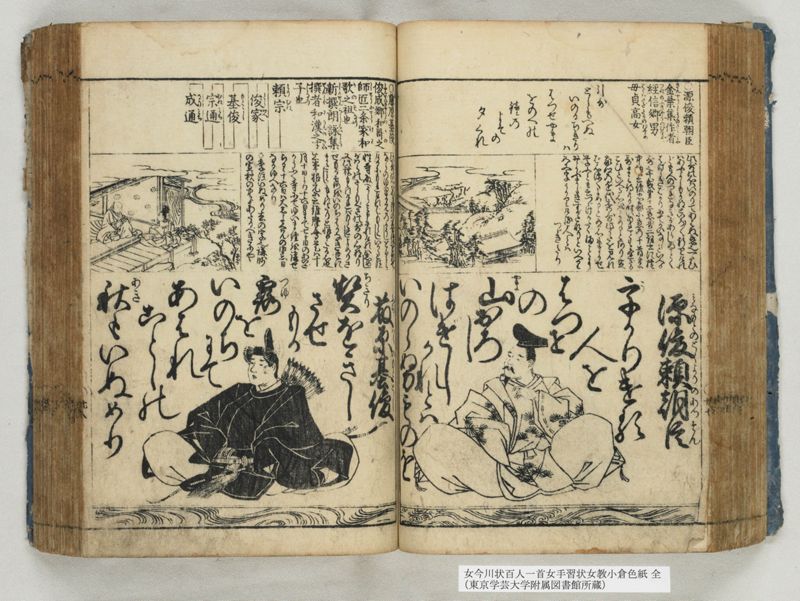
翻刻
【右丁 上段】
○源俊頼朝臣
金葉集(きんやうしうの)作者(さくしや)
経信卿(つねのぶきやうの)男(むすこ)
母(はゝは)貞高(さだたかの)女(むすめ)
引哥
としもへぬ
いのるちきり
は
はつせやま
をのへの
鐘の
よそ
の
夕くれ
【同 中段】
此哥の心はいのりてあはぬ恋也一たひ
はあふよしもかなといろ〳〵祈りけれ
ども人のつれなきがあらしのことく
はげしきばかりにてかいなしといへる
哥也千載第十二恋哥二詞書に権
中納言俊忠家に恋の十首の
哥よみ侍ける時いのれとも逢ざる
こひといへる心をよめるとあり定
家卿のを代秀哥此うたを見れ
ば心深くよめると有心にまかせ
学ふとも云つゞけかたくまことに
およぶまじきすがたなりといへり
五文字うかりける人とは
つゞきたり
【同 下段】
源俊頼朝臣(みなもとのとしよりのあつそん)
宇(う)かりける
人を
はつせ
の
山(やま)おろ
し
はげし
かれとは
いのらぬものを
【左丁 上段】
○藤原基俊
俊成卿(しゆんぜいきやう)和哥之(わかの)
師匠(しせう)二条家(にてうけ)和(わ)
歌之(かの)祖也(そなり)
新撰朗詠集(しんせんらうえいしう)
撰者(せんしや)和漢之(わかんの)才(さい)
子也(しなり)
頼宗(よりむね)
俊家(としいへ)
基俊(もととし)
宗通(むねみち)
成通(なりみち)
【同 中段】
此哥の心はある僧の基俊を頼て
ならのゆいまえ【維摩会】のかうしを望み
けるにもれければもととしいかゝと法
性寺殿へうらみ申されけれはしめし
がはらのさしもぐさの哥の心なり
又此秋もゝれければもととしよめりさ
せもか露をいのちはかなき世に
またことしもゝれたりと恨申たる心也
公事根元に云維摩会是は十
月十日より十六日まで七ヶ日のあいだ
かうふく寺にてゆいま経を講せ
らるゝ十六日は大しよくかんの御忌日
なるゆへなり
○季注いぬめり去の字也講師
の宣秋の中よりあたるべきにや
【同 下段】
藤原基俊(ふじはらのもととし)
契(ちきり)をきし
させ
もが
露(つゆ)
を
いのち
にて
あはれ
ことしの
秋(あき)もいぬめり
現代語訳
【右丁 上段】
○源俊頼朝臣
『金葉集』の編纂者
経信卿の息子
母は貞高の娘
引用歌
年も経ぬ
祈る契りは
初瀬山
尾の上の
鐘の
よその
夕暮れ
【同 中段】
この歌の意味は、祈っても逢えない恋である。一度は逢う方法もあるだろうかと色々と祈ったけれども、人のつれなさが嵐のように激しいばかりで、甲斐がないと詠んだ歌である。『千載集』第十二恋歌二の詞書に「権中納言俊忠の家で恋の十首の歌を詠んだ時、祈っても逢えない恋という心を詠んだ」とある。定家卿の『詠歌秀逸』にこの歌を見れば心深く詠んだとあり、心に任せて学んでも続けがたく、まことに及びがたい姿であると言っている。五文字「憂かりける人とは」と続いている。
【同 下段】
源俊頼朝臣
憂かりける
人を
初瀬の
山颪し
激しかれとは
祈らぬものを
【左丁 上段】
○藤原基俊
俊成卿の和歌の師匠、二条家和歌の祖である
『新撰朗詠集』の撰者、和漢の才子である
頼宗
俊家
基俊
宗通
成通
【同 中段】
この歌の意味は、ある僧が基俊を頼って奈良の維摩会の講師を望んだが、選に漏れたので、基俊はどうしてかと法性寺殿に恨み申し上げたところ、嵯峨野の指燃草の歌の心である。また、この秋も漏れたので基俊が詠んだ。させもが露を命とする短い世に、またことしも漏れたと恨み申し上げた心である。『公事根源』に言う、維摩会とは十月十日から十六日まで七日間、興福寺で維摩経を講じること。十六日は大職冠(藤原鎌足)の御忌日であるからである。
○季注:「いぬめり」は過ぎ去るという字。講師の選考は秋の間に決まるべきなのか。
【同 下段】
藤原基俊
契りをきし
させもが露を
命にて
あはれ
ことしの秋も
いぬめり
英語訳
【Right Page - Upper Section】
○Minamoto no Toshiyori Ason
Compiler of the Kin'yō Collection
Son of Lord Tsunenobu
His mother was the daughter of Sadataka
Cited poem:
Years have passed—
the vows I pray for
at Hatsuse Mountain,
on the peak
the temple bell's
distant
evening twilight
【Same Page - Middle Section】
The meaning of this poem is about love unfulfilled despite prayers. Though I prayed in various ways, hoping there might be some way to meet once, the person's coldness was fierce as a storm, making it all in vain—this is what the poem expresses. In the headnote to the twelfth book of love poems in the Senzai Collection, it says: "When composing ten love poems at the house of Provisional Middle Counselor Tadatada, this expressed the heart of love that remains unfulfilled despite prayers." Lord Teika's Eiga Shūi notes that seeing this poem, it was composed with deep feeling, and even if one studies following one's heart, it's difficult to continue and truly an unattainable style. The five syllables continue with "that cruel person..."
【Same Page - Lower Section】
Minamoto no Toshiyori Ason
That cruel person—
I never prayed
that the harsh
mountain wind
of Hatsuse
would blow so fierce
【Left Page - Upper Section】
○Fujiwara no Mototoshi
Teacher of waka to Lord Shunzei, founder of Nijō house waka poetry
Compiler of the Shinsen Rōei Collection, a master of Japanese and Chinese literature
Yorimune
Toshiie
Mototoshi
Munemichi
Narimichi
【Same Page - Middle Section】
The meaning of this poem: A certain monk relied on Mototoshi, hoping to become a lecturer at the Yuima-e (Vimalakīrti Assembly) in Nara, but was not selected. When Mototoshi complained to the Lord of Hōshōji about why this happened, it carries the same sentiment as the poem about the burning grass of Sagano. Also, when he was passed over again this autumn, Mototoshi composed this. In a world where the dew on the sagebrush is life itself—so brief—lamenting that this year's autumn has also passed him by again. According to Kuji Kongen, the Yuima-e is held for seven days from the 10th to 16th of the tenth month at Kōfukuji, where the Vimalakīrti Sutra is lectured. The 16th is the memorial day of the Great Minister (Fujiwara no Kamatari).
○Seasonal note: "Inumeri" means "has passed." The selection of lecturers should be decided during autumn.
【Same Page - Lower Section】
Fujiwara no Mototoshi
The promised
sagebrush dew
as my very life—
alas, this year's
autumn too
has passed away