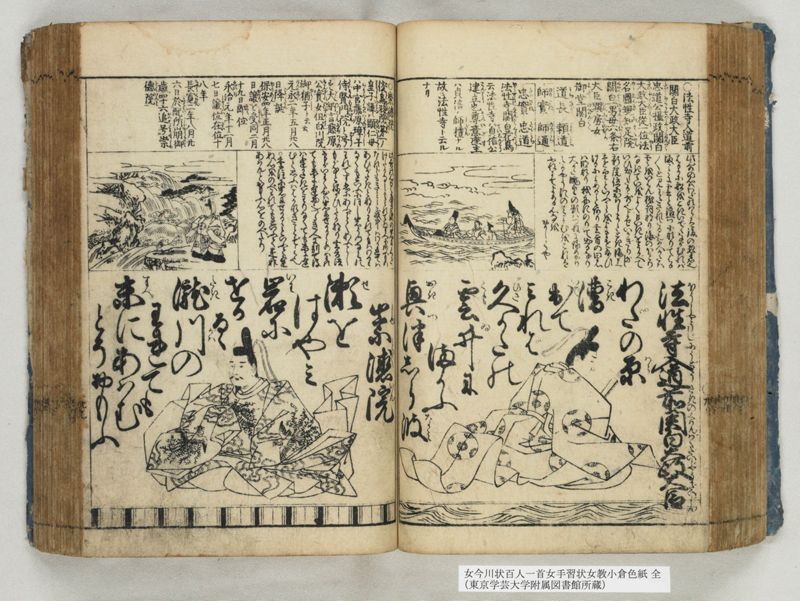
翻刻
【右丁 上段】
○法性寺入道前
関白大政大臣
忠道公(たゞみちこう)摂政関白(せつしやうくわんばく)
大政大臣(たいしやうたいじん)従(しう)一 位(ゐ)法(ほう)
名(めう)円規知足院(ゑんきちそくいん)
関白(くわんばくの)一 男(なん)母(はゝは)六条(ろくてう)右
大臣 顕房(あきふさの)女(むすめ)
御堂関白(みだうのくわんはく)
道長(みちなが)ー頼道(よりみち)
師実(のりさね)ー師通(のりみち)
忠実(たゞざね)ー忠道(たゞみち)
法性寺(ほうせうし)関白(くわんはく)白 花鳥(くわてう)
云法性寺ハ貞信公(ていしんこう)
建立(こんりう)也 尊意座主(そんいざす)
ハ貞信ノ師檀(しだん)ナル
故ニ法性寺ト云ル
ナリ
【同 中段】
此哥の心はわだのはらは海の惣名也
はるかに船をこきいでゝながむれば
まことに雲と浪一つになりてはる
〳〵と見わたされたる也久かたは
雲をいはん枕詞なり海のほとり
なきていをよくけいきをうかべて
いひ出したる哥也よせいかぎりなし
新院位におはしましゝとき海上
遠望といふことをよませ給ひ
けるによめるとあり玄旨の曰心
は明なり我舟にのりて出るなり
大かた眺望の題はつねに詠めやり
たるやうにのみよむをこれは
ふねにてよめる心なを
おかしくや
【同 下段】
法性寺入道(ほうしやうじにうどう)前関白大政大臣(さきのくわんばくだいじやうだいじん)
わだの原(はら)
漕(こぎ)
出(いで)て
みれば
久(ひさ)かたの
雲井(くもゐ)に
まがふ
奥津(おきつ)しら波(なみ)
【左丁 上段】
○崇徳院
後鳥羽院(ごとばのいん)第(だい)一ノ
皇子(わうし)諱(いみな)ハ顕仁(あきひと)母(はゝ)
ハ中宮(ちうぐう)藤原璋子(ふぢはらのせうし)
待賢門院(たいけんもんいん)と号(ごう)
す大納言(だいなこん)藤原(ふぢはらの)
公実(きんざねの)女(むすめ)但(たゝし)白川院
御 猶子(ゆうし)ト云云
元永(けんゑい)二年五月廿八
日 降誕(こうたん)
保安(ほうあん)四年正月廿八
日 譲(ゆつり)を受(うくる)同二月
十九日 即位(そくい)
永治(ゑいぢ)元年十二月
七日 譲位(しやうい)在位(ざいい)十
八年
長寛(ちやうくわん)二年八月廿
六日 於(をいて)_二配所(はいしよに)_一崩御(ほうきよ)
歳四十六 追(おつて)号(こうす)_二崇(しゆ)
徳院(とくいんと)_一
【同 中段】
此哥の心ははやき瀬の岩にくだ
けたるなみもわれてはすへにあふもの
なれどもきみと我中はわかれては
あひがたきとなりわれてもはわり
なくもといふに同し岩うつなみの
われてすゑにあふごとくあふよし
もがなとねがひたるなり玄旨法
印がいわく心は岩にせかるゝ水はわれ
ても末に逢物也つらき人に別て後
は逢かたきをわりなくても末に逢
むと思ふははかなきことぞと也
○季注に岩にせかるゝといふて逢
ぬ心をのべわれてもといふて是非
あはんとおもふ心をのべたり
【同 下段】
崇徳院(しゆとくいん)
瀬(せ)を
はやみ
岩(いわ)に
せか
るゝ
滝川(たきがは)の
われても
末(すへ)にあはむ
とそおもふ
現代語訳
【右丁 上段】
○法性寺入道前関白太政大臣
忠通公(ただみちこう)は摂政関白・太政大臣・従一位で、法名は円規、知足院と称した。
関白忠実の長男、母は六条右大臣顕房の娘。
御堂関白の系譜:
道長―頼通
師実―師通
忠実―忠通
法性寺関白は花鳥を愛した。法性寺は貞信公(藤原忠平)が建立したもので、尊意座主が貞信公の師檀であったため、法性寺と呼ばれるようになった。
【同 中段】
この歌の意味は、和田の原は海の総称である。はるかに船を漕ぎ出して眺めると、まことに雲と波が一つになって、はるばると見渡される様子を詠んだものである。「久方の」は雲にかかる枕詞である。海辺での情景をよく景色として浮かべて詠み出した歌である。余情が限りない。新院が帝位におられた時、「海上遠望」という題で詠ませになったものに詠んだとある。玄旨法印が言うには、心は明らかで、自分が船に乗って出ることを詠んだものである。だいたい眺望の題はいつも詠み流すようにばかり詠むものだが、これは船で詠んだ心がさらに趣深い。
【同 下段】
法性寺入道前関白太政大臣
和田の原
漕ぎ出でて見れば
久方の
雲居にまがう
沖つ白波
【左丁 上段】
○崇徳院
鳥羽院第一の皇子。諱は顕仁、母は中宮藤原璋子(待賢門院と号す)。大納言藤原公実の娘だが、白河院の御猶子とも言われる。
元永二年五月二十八日誕生
保安四年正月二十八日譲位を受け、同年二月十九日即位
永治元年十二月七日譲位、在位十八年
長寛二年八月二十六日、配所において崩御、歳四十六。後に崇徳院と追号された。
【同 中段】
この歌の意味は、速い瀬の岩に砕けた波も分かれてはついには合流するものであるが、君と私の仲は別れては逢いがたいものとなる。「われても」は「割りなくても」と同じで、岩に当たる波が分かれても末で合うように、逢う手立てがあってほしいと願ったものである。玄旨法印が言うには、心は「岩に堰かれる水は分かれても末に逢うものだ。つらい人に別れた後は逢いがたいが、無理にでも末に逢おうと思うのははかないことだ」ということである。
○季注に「岩に堰かるる」と言って逢えない心を述べ、「われても」と言ってぜひとも逢おうと思う心を述べている。
【同 下段】
崇徳院
瀬をはやみ
岩にせかるる
滝川の
われても末に
逢わんとぞ思う
英語訳
【Right Page - Upper Section】
○Hōshōji Lay Monk, Former Regent and Grand Minister
Lord Tadamichi served as regent, chancellor, grand minister, and held the court rank of Senior First Rank. His Buddhist name was Enki, and he was called Chisokuin.
He was the eldest son of Regent Tadazane, and his mother was the daughter of Akifusa, Right Minister of Rokujō.
Genealogy of the Midō Regent:
Michinaga—Yorimichi
Morosane—Morimichi
Tadazane—Tadamichi
The Hōshōji Regent loved flowers and birds. Hōshōji Temple was built by Lord Teishin (Fujiwara no Tadahira), and because the abbot Son'i was Teishin's teacher and patron, it came to be called Hōshōji.
【Same Page - Middle Section】
The meaning of this poem: "Wada no hara" is a general name for the sea. Rowing a boat far out and gazing, truly the clouds and waves become one, stretching endlessly into the distance. "Hisakata no" is a makurakotoba (pillow word) for clouds. This poem skillfully evokes the scenery of the seashore. Its lingering emotion is boundless. It was composed when the New Retired Emperor was on the throne, for the topic "Distant View of the Sea." According to Priest Genshi, the meaning is clear—it describes the poet himself going out in a boat. Generally, poems on the topic of scenic views are always composed as if merely gazing from afar, but this one, being composed from aboard a ship, has an even more charming quality.
【Same Page - Lower Section】
Hōshōji Lay Monk, Former Regent and Grand Minister
On Wada Bay,
rowing out to sea—
the distant white waves
blend with clouds
in the far heavens
【Left Page - Upper Section】
○Emperor Sutoku
The first prince of Retired Emperor Toba. His personal name was Akihito, and his mother was Empress Fujiwara no Shōshi (called Taikenmon'in). She was the daughter of Major Counselor Fujiwara no Kinzane, though she was also called an adopted child of Retired Emperor Shirakawa.
Born on the 28th day of the 5th month of Eien 2
Received abdication on the 28th day of the 1st month of Hōan 4, enthroned on the 19th day of the 2nd month of the same year
Abdicated on the 7th day of the 12th month of Eiji 1, reigned for 18 years
Died at his place of exile on the 26th day of the 8th month of Chōkan 2, aged 46. Later posthumously named Emperor Sutoku.
【Same Page - Middle Section】
The meaning of this poem: Though waves broken against rocks in a swift current separate and eventually reunite downstream, the relationship between you and me becomes difficult to restore once broken. "Warete mo" means the same as "wari naku mo" (even unreasonably). Like waves hitting rocks that separate but meet again at the end, he wishes there might be some way to meet again. According to Priest Genshi, the meaning is: "Water blocked by rocks separates but meets again downstream. After parting from a cruel person, meeting again is difficult, but thinking of meeting again at the end, even unreasonably, is a fleeting hope."
○The seasonal commentary explains that "blocked by rocks" expresses the heart that cannot meet, while "even if separated" expresses the heart that thinks to meet by all means.
【Same Page - Lower Section】
Emperor Sutoku
The current swift,
blocked by rocks—
the cascade
though divided
will meet again at the end,
I believe