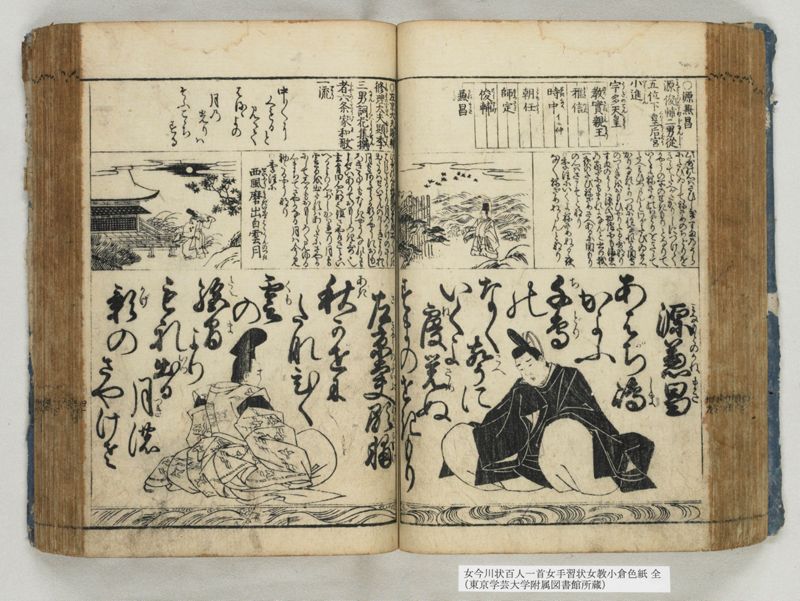
翻刻
【右丁 上段】
○源兼昌
源俊輔(みなもとのとしすけ)二男(じなん)従(じう)
五位下 皇后宮(くわうこうぐう)
小進(せうしん)
宇多天皇(うだのてんわう)
教実親王(のりさねしんわう)
雅信(まさのぶ)
時中(ときなか)《割書:イニ仲》
朝任(ともたう)
師定(もろさだ)
俊輔(としすけ)
兼昌(かねまさ)
【同 中段】
此哥の心はさひしきすまのうら
にたびゐしてねさめのちどりを
きゝてたへがたかりしにつけて
かやうの所のせきもりとなりて
いくよねさめのちどりをきゝて
たへわひつらんとわがたびゐの
かりなるよりつねに住なれたる関守
のつらきをおもひやりたる哥なり
すまのうらは源氏物語にも海士
の家だにもまれになんと書り我
一夜のたびねざめさへあるに関もり
の心はさこそとなり
○季注にいくよねさめぬる夜
な〳〵ねざめぬらんとなり
【同 下段】
源兼昌(みなもとのかねまさ)
あはぢ島(しま)
かよふ
千鳥(ちどり)
の
なく声(こへ)に
いくよ
寝覚(ねさめ)ぬ
すまのせきもり
【左丁 上段】
○左京大夫顕輔
修理太夫(しゆりのだいふ)顕季(あきすへ)
三 男(なん)詞花集(しくはしう)撰(せん)
者(じや)六条家(ろくてうけ)和歌(わか)
一 流(りう)
中〳〵に
くもる
と
見えて
はるゝよの
月の
光は
そふこゝち
する
【同 中段】
此哥の心は秋風の雲を所〳〵つき
はらしたるより月のかけのさし
出たるはせいてんのけしきより猶
月もあきらかなるやうにおもし
ろき事もなきやうなれとも
よせいありておもしろき哥也
玄旨曰心は明也但さやけさとい
へるより心少しかはれり月も
雲間を出たるはあらたにさやか
にしてしかもおもしろく見ゆる
心まちてさやかなる月は今見
初たるやうなり
○季注に
西風(せいふう)磨出(みかきいだす)白雲月(はくうんのつき)
【同 下段】
左京大夫(さきやうのだいぶ)顕輔(あきすけ)
秋(あき)かぜに
たなひく
雲(くも)
の
絶間(たえま)
より
もれ出(いつ)る
月(つき)の
影(かげ)の
さやけさ
現代語訳
【右丁 上段】
○源兼昌
源俊輔の次男。従五位下、皇后宮小進を務めた。
宇多天皇の系譜:
宇多天皇
教実親王
雅信
時中(異名:仲)
朝任
師定
俊輔
兼昌
【同 中段】
この歌の心は、寂しい須磨の浦に旅をして宿泊し、夜中に目覚めて千鳥の鳴き声を聞いて堪え難く感じたことから、このような所の関守となって、何夜もの間、夜中に目覚めて千鳥の声を聞いて耐え忍んでいることだろうと、自分の一夜の旅寝の仮の宿泊よりも、いつも住み慣れている関守のつらさを思いやった歌である。須磨の浦は源氏物語にも「海人の家でさえまばらである」と書かれている。自分でさえ一夜の旅の寝覚めでこのようであるのに、関守の心はさぞかしつらいだろうということである。
○季吟の注釈では「何夜も寝覚めぬる夜な夜な寝覚めぬらん」という意味である。
【同 下段】
源兼昌
淡路島
通う千鳥の
鳴く声に
幾夜寝覚めぬ
須磨の関守
【左丁 上段】
○左京大夫顕輔
修理大夫顕季の三男。詞花集の撰者。六条家和歌の一流を成した。
なかなかに
曇ると
見えて
晴るる夜の
月の
光は
冴ゆる心地
する
【同 中段】
この歌の心は、秋風が雲を所々で吹き払ったことにより月の光が差し出たのは、晴天の景色よりもなお月が明らかになるようで、面白いこともないようであるが、余情があって趣深い歌である。玄旨法印が言うには、心は明らかである。ただし「さやけさ」と言うのとは心が少し変わっている。月も雲間を出たのは新たに清らかになって、しかも興趣深く見える様子で、待っていた清らかな月は今見初めたようである。
○季吟の注釈に「西風磨き出だす白雲の月」とある。
【同 下段】
左京大夫顕輔
秋風に
たなびく雲の
絶え間より
漏れ出づる月の
影のさやけさ
英語訳
【Right Page - Upper Section】
○Minamoto no Kanemasa
Second son of Minamoto no Toshisuke. Held the rank of Junior Fifth Rank Lower, and served as Minor Secretary of the Empress's Household.
Genealogy from Emperor Uda:
Emperor Uda
Prince Norisane
Masanobu
Tokinaka (also called Naka)
Tomotō
Morosada
Toshisuke
Kanemasa
【Same Page - Middle Section】
The meaning of this poem: Having traveled and lodged at the lonely bay of Suma, awakening in the night and hearing the cries of plovers which were unbearable to hear, he thought of how the barrier guard of such a place must endure hearing the plovers' cries through many sleepless nights, and sympathized with the hardship of the guard who lives there constantly, compared to his own single night of temporary travel lodging. Suma Bay is also described in the Tale of Genji as a place where "even the fishermen's houses are sparse." If even his own single night's travel awakening was like this, how much more trying must it be for the barrier guard's heart.
○According to Kigin's commentary, it means "how many nights he must lie awake, night after night."
【Same Page - Lower Section】
Minamoto no Kanemasa
To the cries
of plovers crossing
to Awaji Island—
how many nights sleepless
lies the Suma barrier guard
【Left Page - Upper Section】
○Sakyō no Daibu Akisuke
Third son of Shuri no Daifu Akisue. Compiler of the Shikashū anthology. Founder of the Rokujō school of waka poetry.
All the more
seeming to cloud over
yet clearing—
on such a night
the moon's
light feels
all the more brilliant
【Same Page - Middle Section】
The meaning of this poem: When the autumn wind blows away clouds here and there and moonlight emerges, it appears even more brilliant than in completely clear skies. Though it may seem to lack particular interest, it has lingering emotion and is a deeply moving poem. According to Priest Genshi, the meaning is clear. However, the feeling is somewhat different from simply saying "sayakesa" (clarity). When the moon emerges from between clouds, it appears newly clear and moreover interesting to behold. The clear moon one has been waiting for seems as if seen for the first time.
○Kigin's commentary includes "The west wind polishes forth the moon through white clouds."
【Same Page - Lower Section】
Sakyō no Daibu Akisuke
In the autumn wind,
through breaks in the
trailing clouds,
the moon's light
leaking through—
how clear it is