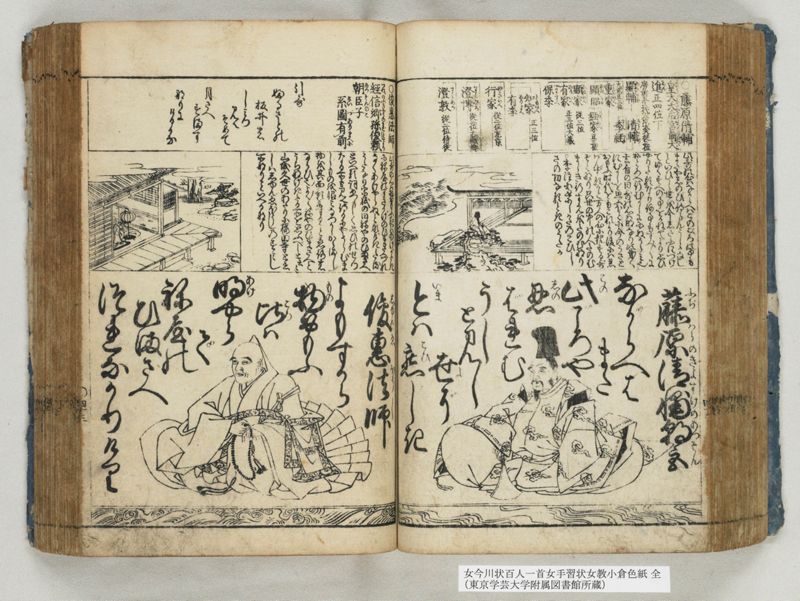
翻刻
【右丁 上段】
○藤原清輔
皇太大后宮(くわうだいたいこうくう)前大(さきのたい)
進(しん)正四位下
《割書:房前五十二代左京大夫従三位》
顕輔(あきすけ) 清輔(きよすけ)
《割書:大弐正三位》 季経(すへつね)
重家(しけいへ)
顕昭(あきてる) 経家(つねいへ)《割書:正三位》
顕家(あきいへ)《割書:従三位》
有家(ありいへ)《割書:正三位大蔵》
保季(やすすへ)
知家(ともいへ)《割書:正三位》
有季(ありすへ)
行家(ゆきいへ)《割書:従二位左京》
澄博(すみひろ)《割書:従二位大蔵卿》
澄敦(すみあつ)《割書:従二位侍従》
【同 中段】
此哥の心はなからへはこのごろの事も
またやしのび侍らんうしかなし
といひし世を今したふにつけ
てゆくすへの事をかねてより思ひ
やりたるなり何事もすみ〳〵に
おとろへ行むかしににぬうらみ也
玄旨の曰哥の心は明なり次第〳〵
にむかしを思ふほとに今のうさと
おもふ時代をもこれより後には忍
ばんずるかと万人の心に観する哥
ぞとなり只世の中の人たのむ
まじき行すえをたのむなり
○季注に過にしかたのこひし
さの切なるときのうたか
【同 下段】
藤原清輔朝臣(ふぢわらのきよすけのあつそん)
ながらへは
また
此(この)ごろや
忍(しの)
ばれむ
うし
と見し
世(よ)ぞ
今(いま)は恋(こひ)しき
【左丁 上段】
○俊恵法師
経信卿(つねのぶきやうの)孫(まご)俊頼(としより)
朝臣(あつそんの)子(こ)
系図(けいづ)有(あり)_レ前(まへに)
引哥
ふるさとの
板井の
しみつ
見え
そめて【ママ】
月さへ
すます
なりに
けるかな
【同 中段】
此哥の心は物おもふ夜はあけがたき
にねやのすきかげのひまさへつれ
なくあけやらぬとなげきたる
うたなり宗祇の曰ねやのひまさへ
といへる詞めつらしく思ひのせつ
なる所もみえ侍るにやうらむま
じものを恨みなつかしからまし
物を其面影にすること恋路の
ならひ也よく〳〵ねやのひまさへと
うちなげきたる所を思ふべしと云々
山城久世のあたりに桜【ママ】田寺と云
しはしゆんゑほうしのすみし
所なりといへるなり
【同 下段】
俊恵法師(しゆんゑほうし)
よもすから
物(もの)おもふ
比(ころ)は
明(あけ)やら
で
ねやの
ひまさへ
つれなかりけり
現代語訳
【右丁 上段】
○藤原清輔
皇太后宮前大進正四位下
房前五十二代左京大夫従三位
系譜:
顕輔(大弐正三位)── 清輔
季経
重家
顕昭 経家(正三位)
顕家(従三位)
有家(正三位大蔵卿)
保季
知家(正三位)
有季
行家(従二位左京大夫)
澄博(従二位大蔵卿)
澄敦(従二位侍従)
【同 中段】
この歌の心は、長らえばこの頃のことをまた懐かしく思うことであろうか。憂しく辛いと言っていた世を今は慕うにつけて、将来のことを前もって思いやったものである。何事も次第に衰えていく昔への恨みである。玄旨が言うには、歌の心は明らかで、次第に昔を思うほどに、今の憂さと思う時代をも、これより後には懐かしく思うであろうかと、万人の心に通じる歌だということである。ただ世の中の人が頼むべきでない将来を頼むのである。
○季注:過ぎ去った過去への恋しさが切ない時の歌か
【同 下段】
藤原清輔朝臣
長らえば
また
この頃や
忍
ばれむ
憂し
と見し
世ぞ
今は恋しき
【左丁 上段】
○俊恵法師
経信卿の孫、俊頼朝臣の子
系図は前にあり
引歌:
ふるさとの
板井の
清水
見え
始めて
月さえ
澄ます
なりに
けるかな
【同 中段】
この歌の心は、物思いする夜は明けがたく、寝屋の隙間の光さえもつれなく明けやらぬと嘆いた歌である。宗祇が言うには、「寝屋の隙間さえ」と言った言葉は珍しく、思いの切なる所も見えるようである。恨むまじきものを恨み、懐かしくないものを懐かしく思う、その面影にすることは恋の道の習いである。よくよく「寝屋の隙間さえ」と嘆いた所を思うべしと言っている。山城国久世のあたりに桜田寺というのがあって、俊恵法師が住んだ所だと言われている。
【同 下段】
俊恵法師
夜通し
物思う
頃は
明けやら
ず
寝屋の
隙間さえ
つれなかりけり
英語訳
【Right Page, Upper Section】
○Fujiwara no Kiyosuke
Former Senior Assistant of the Empress Dowager's Palace, Senior Fourth Rank Lower
52nd generation descendant of Fusasaki, Senior Assistant Governor of the Left Capital, Junior Third Rank
Genealogy:
Akisuke (Senior Assistant Governor, Senior Third Rank) ── Kiyosuke
Suetsune
Shigeie
Akiteru Tsuneie (Senior Third Rank)
Akiie (Junior Third Rank)
Arie (Senior Third Rank, Minister of the Treasury)
Yasusue
Tomoie (Senior Third Rank)
Arisue
Yukie (Junior Second Rank, Senior Assistant Governor of the Left Capital)
Sumihiro (Junior Second Rank, Minister of the Treasury)
Sumiatsu (Junior Second Rank, Chamberlain)
【Same, Middle Section】
The heart of this poem reflects: if one lives long, will these current times also be remembered fondly? What was once called sorrowful and painful is now yearned for, contemplating future matters in advance. It expresses resentment toward the past as everything gradually declines. According to Genshi's interpretation, the poem's meaning is clear: as one increasingly thinks of the past, even the times we now consider sorrowful may be fondly remembered in the future—this is a poem that resonates with everyone's heart. People simply rely on a future that should not be relied upon.
○Seasonal note: Perhaps a poem about the poignant longing for the bygone past
【Same, Lower Section】
Fujiwara no Kiyosuke, Court Noble
If I live long,
will even
these times
be fondly
remembered?
The world I saw
as sorrowful
is now dear to me
【Left Page, Upper Section】
○Monk Shun'e
Grandson of Lord Tsunenobu, son of Toshiyori, Court Noble
The genealogy appears earlier
Referenced poem:
At my old home
the clear water
of Itai
begins to
appear
Even the moon
becomes clear
indeed
【Same, Middle Section】
The heart of this poem expresses how on nights of deep contemplation, dawn comes slowly, and even the light through the gaps in the sleeping quarters seems indifferent in its reluctant breaking. Sōgi commented that the phrase "even the gaps in the sleeping quarters" is remarkable, showing the intensity of the speaker's feelings. To resent what should not be resented, to find dear what should not be dear, to see everything in terms of that beloved's image—this is the way of love. One should deeply contemplate the significance of lamenting "even the gaps in the sleeping quarters." It is said that in the Kuse area of Yamashiro Province, there was a temple called Sakurada-ji where Monk Shun'e lived.
【Same, Lower Section】
Monk Shun'e
All night long,
in times of
contemplation,
dawn does not
break,
even the gaps
in my sleeping quarters
remain indifferent