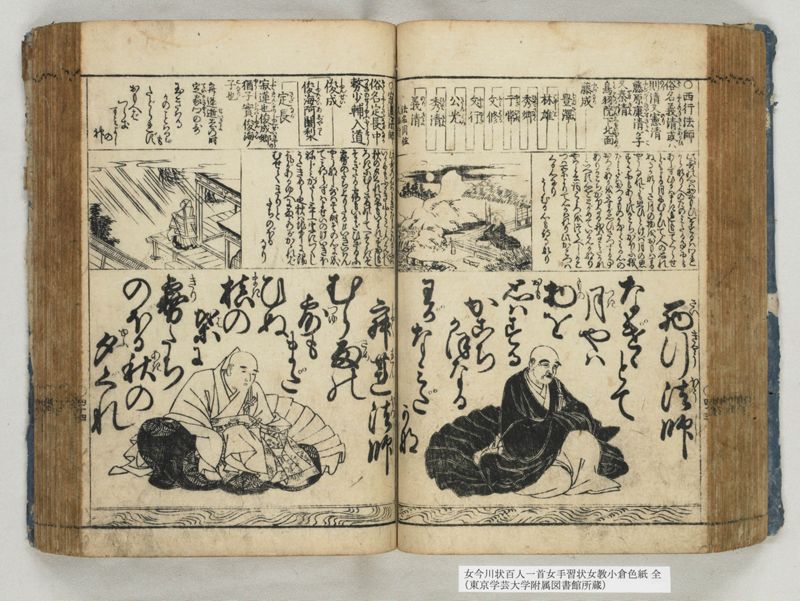
翻刻
【右丁 上段】
○西行法師
俗名(そくみやう)義清(のりきよ)或(あるひ)は
則(のり)清又 憲(のり)清
藤原康清(ふぢわらのやすきよ)が子(こ)
又 泰清(やすきよ)
鳥羽院(とばのいん)下北面(しものほくめん)
藤成(ふぢなり)
豊沢(とよさわ)
林雄(はやしを)
秀郷(ひでさと)
于常(ゆきつね)
文修(ふみはる)
文行(ふみゆき)
公光(きんみつ)
秀清(ひできよ)
義清(のりきよ)
《割書:法名円位|元西行》
【同 中段】
此哥の心は物おもひをするはわれ
からなり人のたのみたる事にも
あらずひるはまきれもしてくらせ
どもよる月にむかひて人の思れ
ぬるかなしさ月の物をおもはする
やうなれども思ひとけば月の思
するにもあらずかこちがほに我
なみだはおつるものかなとわか心の
おろかなるをさすが思ひさつする事
なりかこちがほなる我なみだかな
といへる心をとがめていえるなり
やはと云詞こゝろをつくべしかこ
つは所によりて心かはれり此かこつは
くる心なり
うらむる心も侍るなり
【同 下段】
西行法師(さいきやうほうし)
なげゝとて
月やは
物(もの)を
思(おも)はする
かこち
がほなる
わがなみだ
かな
【左丁 上段】
○寂蓮法師
俗名(そくみやう)定長(さだなが)中(なか)
務(つかさの)少輔(せうゆふ)入道(にうとう)
俊成(しゆんぜい)
俊海阿闍梨(しゆんかいあじやり)
定長(さだなが)
寂蓮(じやくれん)也(なり)俊成卿(しゆんぜいきやうの)
猶子(ゆうし)実(じつは)俊海(しゆんかい)ノ
子(こ)也(なり)
寂蓮 逝去(せいきよ)の時
定家卿(ていかきやう)の哥
玉きはる
かのことはり
も
たどられず
おもへば
つらき
すみよし
の
神
【同 中段】
此哥の心はまきなどある山は
いかにもふかき山とこゝろえべし
秋の夕くれはゑもいわれずおもし
ろきにむらさめのして一そゝぎそ
そぎたる露もいまだひざるに
霧のたち上りたるけいきいわん
やうなし哥は其時その心に成
てみ侍らずはよせいのけいきほ
ねじみがたし三十一字につくし
かたきめう也秋は地中に陽
気があるゆへに雨水がかゝれば
むせてきりと
たちのぼる
なり
【同 下段】
寂蓮法師(じやくれんほつし)
むら雨(さめ)の
露(つゆ)も
まだ
ひぬ
槙(まき)の
葉(は)に
霧(きり)たち
のぼる秋(あき)の
夕(ゆふ)ぐれ
現代語訳
【右丁 上段】
○西行法師
俗名は義清(のりきよ)、あるいは則清、また憲清
藤原康清(あるいは泰清)の子
鳥羽院の下北面の武士
系譜:
藤成
豊沢
林雄
秀郷
于常
文修
文行
公光
秀清
義清(法名円位、のちの西行)
【同 中段】
この歌の心は、物思いをするのは自分からであって、人に頼まれたことでもない。昼は紛れもして暮らすけれども、夜、月に向かって人の思われぬ悲しさよ。月が物思いをさせるようであるけれども、よく思えば月が思いをさせるのでもない。愚痴がましく我が涙は落ちるものかなと、我が心の愚かさを、さすがに反省することである。愚痴がましい我が涙かなと言った心を戒めて言ったのである。「やは」という言葉に心を尽くすべきである。「かこつ」は場所によって心が変わる。この「かこつ」は恨む心である。
恨む心もある。
【同 下段】
西行法師
嘆けとて
月やは
物を
思わせる
愚痴がましい
我が涙
かな
【左丁 上段】
○寂蓮法師
俗名は定長、中務少輔入道
俊成
俊海阿闍梨
定長
寂蓮である。俊成卿の養子、実は俊海の子である。
寂蓮逝去の時
定家卿の歌
魂極まる
その道理も
辿られず
思えば
つらき
住吉の
神
【同 中段】
この歌の心は、槙などがある山はいかにも深い山と心得るべきである。秋の夕暮れは何とも言えず趣深いのに、村雨がして一しきり降り注いだ露もまだ乾かないうちに、霧が立ち上った様子は言いようがない。歌はその時その心になってみなければ、余情の景色は理解しがたい。三十一文字に尽くしがたい妙である。秋は地中に陽気があるゆえに、雨水がかかれば蒸せて霧と
立ち上る
のである。
【同 下段】
寂蓮法師
村雨の
露も
まだ
乾かぬ
槙の
葉に
霧立ち
上る秋の
夕暮れ
英語訳
【Right Page, Upper Section】
○Monk Saigyō
Secular name: Norikiyo, or alternatively Norikyō, also Norikyō
Son of Fujiwara no Yasukyō (or Yasukyō)
Lower northern guard of Emperor Toba
Genealogy:
Fujinari
Toyosawa
Hayashio
Hidesato
Yukitsune
Fumiharu
Fumiyuki
Kinmitsu
Hidekiyo
Norikiyo (Buddhist name En'i, later Saigyō)
【Same, Middle Section】
The heart of this poem is that contemplation comes from within oneself, not at anyone else's request. During the day one can find distractions, but at night, facing the moon, one feels the sadness of being unthought of by others. Though the moon seems to cause melancholy thoughts, upon reflection, it is not really the moon that causes such thoughts. How foolish that my tears fall in such a complaining manner—this reflects on the foolishness of my own heart. He criticizes the heart that said "my complaining tears." The word "yaha" should be given full consideration. "Kakotsu" (to complain/blame) changes meaning depending on the context. This "kakotsu" carries the sense of resentment.
There is also a resentful heart.
【Same, Lower Section】
Monk Saigyō
Does the moon
tell me to lament
and cause me
to think sadly?
These complaining
tears of mine
【Left Page, Upper Section】
○Monk Jakuren
Secular name: Sadanaga, Assistant Junior Secretary of the Ministry of Central Affairs, Buddhist monk
Shunzei
Shunkai Ajari
Sadanaga
This is Jakuren. Adopted son of Lord Shunzei, actually the son of Shunkai.
Upon Jakuren's death
A poem by Lord Teika
The ultimate spirit
even that principle
cannot be traced
thinking of it
is painful
the god of
Sumiyoshi
【Same, Middle Section】
The heart of this poem is that mountains with maki trees should be understood as deeply profound mountains. The autumn evening is indescribably beautiful, and after a brief shower has fallen, before the dew has even dried, mist rises up—the scene is beyond description. Unless one becomes one with that moment and that feeling, the subtlety of the scene cannot be grasped. It is a wonder difficult to capture in thirty-one syllables. In autumn, because there is warmth in the earth, when rainwater falls, it steams up and rises as mist.
【Same, Lower Section】
Monk Jakuren
After the shower
the dew has not
yet
dried on
the maki
leaves,
mist rises
in the autumn
evening