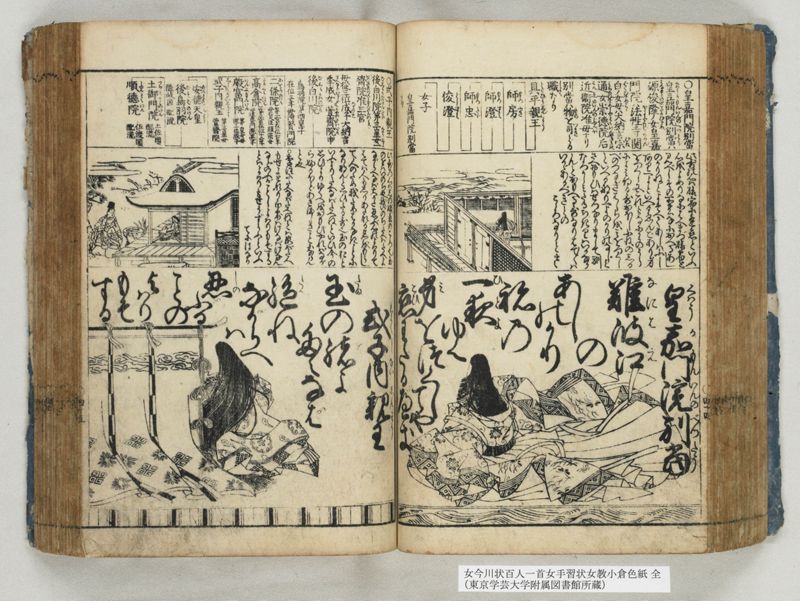
翻刻
【右丁 上段】
○皇嘉門院別当
皇嘉門院(くわうかもんいんの)別当(へつとう)ハ
源俊隆(みなもとのとしたか)ノ女(むすめ)皇嘉
門院ハ法性寺(ほうしやうじ)関(くわん)
白(ばく)ノ女(むすめ)母(はゝ)ハ大納言 宗(むね)
通(みちの)女(むすめ)崇徳院(しゆとくいんの)后(きさき)
近衛院(こんゑのいんの)准母(じゆんぼ)ナリ
別当ハ物(もの)を司(つかさ)どる
職(しよく)なり
具平親王(ともひらしんわう)
師房(もろふさ)
師澄(もろすみ)
師忠(もろたゞ)
俊澄(としすみ)
女子
皇嘉門院別当
ナリ
【同 中段】
此哥の心は旅宿に逢恋といふ
心をよめりなにはへまづ旅宿と
見べしその所のなにおへるあし
のかりねとよそへてあしはふし
あり一よといへるゑんごあり身
をつくし又これもなにわのうら
によみ侍る哥おほしふねのしる
べのつなぎはしらをみをつくし
といへるなり一よのかりのなじみ
さへおもひはせつなりまして馴
なつかしみたるちきりはいかなら
んとおもへる哥なりはて〳〵は
いかゞあるべきとの
こゝろなりと云々
【同 下段】
皇嘉門院(くわうかもんいんの)別当(べつたう)
難波江(なにはえ)
の
あし
のかり
ねの
一夜(ひとよ)
ゆへ
身(み)をつくしてや
恋(こひ)わたるべき
【左丁 上段】
○式子内親王
後白川院(ごしらかはのいん)第(だい)三 皇女(くわうじよ)一
斎院(いつきのいん)准三宮(しゆんさんのみや)
母従三位 成子(なりこ)大納言
季成(すへなり)女(むすめ)《割書:又》萱斎院(かやのさいいん) ̄ト申
後白川院(ごしらかはのいん)
《割書:鳥羽院第四皇子|在位三年母待賢門院》
二条院(にてうのいん)《割書:第一宮在位七年|母右大臣経宗女》
高倉院(たかくらのいん)《割書:第二宮在位十二年|母建春門院亮子》
殷富門院(いんふもんいん)《割書:第 皇女母|従三位成子》
式子内親王(しよくしないしんわう)《割書:第三皇女|萱斎院》
安徳天皇(あんとくてんわう)
後鳥羽院(ごとばのいん)
《割書:隠岐国配流》
土御門院(つちみかとのいん)《割書:土佐国へ|配流》
順徳院(じゆんとくいん)《割書:佐渡国へ|配流》
【同 中段】
此哥の心はしのぶ恋のこゝろ也玉
のをはいのち也我いのちたへはたへよ
ながらへなば大かた忍ぶ心のよはりて
はては人もしりあたなる名をもらし
て人のため我ためはかなきことに
なりなんと思ひたる哥也玉のおと
いふよりたへなばたへねといひ今の
思ひよりゆくへをおもひやればなが
らふるほどあさましきことにならん
と也
○季注にたへなばたへねとは絶ばたへ
もせよとなり白露はけ【消】なばけなん
などいふがことしよはりもぞする
とはよはりもせうずらふといふ
てにはなり
【同 下段】
式子内親王(しよくしないしんわう)
玉(たま)の緒(を)よ
たえなば
絶(たへ)ね
ながらへ
は
忍(しの)
ぶる
ことの
よはり
もそ
する
現代語訳
【右丁 上段】
○皇嘉門院別当
皇嘉門院別当は源俊隆の娘である。皇嘉門院は法性寺関白の娘で、母は大納言宗通の娘、崇徳院の后で近衛院の准母である。
別当は物事を司る職である。
系譜:
具平親王
師房
師澄
師忠
俊澄
娘
皇嘉門院別当
である。
【同 中段】
この歌の心は旅宿での逢恋という心を詠んだものである。難波江をまず旅宿と見るべきで、その所の難波にある葦の仮寝と喩えて、葦は節があり、一夜という縁語がある。身をつくしもまた、これも難波の浦に詠む歌が多い。船の舵の綱を繋ぐ柱を身をつくしというのである。一夜の仮の馴染みさえ思いは切ない。まして馴れ親しんだ契りはどうであろうかと思った歌である。果ては如何なることになるのだろうかという心である。
【同 下段】
皇嘉門院別当
難波江の
葦の仮寝の
一夜ゆえ
身をつくしてや
恋い渡るべき
【左丁 上段】
○式子内親王
後白河院第三皇女、斎院、准三宮
母は従三位成子、大納言季成の娘。萱斎院とも申す。
後白河院(鳥羽院第四皇子、在位三年、母待賢門院)
二条院(第一宮、在位七年、母右大臣経宗の娘)
高倉院(第二宮、在位十二年、母建春門院亮子)
殷富門院(第 皇女、母従三位成子)
式子内親王(第三皇女、萱斎院)
安徳天皇
後鳥羽院(隠岐国配流)
土御門院(土佐国へ配流)
順徳院(佐渡国へ配流)
【同 中段】
この歌の心は忍ぶ恋の心である。玉の緒は命である。我が命よ絶えるなら絶えよ、長らえるなら大方忍ぶ心が弱って、果ては人も知る現れた名を漏らして、人のため我がため儚いことになってしまうだろうと思った歌である。玉の緒というより絶えなば絶えねと言い、今の思いより行く末を思いやれば長らうほど浅ましいことになるだろうということである。
○季吟の注に「絶えなば絶えね」とは絶えるなら絶えてしまえということである。白露は消えなば消えななどと言うのと同じで、弱りもぞするとは弱りもするであろうという助詞である。
【同 下段】
式子内親王
玉の緒よ
絶えなば
絶えね
長らえば
忍ぶる
ことの
弱りも
ぞする
英語訳
【Right Page, Upper Section】
○Kōkamon'in no Bettō
Kōkamon'in no Bettō was the daughter of Minamoto no Toshitaka. Kōkamon'in was the daughter of the Hōshōji Kampaku, her mother was the daughter of Dainagon Munemichi, she was the consort of Emperor Sutoku and the adoptive mother of Emperor Konoe.
Bettō is a position that oversees affairs.
Genealogy:
Prince Tomohira
Morofusa
Morosumi
Morotada
Toshisumi
Daughter
Kōkamon'in no Bettō
【Same, Middle Section】
The heart of this poem expresses the feelings of love encountered during travel lodging. One should first see Naniwa Bay as a place of temporary lodging. Comparing it to sleeping temporarily among the reeds of that place, the reeds have joints, creating a word-play with "one night." "Miwotsukushi" (channel markers) also appears frequently in poems about Naniwa Bay. The pillars where ships tie their steering ropes are called "miwotsukushi." Even the feelings for a single night's temporary acquaintance are painful; how much more so would be a familiar, intimate bond? The poem wonders what will ultimately become of such feelings.
【Same, Lower Section】
Kōkamon'in no Bettō
At Naniwa Bay
sleeping temporarily
among the reeds
for just one night—
must I exhaust myself
in yearning love?
【Left Page, Upper Section】
○Princess Shokushi
Third imperial daughter of Emperor Go-Shirakawa, Saiин, Jun-san-no-miya
Mother: Junior Third Rank Nariko, daughter of Dainagon Suenari. Also called Kaya Saiin.
Emperor Go-Shirakawa (fourth imperial son of Emperor Toba, reigned 3 years, mother Taikemon'in)
Emperor Nijō (first prince, reigned 7 years, mother daughter of Udaijin Tsunemune)
Emperor Takakura (second prince, reigned 12 years, mother Kenshunmon'in Ryōshi)
Infumon'in (imperial daughter, mother Junior Third Rank Nariko)
Princess Shokushi (third imperial daughter, Kaya Saiин)
Emperor Antoku
Emperor Go-Toba (exiled to Oki Island)
Emperor Tsuchimikado (exiled to Tosa Province)
Emperor Juntoku (exiled to Sado Island)
【Same, Middle Section】
The heart of this poem is about secret love. "Tama no o" (jeweled cord) represents life. "My life, if you are to break, then break; if I am to live on, my heart for concealing my love will weaken, and eventually people will know and my reputation will be revealed, bringing ruin to both others and myself"—such is the sentiment of this poem. Rather than just "tama no o," saying "if it breaks, let it break" and thinking from present feelings to the future, the longer one lives, the more shameful things will become.
○Kigin's commentary notes that "taenaba taene" means "if it breaks, let it break completely." It's like saying "if the white dew disappears, let it disappear." "Yowari mo zo suru" means "it will probably weaken"—this is the particle construction.
【Same, Lower Section】
Princess Shokushi
O jeweled cord
if you should
break,
then break—
if I live on,
this concealing
of love
might
weaken