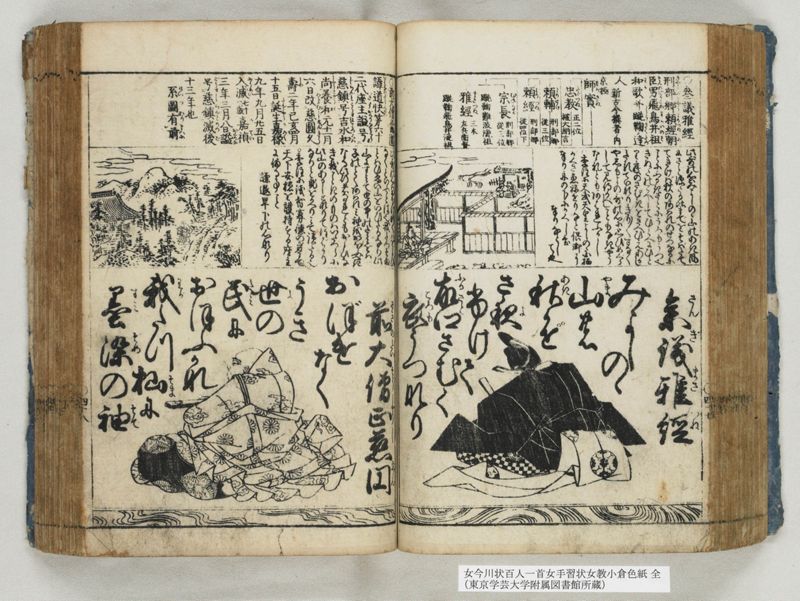
翻刻
】
○参議雅経
刑部卿(きやうぶきやう)頼経朝(よりつねあ)
臣(そんの)男(むすこ)飛鳥井(あすかいの)祖(そ)
和歌(わか)并 蹴鞠(しうきく)ノ達(たつ)
人《割書: |新古今撰者ノ内》
《割書:京極》
師実(もろさね)
忠教(たゞつね)《割書:正二位|権大納言》
頼輔(よりすけ)《割書:刑部卿|従三位》
頼経(よりつね)《割書:刑部卿|従四位下》
宗長(むねなか)《割書:刑部卿|従三位》
《割書:蹴鞠難波流祖》
雅経(まさつね)《割書:三木|左兵衛督》
《割書:蹴鞠飛鳥井流祖》
【同 中段】
此哥の心はみよしのゝ山のあき風
にさと深たる比までをそばたて
てきけば秋のあはれのせつなるに
ことにふるきさとにうつもうつ也
きぬたのこへしてひとへにひと
り寝のさむきをさへひえあるし
たるていなりきり〳〵すなく
やしもよの哥の心に思ひめくら
して見侍るべしこともなきやう
なれともあはれふかし
○季注に天武天皇よしのゝ国栖
がくさ魚ねせりなと供御に
奉り舟の下にかくし置
奉りなとし
て也
【同 下段】
参議(さんぎ)雅経(まさつね)
みよしのゝ
山(やま)の
秋(あき)かぜ
さ夜(よ)
ふけて
故郷(ふるさと)さむく
衣(ころも)うつなり
【左丁 上段】
○前大僧正慈円
諱(いみなは)道快(だうくわい)第六十
二代 座主(ざす)謚(おくりなを)号(こうす)_二
慈鎮(じちんと)_一号(こうす)_二吉水和(よしみつくは)
尚(しやうと)_一養和(やうわ)元十一月
六日 改(あらたむ)_二慈円(じゑん[と])【一点脱】久(きう)
寿(しゆ)二年己亥四月
十五日 誕生(たんじやう)嘉禄(かろく)
九年九月廿五日
入滅(にうめい)【ママ】《割書:七十|一歳》嘉禎(かてい)
三年三月八日 謚(おくりな)
号(ごうす)_二慈鎮(じちんと)_一滅後(めつご)
十三年也
系図(けいづ)有(あり)_レ前(まへに)
【同 中段】
此哥の心はおほけなくはをよび
なくといふことは也我たつそま
とはひゑい山をいひたるなり此
山にすみて世の中のたみをは
子のことくあはれみ袖をおほふべき
なる此行者なれともおもひな
き我こときのものはいたづらに
此山のあるしとなりて住ばかり
なりと身をかへりみて読たる也
○季注に浅智寡徳の身にて
天下安穏を護持する座主
に備る事こと
謙退旱下の心なり
【同 下段】
前(さきの)大僧正(だいそうしやう)慈円(じゑん)
おぼけ【注】
なく
うき
世(よ)の
民(たみ)に
おほふかな
我(わが)たつ杣(そま)に
墨染(すみぞめ)の袖(そで)
【注 「おぼけなく」と「おほけなく」とは語義が違う。ここでは「おほけなく」とあるところ。この資料の「百首略解并家系」の項(18~68コマ)の下段の和歌の散らし書きの地の文の濁点は、すべて白抜きの小丸「◦」二つで表記されていますのに、この語だけ墨で二つの黒点が付いているのは、後の付記かと思われる。】
現代語訳
【右丁 上段】
○参議雅経
刑部卿頼経朝臣の息子で、飛鳥井家の祖である。和歌並びに蹴鞠の達人である。(新古今和歌集の撰者の一人)
(京極家系図)
師実
忠教(正二位、権大納言)
頼輔(刑部卿、従三位)
頼経(刑部卿、従四位下)
宗長(刑部卿、従三位)
(蹴鞠難波流の祖)
雅経(参議、左兵衛督)
(蹴鞠飛鳥井流の祖)
【同 中段】
この歌の心は、吉野の山の秋風に夜が深まった頃まで、そばだてて聞けば秋の哀れが切ないのに、特に古い里に住んでいると、きぬたの音がして、ひとえに独り寝の寒さをさらに冷え冷えとさせる様子である。きりきりと鳴く虫の音も夜すがらの歌の心に思いをめぐらして見るべきである。何でもないようだが、哀れが深い。
○季吟の注に、天武天皇の時、吉野の国栖が草や魚、芹などを供御に奉り、舟の下に隠し置いて奉ったなどしたのである。
【同 下段】
参議雅経
み吉野の
山の
秋風
夜
更けて
古里寒く
衣打つなり
【左丁 上段】
○前大僧正慈円
諱は道快。第六十二代座主。謚号を慈鎮という。また吉水和尚とも号した。養和元年十一月六日に慈円と改めた。久寿二年己亥四月十五日誕生。嘉禄九年九月二十五日入滅(七十一歳)。嘉禎三年三月八日に謚号を慈鎮とした。滅後十三年である。
系図は前にある。
【同 中段】
この歌の心は、「おおけなく」は「身の程知らずに」ということである。「我が立つ杣」とは比叡山を言ったのである。この山に住んで世の中の民を子のように哀れみ、袖で覆うべきであるこの行者であるが、思慮のない私のような者は、いたずらにこの山の主となって住んでいるばかりであると、身を省みて詠んだのである。
○季吟の注に、浅智寡徳の身で天下安穏を護持する座主に備わることは、謙退の心である。
【同 下段】
前大僧正慈円
おほけ
なく
憂き
世の
民に
覆ふかな
我が立つ杣に
墨染の袖
【注:「おぼけなく」と「おほけなく」とは語義が違う。ここでは「おほけなく」とあるところ。この資料の「百首略解并家系」の項(18~68コマ)の下段の和歌の散らし書きの地の文の濁点は、すべて白抜きの小丸「◦」二つで表記されているのに、この語だけ墨で二つの黒点が付いているのは、後の付記かと思われる。】
英語訳
【Right Page, Upper Section】
○Sangi Masatsune
Son of Kyōbukyō Yoritsune Ason, ancestor of the Asukai family. A master of waka poetry and kemari (kickball). (One of the compilers of the Shin Kokin Wakashū)
(Kyōgoku family genealogy)
Morosane
Tadatsune (Senior Second Rank, Provisional Major Counselor)
Yorisuke (Minister of Justice, Junior Third Rank)
Yoritsune (Minister of Justice, Junior Fourth Rank Lower)
Munenaga (Minister of Justice, Junior Third Rank)
(Founder of Namba school of kemari)
Masatsune (Middle Counselor, Assistant Captain of the Left Military Guards)
(Founder of Asukai school of kemari)
【Same, Middle Section】
The heart of this poem is about the autumn wind of Mount Yoshino as the night deepens. When you listen carefully, the autumn pathos becomes poignant, and especially in an old village, the sound of fulling cloth makes the cold of sleeping alone even more chilling. The chirping of insects throughout the night should also be contemplated in the heart of this poem. Though it seems like nothing special, the pathos runs deep.
○Kigin's commentary notes that during Emperor Tenmu's reign, the Yoshino Kunisu people offered grass, fish, water dropwort and such as imperial food, hiding them under boats when presenting them.
【Same, Lower Section】
Sangi Masatsune
In fair Yoshino's
mountains
autumn wind
as night
deepens—
in the old village, cold,
cloth is being fulled
【Left Page, Upper Section】
○Former Dai-Sōjō Jien
His posthumous name was Dōkai. The 62nd head priest. His posthumous title was Jichin. He was also called Yoshimizu Hōjō. On the 6th day of the 11th month of Yōwa 1, he changed his name to Jien. Born on the 15th day of the 4th month of Kyūju 2 (1155). Died on the 25th day of the 9th month of Karoku 9 (1213) at age 71. On the 8th day of the 3rd month of Katei 3, he was given the posthumous title Jichin, thirteen years after his death.
The genealogy appears earlier.
【Same, Middle Section】
The heart of this poem is that "ōkenaku" means "presumptuously" or "beyond one's station." "Waga tatsu soma" refers to Mount Hiei. Though he is a monk who should live on this mountain and compassionately protect the people of the world like children, covering them with his sleeves, he reflects that a thoughtless person like himself merely resides as master of this mountain in vain.
○Kigin's commentary notes that for someone of shallow wisdom and few virtues to serve as head priest protecting the peace of the realm represents a heart of humble self-deprecation.
【Same, Lower Section】
Former Dai-Sōjō Jien
How presumptuously
I cover
the suffering
people of the world
with sleeves dyed black
on the wooded mountain where I dwell
【Note: "Obokenaku" and "ōkenaku" have different meanings. Here it should be "ōkenaku." In this document's "Hundred Poems Brief Commentary and Genealogies" section (frames 18-68), all the voiced marks in the scattered writing of the waka in the lower sections are marked with two white hollow circles "◦", but this word alone has two black ink dots, suggesting it may be a later addition.】