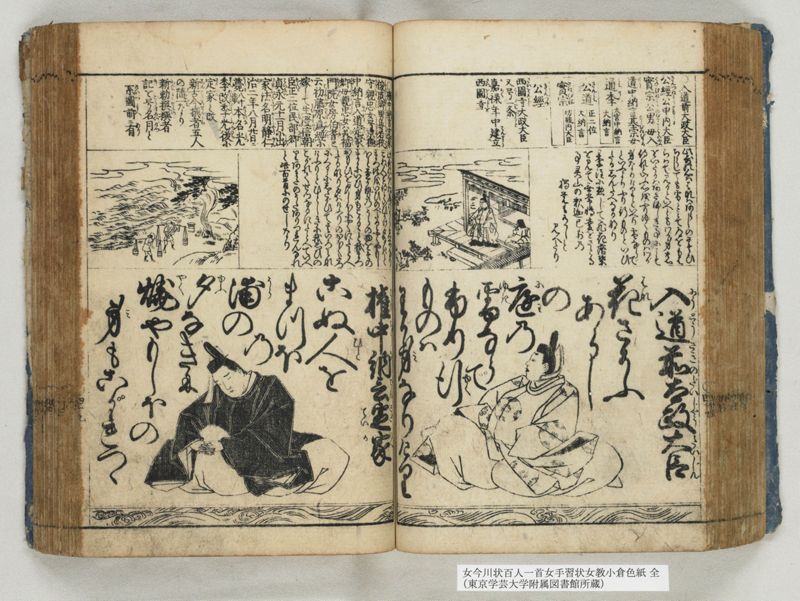
翻刻
【右丁 上段】
○入道前大政大臣
公経公(きんつねこうと)申(もうす)内大臣
実宗公(さねむねこうの)男(むすこ)母(はゝは)入(にふ)
道(とう)中納言 基宗(もとむね)女(むすめ)
通季(みちすへ)《割書:大宮中納言|大納言》
公道(きんみち)《割書:正二位|大納言》
実宗(さねむね)《割書:坊城内大臣》
公経(きんつね)
西園寺(さいをんじ)大政大臣
又 号(こうす)_二 一条(いちでうと)_一
嘉禄(かろく)年中建_二立
西園寺(さいをんじを)_一
【同 中段】
此哥の心ははなはあらしのさそひ
ちらしても雪とみて道をもは
らはで見るといへどもわが身の
をいたるはあさましき事にこそ
侍れといふ心をふりゆくものはわが
身なりけりといへり雪ならで
といふよりふり行ものといひ
たるしんたへなるなり
○季注に総【惣】じて飛花落葉
を見て無常転変をさとる
事霊山の釈迦已前の
独覚も有しと
見へたり
【同 下段】
入道(にうどう)前(さきの)太政大臣(だいじやうたいじん)
花(はな)さそふ
あらし
の
庭(にわ)の
雪(ゆき)なら
で
ふり行(ゆく)
ものは
わが身(み)なりけり
【左丁 上段】
○権中納言定家
俊成卿(しゆんせいきやうの)男(むすこ)母(はゝは)若狭(わかさの)
守(かみ)親忠(ちかたゞ)女 号(こうす)_二京極(きやうごく)【一点脱】
中納言 入道(にふとう)定家(ていか)
卿(きやうの)母(はゝ)親忠(ちかたゞ)女は美福(びふく)
門院(もんいん)女房 伯耆(ほうき)と
云 初(はしめ)藤原為経(ふぢわらのためつね)に
嫁(か)して生(うむ)_二澄信朝(すみのぶあ)
臣(そんを)_一正 二位 民部卿(みんぶきやう)
貞永(ていゑい)元十一月に出(しゆつ)
家(けす)法名(ほうみやう)明静(めうじやう)仁(にん)
治(ぢ)二年八月廿日に
薨(こうす)《割書:八十|歳》本名(もとのな)光(みつ)
季(すへ)改(あらたむ)_二季光(すへみつに)_一後(のち)に
定家(さたいへ)と改
新古今(しんこきん)撰者(せんじや)五人
の随一(すいいち)なり
新勅撰(しんちよくせんの)撰者
記(き)を号(ごうす)名月(めいげつ)と
系図(けいづ)前(まへ)に有(あり)
【同 中段】
此哥の心は松尾のうら名所なり
こぬ人を待といひかけ夕なきと
まつ比をいひのべたりやくやもし
ほと松かせのうらの物をその
まゝにいひ身もこかるゝと我まつ
おもひを夕しほにやくにたとへ
たるなり夕はけふりのおほくたつ
にくるゝにしたがひて其いろみな
けふりとひとしきに我思ひの
こがれてせつなるにたとへていへ
りあまたのうたありつれんなれ
と此百首にのせしなり
【同 下段】
権中納言(ごんちうなごん)定家(さだいへ)【左ルビ:ていか】
こぬ人(ひと)を
まつほ
の
浦(うら)の
夕(ゆふ)
なぎに
焼(やく)やもしほの
身(み)もこがれつゝ
現代語訳
【右丁 上段】
○入道前太政大臣
公経公と申す方は、内大臣実宗公の息子である。母は入道中納言基宗の娘である。
通季(大宮中納言、大納言)
公道(正二位、大納言)
実宗(坊城内大臣)
公経
西園寺太政大臣
また一条とも号した。
嘉禄年中に西園寺を建立した。
【同 中段】
この歌の心は、花は嵐に誘われて散ってしまっても、雪と見て道も払わずに見ているというけれども、我が身の老いたることは情けないことであるという心を、「降り行くものは我が身なりけり」と言っている。「雪ならで」と言ってから「降り行くもの」と言ったのは巧妙である。
○季吟の注に、総じて飛花落葉を見て無常転変を悟ることは、霊山の釈迦以前の独覚にもあったと見える。
【同 下段】
入道前太政大臣
花誘う
嵐
の
庭の
雪なら
で
降り行く
ものは
我が身なりけり
【左丁 上段】
○権中納言定家
俊成卿の息子。母は若狭守親忠の娘。京極中納言入道定家卿と号した。母親忠の娘は美福門院の女房で、伯耆と言った。初めは藤原為経に嫁して澄信朝臣を生んだ。正二位民部卿。貞永元年十一月に出家し、法名は明静。仁治二年八月二十日に薨去(八十歳)。本名は光季、後に季光と改め、後に定家と改めた。新古今和歌集撰者五人の随一である。新勅撰和歌集の撰者。明月記を号とする。
系図は前にある。
【同 中段】
この歌の心は、松尾の浦は名所である。来ない人を待つと言いかけて、夕凪と松との頃を言い述べた。焼く藻塩と松風の浦のものをそのまま言い、身も焦がれると我が待つ思いを夕潮に焼くのに例えたのである。夕は煙が多く立つのに、暮れるに従ってその色皆煙と等しいのに、我が思いの焦がれて切ないのに例えて言った。多くの歌があったようだが、この百首に載せたのである。
【同 下段】
権中納言定家
来ぬ人を
松帆
の
浦の
夕
凪に
焼く藻塩の
身も焦がれつつ
英語訳
【Right Page, Upper Section】
○Nyūdō Former Daijō-daijin (Prime Minister)
Lord Kintsune, son of Naidaijin (Interior Minister) Lord Sanemune. His mother was the daughter of Nyūdō Chūnagon (Middle Counselor) Motomune.
Michisue (Ōmiya Chūnagon, Dainagon)
Kinmichi (Senior Second Rank, Dainagon)
Sanemune (Bōjō Naidaijin)
Kintsune
Saionji Daijō-daijin
Also known as Ichijō.
Built Saionji temple during the Karoku era.
【Same, Middle Section】
The heart of this poem is that though flowers are scattered by the storm and one might mistake them for snow without sweeping the path, the aging of one's own body is truly lamentable. This sentiment is expressed as "what falls is my own body." The transition from "not snow" to "what falls" is skillfully done.
○Kigin's commentary notes that in general, seeing falling flowers and leaves to realize the impermanence and change of all things existed even among the solitary enlightened ones before Shakyamuni on Vulture Peak.
【Same, Lower Section】
Nyūdō Former Daijō-daijin
Flowers scattered
by the storm
in the
garden—
not
snow
but what falls
is
my own body
【Left Page, Upper Section】
○Gon-chūnagon Teika
Son of Lord Shunzei. His mother was the daughter of Wakasa no kami Chikatada. He was known as Kyōgoku Chūnagon Nyūdō Teika. His mother, Chikatada's daughter, was a lady-in-waiting to Bifukumon-in, called Hōki. She first married Fujiwara no Tamesune and bore Suminobu Ason, Senior Second Rank, Minbukyō. He became a monk in the 11th month of Jōei 1, with the Buddhist name Myōjō. He died on the 20th day of the 8th month of Ninji 2 (at age 80). His original name was Mitsusue, later changed to Suemitsu, then to Teika. He was foremost among the five compilers of the Shin Kokin Wakashū and a compiler of the Shin Chokusen Wakashū. Known for the Meigetsuki (Chronicle of the Bright Moon).
The genealogy appears earlier.
【Same, Middle Section】
The heart of this poem is that Matsuo no Ura is a famous place. He speaks of waiting for someone who doesn't come, describing the time of evening calm and pines. Speaking directly of burning seaweed salt and the things of Matsukaze no Ura, he compares his burning, yearning heart and waiting thoughts to salt being burned in the evening tide. In the evening when much smoke rises, as it grows dark all colors become like smoke—he uses this to compare his own burning, anguished thoughts. There seem to have been many such poems, but this one was included in the hundred poems collection.
【Same, Lower Section】
Gon-chūnagon Teika
Waiting for one
who doesn't come
at Matsuho
no
Ura in
evening calm—
burning seaweed salt,
my body too burns with longing