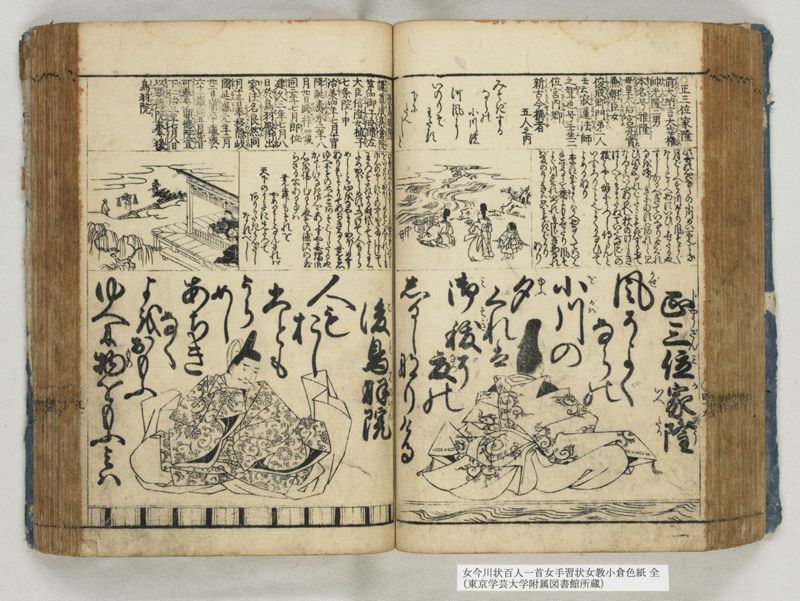
翻刻
【右丁 上段】
○正三位家隆
前(さきの)大納言(だいなごん)太宰権(だざいごんの)
帥(そつ)光隆(みつたかの)二男
本名(もとのな)号(こうす)_二雅隆(まさたかと)_一
母(はゝは)皇太后宮(くわうだいこうくうの)亮(すけ)実(さね)
兼(かね)朝臣(あつそんの)女(むすめ)
俊成卿(しゆんせいきやうの)門弟(もんてい)一人
云云 寂蓮法師(じやくれんほつし)
之 聟(むこ)也号(こうす)_二壬生(みぶ)二
位 宮内卿(くないきやうと)_一
新古今(しんこきん)撰者(せんじや)
五人之内
みそぎする
ならの
小川の
河風に
いのりぞ
わたる
下に
たへ
し
と
【同 中段】
此哥の心はならの小川めい所也みな
月ばらへする川なり風そよぐ
ならとうへ物にいひよせたる也
すゞしかるべきていなり夕ぐれ
なを深しきにあすはあれと思
ひ此夕なればたゝみそぎするにて
なつとはいふなるべし秋のけしき
はらへをもまたぬてい也なごしの
祓はやく秋にうつし侍らんと
いふまつりこと也よくかなひて
よめるなり
○季注にそよくはうへ物なくてはいは
れずならを楢(なら)にもたせたり風そ
よぐ川夕ぐれいづれもすゞしき物なれ
ば夏のけしきは只みそぎばかり
なり
【同 下段】
正三位(じやうざんみ)家隆(かりう)【左ルビ:いへたか】
風(かぜ)そよぐ
ならの
小川(をがは)の
夕(ゆふ)
ぐれは
御祓(みそぎ)ぞ
夏(なつ)の
しるしなりける
【左丁 上段】
○後鳥羽院
諱(いみなは)尊成(たかなり)高倉院(たかくらのいん)
第四御子 母(はゝは)贈(そう)左
大臣 信澄(のぶすみの)女(むすめ)植子(たねこ)
七条院ト申
治承(ぢしやう)四年七月十四日
降誕(こうたん)寿永(じゆゑい)二年八
月廿日 践祚(せんそ)四歳
同三年七月 即位(そくい)
建久(けんきう)三年七月八
日 於(をいて)_二鳥羽殿(とばとのに)_一御 出(しゆつ)
家(け)法名(ほうみやう)良然(りやうねん)同
月十三日 奉(たてまつる)【レ点脱】移(うつし)【二点脱】隠岐(をきの)
国(くにゝ)【一点脱】延応(ゑんをう)元年二月
廿二日 崩(ほう▢)【「す」ヵ】六十歳或ハ
六十一歳同五月廿九日
可(へき)_レ 奉(たてまつる)_レ号(こうし)_二顕徳院(けんとくいんと)_一宣(せん)
下(げ)仁治(にんぢ)三年七月八日
以(もつて)_二顕徳院(けんとくいんを)_一奉(たてまつる)_レ号(こうし)_二後(ご)
鳥羽院(とばのいんと)
【同 中段】
此哥の心は人もをしとは世の中のたみ
をいたはりおほしめす也しかれども
御心のやうによの中おさまらずして
王道すたれやる時代とてたみの
ためおぼしめすにつけて人もうら
めしと御心をなやましおぼしめす
なり是によりてあぢきなく世を思
ゆへにもの思ふとあそばしたる也
かたじけなき御心にあらずや無端御
心を傷しむると也その徳沢の至
らさる所のある事は
尭舜もそれを
やめりとなんされば
天下のうきに先たつて
ありかたき御心ざし
なるべし
【同 下段】
後鳥羽院(ごとばのいん)
人も
おし
ひとも
うら
めし
あちき
なく
よをおもふ
ゆへに物(もの)をもふみは
現代語訳
【右丁 上段】
○正三位家隆
前大納言太宰権帥光隆の次男。
本名は雅隆と号した。
母は皇太后宮亮実兼朝臣の娘。
俊成卿の門弟の一人である。
寂蓮法師の婿である。壬生二位、宮内卿とも号した。
新古今和歌集撰者五人のうちの一人。
禊する
楢の
小川の
河風に
祈りぞ
渡る
下に
絶え
し
と
【同 中段】
この歌の心は、楢の小川は名所である。皆月祓いをする川である。風がそよぐ楢という上の物に言い寄せたのである。涼しいであろう体である。夕暮れなお深しきに明日はあれと思い、この夕なればただ禊するにて夏とは言うのであろう。秋の気色、祓いをも待たぬ体である。名越の祓いを早く秋に移し申そうという祭り事である。よく叶って詠んだのである。
○季吟の注に、そよぐは上の物なくては言われず、楢を楢にもたせた。風そよぐ川夕暮れいずれも涼しき物なれば、夏の気色はただ禊ばかりである。
【同 下段】
正三位家隆
風そよぐ
楢の
小川の
夕
暮れは
御祓いぞ
夏の
しるしなりける
【左丁 上段】
○後鳥羽院
諱は尊成。高倉院の第四皇子。母は贈左大臣信澄の娘植子、七条院と申す。
治承四年七月十四日降誕。寿永二年八月二十日践祚、四歳。
同三年七月即位。
建久三年七月八日、鳥羽殿にて御出家、法名良然。同月十三日、隠岐国に移し奉る。延応元年二月二十二日崩御、六十歳或いは六十一歳。同五月二十九日、顕徳院と号し奉るべき旨宣下。仁治三年七月八日、顕徳院をもって後鳥羽院と号し奉る。
【同 中段】
この歌の心は、人も愛しとは世の中の民を労わりお思いになることである。しかれども御心のように世の中治まらずして、王道廃れゆく時代とて、民のためお思いになるにつけて、人も恨めしと御心を悩ましお思いになるのである。これによって味気なく世を思うゆえに物思うとお詠みになったのである。かたじけない御心ではないか。むやみに御心を痛めるということである。その徳沢の至らざる所のあることは、堯舜もそれを止めたということなれば、天下の憂きに先立ってありがたき御心ざしなるべし。
【同 下段】
後鳥羽院
人も
愛し
人も
恨
めし
味気
なく
世を思う
ゆえに物思う身は
英語訳
【Right Page, Upper Section】
○Senior Third Rank Ietaka
Second son of former Dainagon and Dazai-gon-no-sochi Mitsutaka.
His original name was Masataka.
His mother was the daughter of Kōtaigōgū-no-suke Sanekane Ason.
One of Lord Shunzei's disciples.
Son-in-law of the monk Jakuren. Also known as Mibu Second Rank and Kunaikyō.
One of the five compilers of the Shin Kokin Wakashū.
Performing purification
at Nara's
small river
in the river wind
prayers
cross over
beneath
having
ceased
thus
【Same, Middle Section】
The heart of this poem is that Nara no Ogawa is a famous place. It is a river where everyone performs monthly purification. The wind rustling through the oak trees above is what he refers to. It would be a cool scene. Though evening deepens and one thinks tomorrow will come, because it is this evening, it is probably called summer only because of the purification rituals. The autumn atmosphere doesn't wait for purification. This is a ritual of moving the Nagoshi purification early into autumn. It is well composed to match this.
○Kigin's commentary notes that "rustling" cannot be said without something above, so he uses the oak trees. The wind rustling, the river, the evening—all are cool things, so the only sign of summer is the purification ritual.
【Same, Lower Section】
Senior Third Rank Ietaka
Wind rustling
through Nara's
small river
in the evening
twilight—
purification rituals
are summer's
only sign
【Left Page, Upper Section】
○Emperor Go-Toba
His personal name was Takanari. Fourth son of Emperor Takakura. His mother was Taneko, daughter of the posthumously promoted Sadaijin Nobusumi, known as Shichijō-in.
Born on the 14th day of the 7th month of Jishō 4. Acceded to the throne on the 20th day of the 8th month of Juei 2, at age four.
Formally enthroned in the 7th month of the same third year.
On the 8th day of the 7th month of Kenkyū 3, he became a monk at Toba Palace with the Buddhist name Ryōnen. On the 13th day of the same month, he was exiled to Oki Province. He died on the 22nd day of the 2nd month of En'ō 1, at age sixty or sixty-one. On the 29th day of the 5th month of the same year, an imperial decree was issued to posthumously name him Kentoku-in. On the 8th day of the 7th month of Ninji 3, Kentoku-in was renamed Go-Toba-in.
【Same, Middle Section】
The heart of this poem is that "people too are dear" expresses his compassionate thoughts for the people of the realm. However, the world does not conform to his imperial will, and in this age when the royal way declines, his concern for the people also makes him feel that "people are resentful," troubling his heart. Therefore, he composed this poem expressing his melancholy thoughts about the tasteless world. What a gracious imperial heart this shows—he grieves unnecessarily. That there are places his virtuous influence doesn't reach is something even the sage emperors Yao and Shun had to accept, so this represents his precious concern that precedes the sorrows of the realm.
【Same, Lower Section】
Emperor Go-Toba
People too
are dear
people too
are re-
sentful
tastelessly
I contemplate the world—
therefore this contemplating self