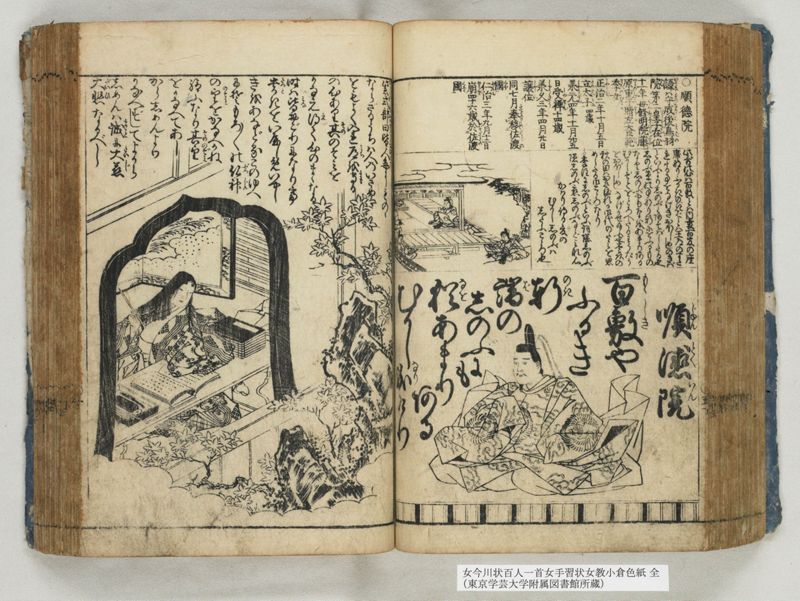
翻刻
【右丁 上段】
○順徳院
諱(いみな)ハ守成(もりなり)後鳥羽(ことばの)
院(いん)第二 皇子(わうし)在位(ざいい)
十一年 母(はゝは)修明院(しふみやういん)藤(ふぢ)
原重子(わらのしげこ)贈(そう)左大臣 範(のり)
季(すへの)女(むすめ)
正治(しやうぢ)二年十月五日
立(たつ)【二点脱】太子(たいしに)_一 四歳
承元(しやうげん)四年十一月廿五
日 受禅(しゆせん)十四歳
承久(しやうきう)三年四月廿日
譲位(しやうい)
同七月 奉(たてまつる)_レ移(うつし)_二佐渡(さどの)
国(くにゝ)_一
仁治(にんぢ)三年九月十二日
崩(ほうず)四十六歳 於(おいて)_二佐渡(さどの)
国(くにゝ)_一
【同 中段】
此哥の心は百敷とは内裏百官の座
席なりふるきのきばとは王道のすた
れたる事をなげきおほしめしのきば
といふよりしのぶとあそばしたる也
しのぶ草の事なり軒にをふるもの
なりしのぶにもなをあまりある
むかしぞとをとろへたるわうたう
をおぼしめしなげかせ給ふ也巻頭の
秋の田はおさまれる御代のたみを思
めしたる御こゝろなり
○季注にしのぶといふ詞堪しのぶ
隠しのぶ恋しのぶなどみな心
かはり侍る爰の
むかししのぶは
したふこゝろ也
【同 下段】
順徳院(じゆんとくいん)
百敷(もゝしき)や
ふるき
軒(のき)
端(ば)の
しのぶに
も
猶(なを)あまり
ある
むかし成(なり)けり
【左丁】
紫式部(むらさきしきぶの)曰(いはく)皆(みな)人毎(ひとこと)にものゝ
ならざるうちは人のいさめ
をもよく入れ道(みち)を守(まも)る
の心あり其(その)のそみを
かなえ得(え)て心のまゝなる
時は皆(みな)おごりになりて
貴(たつと)きをいやしめいやし
きをあなどるこのゆへ
にそもろ〳〵の仏神(ぶつじん)
の望(のそみ)をかなへかね
給ふなり其(その)望(のぞみ)
をかなへてあし
からしめんより
かなへずしてよから
しめんは誠(まこと)に大慈(たいじ)
大悲(だいひ)なるべし
現代語訳
【右丁 上段】
○順徳院
諱は守成。後鳥羽院の第二皇子。在位十一年。母は修明院藤原重子、贈左大臣範季の娘。
正治二年十月五日、太子に立てられる、四歳。
承元四年十一月二十五日、受禅、十四歳。
承久三年四月二十日、譲位。
同年七月、佐渡国に移される。
仁治三年九月十二日、佐渡国にて崩御、四十六歳。
【同 中段】
この歌の心は、百敷とは内裏で百官が座る席のことである。古き軒端とは王道が廃れたことを嘆いてお思いになり、軒端というところから忍ぶとお詠みになったのである。忍ぶ草のことである。軒に生えるものである。忍ぶにもなお余りある昔よと、衰えた王道をお思いになり嘆かれるのである。巻頭の「秋の田」は治まった御代の民を思し召された御心である。
○季吟の注に、忍ぶという詞は、堪え忍ぶ、隠し忍ぶ、恋し忍ぶなど皆心が変わる。ここの昔忍ぶは慕う心である。
【同 下段】
順徳院
百敷や
古き
軒
端の
忍ぶにも
なお余りある
昔なりけり
【左丁】
紫式部が言うには、皆人は誰でも物事が思うようにならないうちは、人の諫めもよく聞き入れ、道を守る心がある。その望みを叶え得て心のままになる時は、皆驕りになって、貴きものを卑しめ、卑しきものを侮る。このゆえに諸々の仏神が望みを叶えかねるのである。その望みを叶えて悪くさせるよりも、叶えずして良くさせるのは、誠に大慈大悲というべきである。
英語訳
【Right Page, Upper Section】
○Emperor Juntoku
His personal name was Morinari. Second son of Emperor Go-Toba. Reigned for eleven years. His mother was Shūmyō-in Fujiwara no Shigeko, daughter of the posthumously promoted Sadaijin Norisue.
On the 5th day of the 10th month of Shōji 2, he was made Crown Prince at age four.
On the 25th day of the 11th month of Jōgen 4, he received the throne at age fourteen.
On the 20th day of the 4th month of Jōkyū 3, he abdicated.
In the 7th month of the same year, he was exiled to Sado Province.
On the 12th day of the 9th month of Ninji 3, he died in Sado Province at age forty-six.
【Same, Middle Section】
The heart of this poem: "momoshiki" refers to the seats where the hundred court officials sit in the imperial palace. "Ancient eaves" expresses his lament over the decline of the royal way, and from "eaves" he composed about "shinobu" (remembering/longing). This refers to the shinobu fern that grows on eaves. "Even in remembrance there is still too much of the past"—he grieves over the declined royal way. The opening poem "Aki no ta" (autumn fields) expresses his imperial concern for the people of a well-governed reign.
○Kigin's commentary notes that the word "shinobu" has different meanings: enduring, hiding, yearning in love—all with different nuances. The "remembering the past" here means a heart that longs for bygone days.
【Same, Lower Section】
Emperor Juntoku
At the hundred-fold palace,
even in remembering
the ancient
eaves
with their shinobu ferns,
there is still
too much
of the past
【Left Page】
Murasaki Shikibu says: All people, when things do not go as they wish, readily accept others' admonitions and have a heart that keeps to the right path. When their desires are fulfilled and they can do as they please, they all become arrogant, despising what is noble and scorning what is humble. For this reason, the various buddhas and gods find it difficult to fulfill people's wishes. Rather than granting wishes and making people worse, not granting them and making people better is truly the embodiment of great compassion and great mercy.