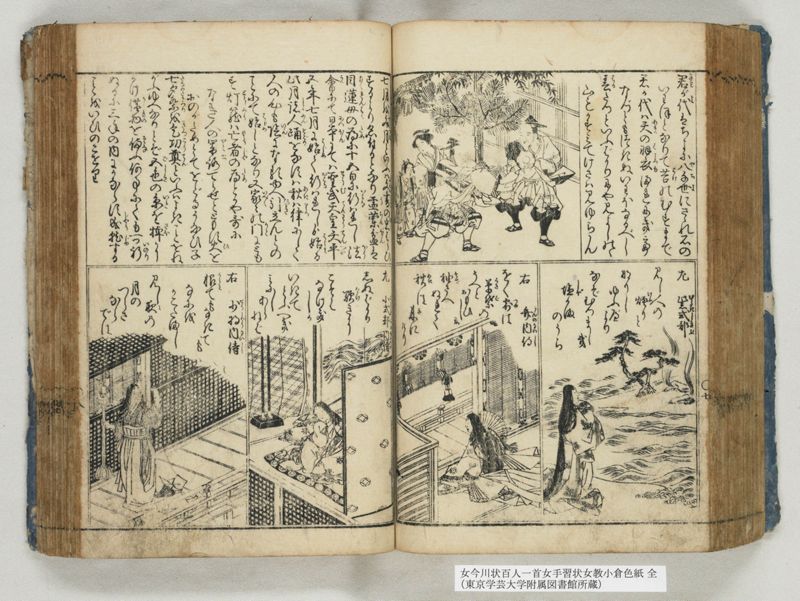
翻刻
【右丁 上段】
君(きみ)が代(よ)はちよに八千世(やちよ)にさゝれ石の
いわほとなりて苔(こけ)のむすまで
君か代は天(あま)の羽衣(はころも)まれにきて
なづともつきぬいわほなるべし
春(はる)たつといふばかりにやみよしのゝ
山もかすみてけさは見ゆらん
【挿絵あり】
【左丁 上段】
七月を文月(ふみつき)といふは文書(ふんしよ)の虫(むし)はらひ
するより名付るとなり盂蘭盆(うらんぼん)は
目蓮(もくれん)母(はゝ)の為(ため)に十五日に行(おこな)はれし法(ほう)
会(え)にて日本(につほん)にては聖武天皇(せうむてんわう)天平(てんへい)
五年七月に始(はじめ)て行(おこな)はれしより始(はじま)る
此月 諸人(しよにん)踊(をどり)をなすは秋(あき)は律(りつ)にして
人の心も陰(いん)になるゆへ引(ひき)立んとの
ことにて始(はじめ)しとなり又 家々(いへ〳〵)の門(かと)にとも
す灯籠(とうろう)は亡者(もうじや)の為(ため)とかや哥に
なき人の闇路(やみぢ)てらせとともす火(ひ)を
おのがためとてをどるうなひ子
七夕祭(たなはたまつり)を乞巧奠(きつこうてん)といふはよきことをね
がふゆへなりとぞ五色(ごしき)の糸(いと)を棹(さほ)に
かけ借物(かしもの)を備(そな)ふ何事にても一ツ祈(いのり)
ぬるに三年の内にかならす成就(じやうじゆ)する
ことをいひのこせり
【右丁 下段】
左 紫式部(むらさきしきぶ)
見し人の
煙(けふ)り
と
なりし
ゆふべ
より
なぞ
むつまし
き
塩(しぼ)かま【濁点の打間違い】
のうら
右 弁内侍(べんのないし)
をく露(つゆ)は
草葉(くさば)
の
うへと
おもひ
し
に
袖(そで)さへ
ぬれて
秋(あき)は
来(き)に
けり
【左丁 下段】
左 小式部内侍(こしきぶのないし)
しぬばかり
歎(なけ)きに
こそは
なけき
しか
いきて
とふへき
みにし
あら
ねば
右 少将内侍(せうしやうないし)
恨(うらみ)てもなきて
も
なにを
かこたまし
見し夜(よ)の
月の
つらさ
なら
では
現代語訳
【右丁 上段】
君が代は千代に八千代にさざれ石の
岩となりて苔の生すまで
君が代は天の羽衣まれに来て
なづとも尽きぬ岩であるべし
春立つというばかりで吉野の
山も霞んで今朝は見えるだろう
【挿絵あり】
【左丁 上段】
七月を文月というのは文書の虫干し
をすることから名付けられたということである。盂蘭盆は
目連が母のために十五日に行った法
会であって、日本では聖武天皇の天平
五年七月に初めて行われたことから始まる。
この月、諸人が踊りをするのは、秋は律(陰の音階)であって
人の心も陰になるので、気持ちを引き立てようという
ことで始めたということである。また家々の門に灯す
灯籠は亡者のためだという。歌に
亡き人の闇路照らせと灯す火を
己がためとて踊る海女の子
七夕祭を乞巧奠というのは良きことを願う
ためということである。五色の糸を竿に
かけ、供物を供える。何事でも一つ祈り
込めば三年の内に必ず成就する
ことを言い残している。
【右丁 下段】
左 紫式部
見し人の
煙
と
なりし
夕べ
より
なぞ
睦まじき
塩釜
の浦
右 弁内侍
置く露は
草葉
の
上と
思い
し
に
袖さえ
濡れて
秋は
来
けり
【左丁 下段】
左 小式部内侍
死ぬばかり
嘆きに
こそは
嘆き
しか
生きて
問うべき
身にし
あら
ねば
右 少将内侍
恨んでも泣いて
も
何を
か嘆こうか
見し夜の
月の
つらさ
なら
では
英語訳
【Right Page, Upper Section】
May the reign of our lord continue
for a thousand, nay, eight thousand generations,
until pebbles grow into mighty rocks
and moss grows upon them
May the reign of our lord be like heavenly robes rarely worn,
lasting forever like enduring rock
Just because spring is said to arrive,
Mount Yoshino too appears hazy
this morning
[Illustration present]
【Left Page, Upper Section】
July is called "Fumitsuki" (Letter Month) because it is when one airs out
documents to prevent insect damage, hence the name. Obon is
a Buddhist ceremony that Mokuren held on the 15th day for his
mother's sake. In Japan, it began when Emperor Shōmu first
held it in the 7th month of Tenpyō 5 (733 CE).
In this month, when all people dance, it is because autumn follows the ritsu scale (minor mode),
and people's hearts also become melancholy, so dancing was begun
to lift their spirits. Also, the lanterns lit at
each house's gate are said to be for the deceased. In a poem:
I light this fire to illuminate the dark path of the dead—
The fisher-girl dances for her own sake
The Tanabata festival is called Kikkōden because it is for
wishing for good things. Five-colored threads are hung
on bamboo poles, and offerings are prepared. It is said that
if you pray earnestly for anything, it will surely
be fulfilled within three years.
【Right Page, Lower Section】
Left Murasaki Shikibu
Since that evening
when the person I saw
became
smoke,
why has
Shiogama
Bay
become so
dear to me?
Right Ben no Naishi
I thought
the dew that falls
was only
on grass
leaves,
but even my sleeves
are wet—
autumn has
come
indeed
【Left Page, Lower Section】
Left Koshikibu no Naishi
I could die
from this grief—
such is
my
sorrow,
since I am not
one who should live
to ask
about it
Right Shōshō no Naishi
Whether I resent or
weep,
what should
I lament—
if not the cruelty
of the moon
on that night
I saw
you?