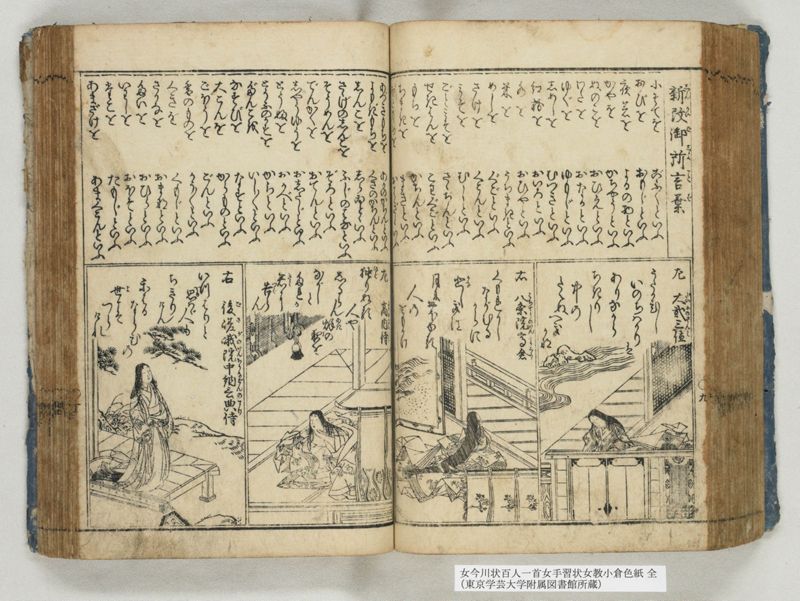
翻刻
【右丁 上段】
新改(しんかい)御所言葉(ごしよことば)
【縦線有り】
小そてを ごふくといふ
おびを おもじといふ
夜着を よるの物といふ
かやを かちやうといふ
ぬのこを おひえといふ
わたを おなかといふ
ゆぐを ゆもじといふ
しめしを むつきといふ
紅粉を おいろといふ
水を おひやといふ
米を うちまきといふ
めしを ぐごといふ
さけを くこんといふ
みそを むしといふ
ごとみそを さゝぢんといふ
せきはんを こわぐごといふ
もちを かちんといふ
ちまきを まきといふ
ぼたもちを おはぎといふ
【左丁 上段】
あづきもちを あかのかちんといふ
よもぎもちを くさのかちんといふ
しんこを しらゐとゝいふ
さゝげのしんこを ふじのはなといふ
そうめんを ぞろといふ
でんかくを おてんといふ
しやうゆうを おしたじといふ
とうふを おかべといふ
とうふのかすを からといふ
だんこを いし〳〵といふ
なすびを なすといふ
大こんを からものといふ
ごぼうを ごんといふ
香のものを かう〳〵といふ
くきを くもじといふ
さかなを おまなといふ
たいを おひらといふ
いわしを おほそといふ
たこを たもじといふ
あまざけを あまくこんといふ
【右丁 下段】
左 大弐三位(だいにのさんみ)
うたかひし
いのちはかり
は
ありなから
ちきり
し
中の
たえぬへき
かな
右 八条院高倉(はちてうのいんたかくら)
くもれかし
ながむる
からに
悲(かな)し
きは
月におほゆる
人の
をもかけ
【左丁 下段】
左 高内侍(たかのないし)
独(ひと)りぬる
人や
しるらん
秋(あき)の
ながし 夜(よ)を
と
たれか
君(きみ)に
告(つぐ)ら
ん
右 後嵯峨院(ごさがのいん)中納言典侍(ちうなごんのすけ)
いつはりと
思(をも)はゞ【ママ】
人も
ちきり
けん
かはる
ならひ
の
世(よ)こそ
つら
けれ
現代語訳
【右丁 上段】
新改御所言葉
【縦線有り】
小袖を 呉服という
帯を 面文字という
夜着を 夜の物という
蚊帳を 蚊帳という
布子を お冷えという
綿を お中という
湯具を 湯文字という
褌を 六つ木という
紅粉を お色という
水を お冷やという
米を 打ち撒きという
飯を ぐごという
酒を くこんという
味噌を 虫という
胡味噌を ささじんという
赤飯を 強いぐごという
餅を かちんという
粽を 巻きという
牡丹餅を おはぎという
【左丁 上段】
小豆餅を 赤のかちんという
蓬餅を 草のかちんという
新粉を 白糸という
大角豆の新粉を 藤の花という
素麺を ぞろという
田楽を おてんという
醤油を お下地という
豆腐を お壁という
豆腐の滓を 殻という
団子を 石々という
茄子を 茄子という
大根を 辛物という
牛蒡を ごんという
香の物を 香々という
茎を 茎文字という
肴を お菜という
鯛を お平という
鰯を お細という
蛸を 蛸文字という
甘酒を 甘くこんという
【右丁 下段】
左 大弐三位
歌い合いし
命ばかりは
ありながら
契り
し
仲の
絶えぬべき
かな
右 八条院高倉
曇れかし
眺むる
からに
悲しきは
月に似る
人の
面影
【左丁 下段】
左 高内侍
独り寝る
人や
知るらん
秋の
長し 夜を
と
誰か
君に
告げら
ん
右 後嵯峨院中納言典侍
偽りと
思わば
人も
契り
けん
変わる
習い
の
世こそ
辛
けれ
英語訳
【Right Page, Upper Section】
Newly Revised Court Language
【Vertical line present】
Kosode (undergarment) is called "gofuku"
Obi (sash) is called "omoji"
Night wear is called "yoru no mono"
Mosquito net is called "kachō"
Padded garment is called "ohie"
Cotton is called "onaka"
Bath clothes are called "yumoji"
Loincloth is called "mutsuki"
Face powder is called "oiro"
Water is called "ohiya"
Rice is called "uchimaki"
Cooked rice is called "gugo"
Sake is called "kukon"
Miso is called "mushi"
Sesame miso is called "sasajin"
Red rice is called "kowa gugo"
Rice cake is called "kachin"
Rice dumpling wrapped in bamboo is called "maki"
Botamochi (sweet rice ball) is called "ohagi"
【Left Page, Upper Section】
Azuki rice cake is called "aka no kachin"
Mugwort rice cake is called "kusa no kachin"
Rice flour is called "shiraito"
Cowpea rice flour is called "fuji no hana"
Somen noodles are called "zoro"
Dengaku (grilled tofu) is called "oten"
Soy sauce is called "oshitaji"
Tofu is called "okabe"
Tofu dregs are called "kara"
Dumplings are called "ishi-ishi"
Eggplant is called "nasu"
Daikon radish is called "karamono"
Burdock is called "gon"
Pickled vegetables are called "kō-kō"
Stems are called "kumoji"
Side dishes are called "omana"
Sea bream is called "ohira"
Sardines are called "ohoso"
Octopus is called "tamoji"
Sweet sake is called "ama kukon"
【Right Page, Lower Section】
Left Daini no Sanmi
We sang together—
only life remains
though we live on,
the bond
we
made
will surely
break
Right Hachijō-in Takakura
Let it cloud over—
for gazing
brings
such sadness:
the person's face
that resembles
the moon
【Left Page, Lower Section】
Left Taka no Naishi
Does the person
sleeping
alone
know
the autumn
long nights—
and
who will
tell you,
my lord
of this?
Right Go-Saga-in Chūnagon no Suke
If you think it
a lie,
then people
too must have
made
promises
This world
of changing
customs
is truly
cruel