翻刻
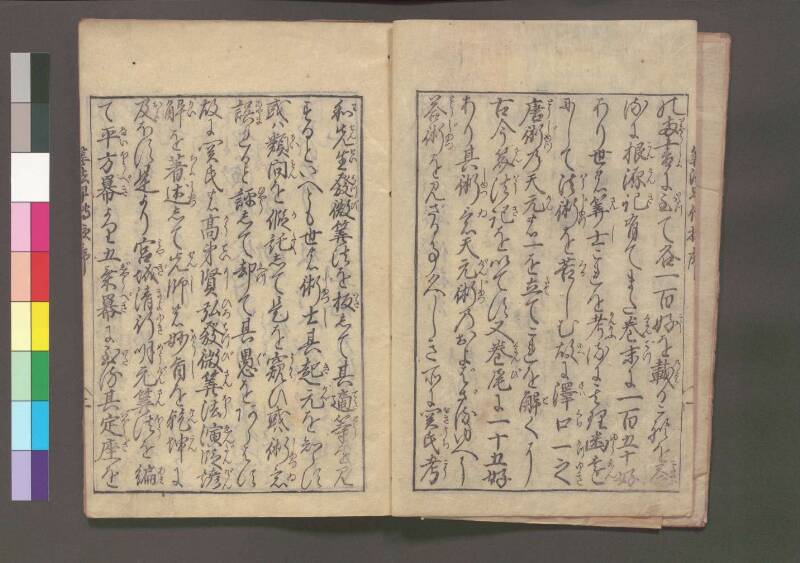
の両書(りやうしよ)に至(いたつ)て各一百/好(こう)を載(のす)るこれを答(こたふ)
るに根源記(こんけんき)有てまた巻末(くわんばつ)に一百五十好
あり世の筭士(さんし)これを考(かんかふ)るに其理/幽遠(ゆうゑん)
にして法術(はうじゆつ)を苦(くる)しむ故(ゆへ)に沢口一之(さはくちかつゆき)
唐術(とうじゆつ)の天/元(けん)の一を立(たて)てこれを解(と)くに
古今/筭法記(さんはうき)を以てす又/巻尾(くわんび)に一十五好
あり其/術意(しゆつゐ)天/元術(げんじゆつ)のおよばざるゆへに
答術(とうじゆつ)を見ざる事久しき所に関氏考(せきうちこう)
和先生(わせんせい)発微(はつび)筭法を板(いた)して其/適等(てきとう)を見
するといへとも世の術士(じゆつし)其/起元(きげん)を知らす
或は類問(るいもん)を仮託(かたく)して是を窺(うかゝ)ひ或は術意(しゆつゐ)
誤(あやま)れると評(ひやう)して却(かへつ)て其/愚(ぐ)をあらはす
故に関氏の高弟(かうてい)賢弘(よしひろ)發微筭法演段諺(はつびさんほうゑんだんげん)
解(かい)を著述(ちよしゆつ)して先師(せんし)の妙旨(めうし)を乾坤(けんこん)に
及(およ)ほす是より宮城清行(みやぎきよゆき)明元筭法(めうげんさんほう)を編(あみ)
て平方冪(へいほうべき)より五/乗冪(じやうべき)に至(いた)る其/定座(ぢやうざ)を
現代語訳
(前ページより続く)この両書(※1)に至っては、それぞれ百問ずつを載せており、これに答えるための『根源記』(※2)があり、また巻末には百五十問が収められている。世の算士たちがこれを考えるに、その理は深遠で、解法に苦しんだ。そこで沢口一之(※3)は、唐(中国)の数学における天元術(※4)を用いてこれを解き、『古今算法記』(※5)をもってその解答とした。また、その巻末には十五問が収められているが、その術意(解法の意図)は天元術でも及ばないものであったため、答えの解法を見ることができないまま長い年月が経った。そうしたところ、関孝和(※6)先生が『発微算法』(※7)を刊行して、その適切な解を示したといえども、世の術士たちはその起元(計算の出発点・根拠)を理解できず、ある者は類似の問題を仮借して内容を窺おうとし、ある者は術意が誤っていると批評して、かえって自らの愚かさをさらけ出した。そこで関氏の高弟・建部賢弘(※8)は、『発微算法演段諺解』(※9)を著述して、先師の深遠な意図を天下に広めた。これより宮城清行(※10)は『明元算法』(※11)を編み、平方冪から五乗冪に至るまでの定座(各冪乗の位置・定め)を(次ページへ続く)
英語訳
(Continued from the previous page) When it comes to these two books (※1), each contains one hundred problems. To answer these, there exists the *Kongenki* (※2), and furthermore, one hundred and fifty problems are appended at the end of its volumes. When the mathematicians of the day attempted to work through these problems, the principles were found to be so profound and obscure that they struggled greatly with the methods of solution. Thereupon, Sawaguchi Kazuyuki (※3) employed the Chinese mathematical technique of *tianyuan* (the "celestial element" method) (※4) to solve them, presenting his solutions through the *Kokon Sanpōki* (※5). Additionally, fifteen problems were appended at the end of that work; however, their intended methods of solution lay beyond even what the *tianyuan* technique could reach, and so no solutions were seen for a great many years. It was then that Master Seki Takakazu (※6) published the *Hatsubi Sanpō* (※7), demonstrating appropriate solutions. Yet the mathematicians of the world could not understand the origins of his calculations (*kigen*); some attempted to peer into the content by substituting similar problems, and others went so far as to criticize his methods as erroneous, thereby only revealing their own ignorance. Thus, Takebe Katahiro (※8), the most distinguished disciple of Seki, composed the *Hatsubi Sanpō Endan Genkai* (※9), spreading his late master's profound intentions throughout the land. From this point, Miyagi Kiyoyuki (※10) compiled the *Myōgen Sanpō* (※11), covering the fixed positions (*teiza*) of terms from the square power up to the fifth power— (continued on next page)