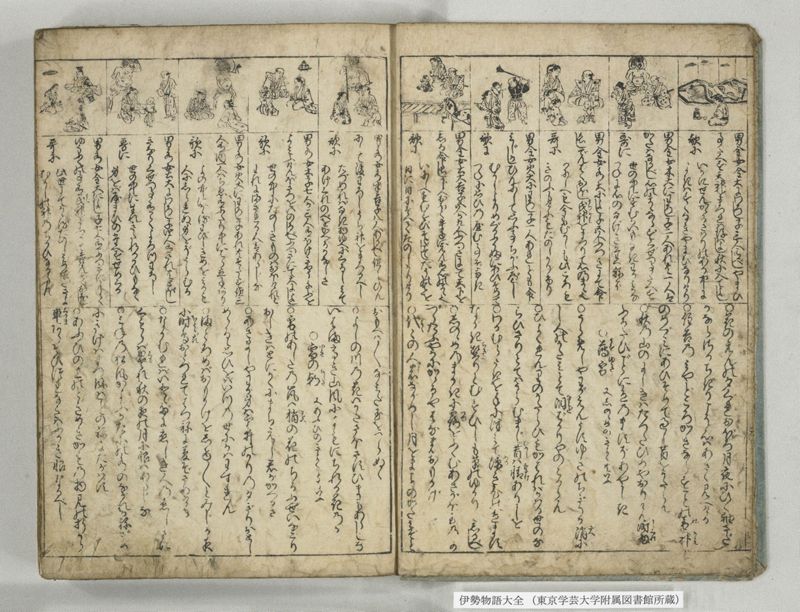
翻刻
【右丁・上段】
男金女金大にわろし子三人有べしやまひ
事たへず天神をまつれは後はよし秋に入てよし
歌に いかにせんかゝるさはりのある中に
よきはすくなきやまひなりけり
男金女木大にわろし子二人あれ共一人は
かたはなるべし心のまゝならずくぜつ事たへす
歌に 世の中にすむかいもなきわがみかな
つねに心のなげきたへねば
男金女水大によし子五人ふつきにて命
長しでんばく#1おほし氏神(うぢがみ)をまつりて心のまゝ也
歌に いにしへも今もむかしも此ころも
きのふもけふもたのしかりけり
男金女火大にわろし子一人あれども命
みじかしひんにして思ふ事ちがふべし
歌に むかしよりめぐるふうふにあひそめて
つねに思ひのやむ事ぞなき
男金女土大吉子五人か九人ふつきにして天下を
しる命長し下人おほく牛馬にえん有心のまゝ也
歌に いにしへもむすびそだてしたうのはを
日に日にそへてたのしかりけり
【右丁・下段】
〇花のえんの夕ぐれおぼろ月夜にひく袖さだ
かならざるちぎりこそ心はあさく見へける
〇住吉のみやどころかきならすことの音(ね)神(かみ)
のめぐみにあひそめて過し昔をかたらん
〇秋の山のにしきはたつたびめやおりけん時雨(しくれ)
ふるたびごとに色のますぞあやしき
〇/薄雪(うすゆき) 又しのゝめのきよく共いふ
〇うらめしやわがえんうすゆきのちぎりか消(きへ)に
し人のかたみとて泪(なみだ)ばかりやのこるらん
〇ひよくれんりのかたらひもかはればかはる世のな
らひさりとてはうらむまじ昔(むかし)は情(なさけ)ありしを
〇わかむらさきを手につみて深(ふか)き心の色ます
ながき契(ちぎ)りとむすひしも草のゆかり□しるべし
〇しのゝめのまがきに露(つゆ)をふくむあさがほ玉のか
づらたふやかにかゝるやはなのおもかげ
〇/代々(よゝ)の人のながめし月をまよのかたみぞと
【左丁・上段】
男水女水半吉子八人あるべし但し但しひん
にして後わろしうぢ神をまつるべし
歌に たづぬればなき物ゆへにくるしみて
あけくれのべをかへるかなしさ
男水女木子七人か三人有ほけきやう千ぶを
よみふげんぼさつをいのるべしふつきにて大によし
歌に 世の中にたのしきものはおほけれど
われにまされる人はあらじな
男水女火大にわろし子あれ共そだゝず但三
人有内一人はちゑ有ふたり中にはら立事あり
歌に よの中にかゝるわびしきめをみるも
人にしられぬ身をぞうらむる
男水女土大にわろし子四人有され共とぼし
きなりくぜつ事有てよろづわろし
歌に 世の中に生れきたれるかひもなく
身をばやまひのたへずせめくる
男水女金大によし子七人有ふつきにして
ゆうふくの事有/氏(うぢ)神をまつりて吉けんぞくおほし
歌に 此世にてかゝるたのしみめてたさよ
むかしの神のちかひなるらん
【左丁・下段】
おもへは〳〵なみだ玉をつらぬく
〇よしの川の花いかださほさすひまもあらしな
いはま高き山風に□もにちれる花のか
〇/雪(ゆき)の朝(あした) 又あふひのきよくともいふ
〇雪のあしたの嵐は梢(こすへ)の花のちるふぜいなこり
おしきはとにかくにまちえし君がかへるさ
〇あさましやわが身は雲井のかりの夕ぎりおとし
めらるゝ思ひをばいつの世にかはわすれん
〇まとろめばおもかげをしげ〳〵とみじか夜
に時鳥(ほとゝぎす)おとづれてはつねに夢ぞさめける
〇ながむればいとゞだに恋しき人の恋しきに
くもらば曇(くも)れ秋の夜の月に恨はあらじな
霧に
〇みねの松風かよふかたにの水のながれかねざめ
にきけはまつ風はことのねにたがはず
〇あふひの上のときめきかもの物見の折から
車(くるま)あらそひつれなきはふかき恨なるべし
現代語訳
【右丁・上段】
**男金・女金:** 大いに悪し。子は三人いるべきだが、病が絶えない。天神を祀れば後には良くなる。秋に入ると良し。
歌:「どうすればよいのか、このような障りのある中に、良いことは少なく、病ばかりなりけり」
**男金・女木:** 大いに悪し。子は二人いるが、一人は体が不自由になるだろう。思い通りにならず、口論が絶えない。
歌:「この世に生きている甲斐もないわが身よ、常に心の嘆きが絶えないので」
**男金・女水:** 大いに良し。子は五人、病気がちだが命は長い。田畑の所有が多い。氏神を祀れば心のままになる。
歌:「いにしえも今も昔も、このごろも、昨日も今日も楽しいことだ」
**男金・女火:** 大いに悪し。子は一人いるが、命が短い。貧しくて、思うことが叶わない。
歌:「昔より巡り合った夫婦として愛し合い始めて、常に思いが止むことがない」
**男金・女土:** 大吉。子は五人か九人、病気がちだが天下を知る(知識・見識に優れる)。命は長く、下人も多く、牛馬との縁もある。心のままになる。
歌:「いにしえより結び育ててきた縁(たうのは)を、日に日に重ねて楽しいことだ」
---
【右丁・下段】(謡曲・歌謡の詞章)
○花の宴の夕暮れ、朧月夜に引く袖、定かならぬ契りこそ、心は浅く見えることよ。
○住吉の御神域で掻き鳴らす琴の音よ、神のめぐみに愛し合い始めて、過ぎし昔を語ろう。
○秋の山の錦は、竜田姫が折ったのだろうか。時雨が降るたびに色が増すのが不思議だ。
○薄雪(別名「しののめの曲」ともいう)
○恨めしいや、わが縁薄雪の契りが消えた人の形見として、涙ばかりが残るのだろうか。
○比翼連理の語らいも、変われば変わる世の習い。さりとて恨むまじ、昔は情けがあったのに。
○若紫を手に摘んで、深い心の色を増し、長き契りと結んだのも、草の縁(ゆかり)を知るべし。
○東雲(しののめ)の籬(まがき)に露を含む朝顔、玉の蔓(かずら)たおやかにかかる、花の面影よ。
○代々の人が眺めた月を、(我が)前髪(まよ)の形見とぞ…
---
【左丁・上段】
**男水・女水:** 半吉。子は八人いるべきだが、ただし貧しくて後には悪くなる。氏神を祀るべし。
歌:「尋ねれば、ないものゆえに苦しんで、朝に晩に野を帰る悲しさよ」
**男水・女木:** 子は七人か三人いる。法華経千部を読み、普賢菩薩に祈るべし。病気がちだが大いに良し。
歌:「この世に楽しいものは多くあれど、わたしに勝る人はいないだろう」
**男水・女火:** 大いに悪し。子はいるが育たない。ただし三人いて、内一人は知恵がある。二人の間には腹を立てることがある。
歌:「世の中にこのような侘しい目を見るのも、人に知られぬわが身を恨むことよ」
**男水・女土:** 大いに悪し。子は四人いるが、それでも貧しい。口論があって、万事が悪し。
歌:「この世に生まれてきた甲斐もなく、我が身を病が絶えず責め苦しめる」
**男水・女金:** 大いに良し。子は七人いる。病気がちだが、裕福なことがある。氏神を祀って吉。眷属(家族・従者)が多い。
歌:「この世にてこのような楽しみ、めでたさよ。昔の神の誓いによるのであろう」
---
【左丁・下段】(謡曲・歌謡の詞章)
○思えば思えば、涙の玉が(数珠のように)貫かれる。
○吉野川の花筏、竿を差す間もあるまい。岩の間の高い山風に、(□)散る花の香よ。
○雪の朝(別名「あふひの曲」ともいう)
○雪の朝(あした)の嵐は梢の花を散らす風情よ、名残惜しいのは、とにもかくにも待ち得た君の帰るさ(帰り)よ。
○あさましや、わが身は雲居の雁の夕霧、貶められる思いを、いつの世にか忘れられようか。
○まどろめば、面影をしきりに(繰り返し)、短い夜に時鳥(ほととぎす)が訪れて、初音に夢がさめることよ。
○眺めれば、ますます恋しい人の恋しさよ。曇るなら曇れ、秋の夜の月に恨みはあるまい。
(続き)霧に…
○峰の松風が通う方に水が流れ、寝覚めに聞けば、松風は琴の音に違わない。
○葵の上のときめき(栄え)、賀茂の祭の物見の折から、車争いよ。つれなきは深い恨みなるべし。
英語訳
**[Right Folio, Upper Section]** — Five-Element Compatibility Divination: Metal Element Pairings
**Male Metal + Female Metal:** Greatly inauspicious. They may have three children, but illness will be constant. If they venerate the Tenjin deity, things will improve later. Auspicious upon entering autumn.
Poem: "What am I to do? In the midst of such obstacles, the good is scarce, and illness abounds."
**Male Metal + Female Wood:** Greatly inauspicious. They will have two children, but one is likely to be physically disabled. Things will not go as wished, and quarrels will be unceasing.
Poem: "There is no point to living in this world for me — for sorrow never ceases to fill my heart."
**Male Metal + Female Water:** Greatly auspicious. They will have five children; though prone to illness, their lives will be long. They will have extensive farmlands and fields. If they venerate the ujigami (clan deity), they will live as they wish.
Poem: "In ancient times, in the present, in days past, and in these very days — yesterday and today alike — all has been joyful."
**Male Metal + Female Fire:** Greatly inauspicious. They will have one child, but that child's life will be short. They will be poor and things will not go as they hope.
Poem: "Since ancient times, destined to meet as husband and wife, we began to love — and my longing for you has never ceased."
**Male Metal + Female Earth:** Great fortune (大吉). They will have five or nine children; though prone to illness, they will be knowledgeable about the world (lit. "know the realm"). Their lives will be long, they will have many servants, and there will be a connection to livestock. All will proceed as desired.
Poem: "From ancient times, the bond we have nurtured and cultivated — day by day it grows, and how joyful it is."
---
**[Right Folio, Lower Section]** — Passages from Noh/Kouta song lyrics
○ At the twilight of the flower banquet, in the hazy moonlit night, the sleeve I pull — the uncertain bond seems shallow at heart.
○ At the sacred precincts of Sumiyoshi, the sound of the koto I pluck — having come together through the blessing of the gods, let us speak of days long past.
○ The autumn mountain brocade — did the Princess of Tatsuta weave it? How wondrous that with each passing shower, the colors deepen.
○ [Song entitled] "Thin Snow" (also called the "Shinonome" melody)
○ How resentful I am — like a thin-snow vow that has melted away, only tears remain as a memento of that person.
○ The vow of the devoted couple (hiyoku renri) — when things change, such is the way of this world. Yet I will not bear a grudge; once, long ago, there was tenderness.
○ Gathering young purple grasses in my hands, with deepening color of heart, the long vow we bound — know it by the connection of the grasses.
○ On the fence at dawn (shinonome), morning glories heavy with dew, trailing gracefully like jeweled vines — such is the image of a flower.
○ The moon that the people of generations past have gazed upon, as a keepsake of those days…
---
**[Left Folio, Upper Section]** — Five-Element Compatibility Divination: Water Element Pairings
**Male Water + Female Water:** Half-auspicious (hankyū). They should have eight children, but will be poor, and things will worsen later. They should venerate the ujigami deity.
Poem: "Searching for what cannot be found, suffering over its absence, morning and evening wandering the fields — how sorrowful."
**Male Water + Female Wood:** They will have seven or three children. They should recite one thousand copies of the Lotus Sutra and pray to the Bodhisattva Fugen (Samantabhadra). Though prone to illness, greatly auspicious.
Poem: "Though there are many joyful things in this world, there can be no one who surpasses me in good fortune."
**Male Water + Female Fire:** Greatly inauspicious. Children will be born but will not survive. However, three children will be born, of whom one will be intelligent. Between the couple, there will be frequent anger and conflict.
Poem: "To find myself in such a wretched situation — it is my own unseen and unknown self that I resent."
**Male Water + Female Earth:** Greatly inauspicious. They will have four children, yet they will still be poor. There will be quarrels, and all manner of things will go badly.
Poem: "There is no point in having been born into this world — for illness relentlessly torments my body without ceasing."
**Male Water + Female Metal:** Greatly auspicious. They will have seven children. Though prone to illness, they will prosper. If they venerate the ujigami, auspicious. They will have many family members and attendants.
Poem: "What joy and felicity — such happiness in this world! It must be the fulfillment of a divine vow from ages past."
---
**[Left Folio, Lower Section]** — Passages from Noh/Kouta song lyrics
○ The more I think of it, the more tears thread through like pearls on a string.
○ The flower-raft on the Yoshino River — there is no time even to pole through. In the high mountain wind through the crags, the petals scatter, leaving their fragrance.
○ [Song entitled] "Snowy Morning" (also called the "Aoi" melody)
○ The storm on the snowy morning — the beauty of blossoms scattering from the treetops. What is most regrettable, in any case, is the departure of the lord I had at last waited to meet.
○ How dreadful — my life is like a wild goose in the evening mist of the high clouds, looked down upon and belittled. When in any age shall I ever forget this humiliation?
○ When I doze off, your face appears vividly, time and again — in the brief night the hototogisu (cuckoo) calls, and at its first cry my dream is broken.
○ The more I gaze, the more keenly I long for the one I love. Grow cloudy if you will — I bear no grudge against the moon on this autumn night. [Continues:] In the mist…
○ The pine wind blowing from the mountain peak, in the direction of flowing water — waking in the night and listening, the wind through the pines is indistinguishable from the sound of koto strings.
○ The glory of Lady Aoi, at the occasion of the Kamo Festival procession — the carriage dispute. The cold indifference (of the rival) must have been a source of deep resentment.