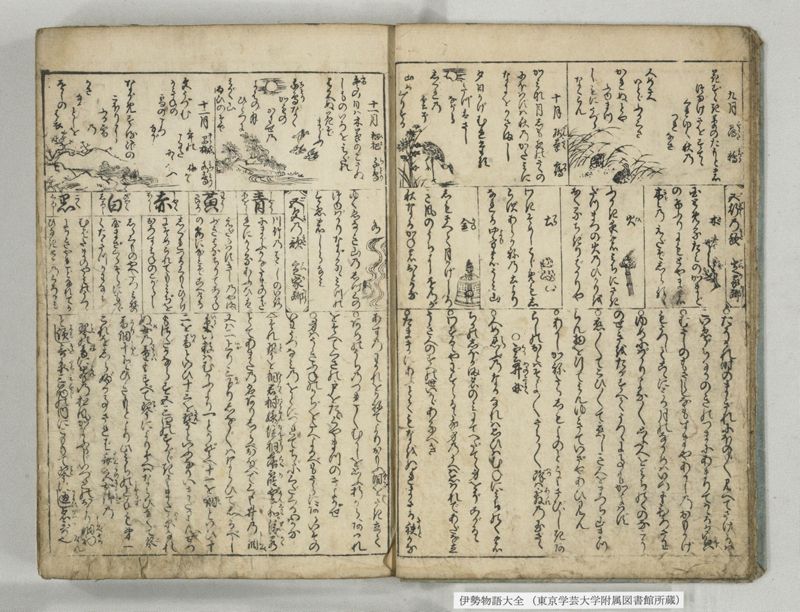
翻刻
【右丁・上段】
九月 薄(すゝき) 鶉(うづら)
花ずゝき草のたもとの
つゆけさをすてゝ
くれゆく秋の
つれなさ
人めさへ
いとゞふかくさ
かれぬとや
ふゆまつ
しもにうづら
なくらん
十月 残菊(ざんきく) 鶴(つる)
かみな月しも夜のきくの
にほはずは秋のかたみに
なにをかさまし
夕日かげむれたる
たづはさし
ながら
しくれの
雲ぞ
山めぐりする
【右丁・中段】
五行(ごぎやう)の歌(うた) 定家卿(ていかけう)
木(き)
国とめるたみのかまど
のけふりにもとやまの
木々(きゞ)のえだぞしらるゝ
火(ひ)
ふかき夜のみちにさき
だつまつの火のひかりを
おくるちぎりばかりや
土(つち)
わきそめしはじめもし
らずあらかねの土より
なれる四方(よも)のうみ山
金(かね)
しもさへて月かげしろ
き風のうちにをつ【のヵ】が
秋なるかねのおとかな
【右丁・下段】
○たそかれ時のまぎれにほの〴〵見へてさけるは
こいゑがちなかのきのつまにあまりてかゝろ夕/貌(かほ)
○むさしのもさらしなもすまやあかしのおもかげ
もうつしてこゝにこる【「みか」では】月のながめはいつもひろさわ
○ゆめにばかりよな〳〵思ふ人をみちのくのなこそ
のせきをたがすへてうつゝに事もかよはず
○恋〳〵てこひ〳〵て恋しき人をまつら#1山まつ
らん物を行てみんゆきていざやあひ見ん
○あかしかねたるしもよのとこもさびしきあ
らしのおとはそよ〳〵さら〳〵降(ふる)は霰(あられ)の玉ざゝ
○雲井曲(くもゐのきよく)
○人め忍(しの)ぶのなかなれは思ひはむねにみちのくの
ちかのしほがま名のみにてへだてゝ身をぞこがるゝ
○わするゝやわすらるゝ我身のうへは思はれであだな立
うき人のすへの世いかゞあるべき
○たまさかにあふとてもなをぬれまさる袂(たもと)かな
【左丁・上段】
十一月 枇杷(ひわ) 千鳥(ちどり)
冬(ふゆ)の日は木草のこさぬ
しものいろをえだの
はかへぬ花ぞ
まがふ
千鳥(ちとり)なく
かもの
かわせの
よはの月
ひとつに
みがく山
あひのそで
十二月 早梅(そうばい) 水鳥(みづとり)
色うづむ 年の 梅がゝ
かきねの こなた
雪のころ にゝ□【ほヵ】ふ
なが【「ら」脱ヵ】
ながめする池の
こほりに
ふる雪
の
かさ
なる
としを
をしのは衣
【左丁・中段】
水
ゆくゑなき山のしづくの
つゆばかりながるゝみつの
すゑのしらなみ
五色(ごしき)の歌(うた) 定家卿(ていかけう)
川竹のはしのいろ
《振り仮名:青|しやう|あをし》 にまがふかなたまのすだ
れにかゝるあふひは
えだかはすきしのやま
《振り仮名:黄|わう|きいろ》 ぶきはなちりてあかね
の露になみぞこへける
しぐれつるくもゝひかげ
《振り仮名:赤|しやく|あかし》 にそめられてもみぢを
おろすみねのこがらし
しらくものやへたつみねの
《振り仮名:白|びやく|しろし》 やまざくらそらにもつゞ
くたきつかわなみ
むばたまのやみのうつゝ
《振り仮名:黒|こく|くろし》 にかきやれどなれてか
ひなきとこのくろかみ
【左丁・下段】
あすのわかれをかねてよりおもふ泪(なみだ)をさき立て
○あめのうちのつれ〳〵むかしを思ふ折からあはれ
をそへてくさの戸をたゝくやまつのさよかせ
○身はうきふねのかぢをたへよるべもさらにあらいその
いわうつなみのをとにつれてちゞにくだくる心かな
△それ琴(こと)を桐君(たうくん)。桐孫(たうそん)。弦桐(げんたう)。落露(らくろ)。雲和(うんくわ)。清客(せいかく)
とてあまたの名ありしらべおぼへてくもゐの調(しらべ)
又は二/上(あが)り三/下(さが)りしな〴〵はならひてしるべし
糸(いと)い数はむかふより一とかぞへ十一を調(と)といひ十
二を音(いん)といひ十三を琴(きん)といふなりいまだりんぜつ
もさだかならず五三四のすがゞきもまだ糸(よ□)なれ
ぬ女(め)の童(わらは)もすべて琴(こと)によりそへばならひなくて琴(こ)
音調(ろり)十(しやん)とひきもとより此みちの上手(じやうず)も第一
これをしらぶる事されば斎宮女御(さいくうのにようご)の
琴(こと)の音(ね)に峯(みね)の松風かよふらじいづれのおより調初(しらべそめ)けん
と読(よみ)し哥糸三筋(うたいとみすじ)の内にこもりて琴(こと)に通(かよひ)し名哥(めいか)也
現代語訳
## 【右丁・上段】四季花鳥の歌(続き)
**九月 薄(すすき)・鶉(うずら)**
花すすき、草の袂の
露けさを捨てて
暮れゆく秋の
つれなさよ
人目さえ
いっそう深草
枯れぬとや
冬待つ
霜にうずら
鳴くらん
**十月 残菊(ざんぎく)・鶴(つる)**
神無月、霜夜の菊の
匂わずは、秋の形見に
何をかさまさん
夕日影、群れたる
鶴はさしながら
時雨の
雲ぞ
山めぐりする
---
## 【右丁・中段】五行の歌 定家卿
**木(き)**
国治める民のかまどの
今日の煙にも、遠山の
木々の枝ぞ知らるる
**火(ひ)**
深き夜の道に先立つ
松の火の光を
送る契りばかりや
**土(つち)**
湧き初めし始めも知らず
荒金の土より
なれる四方の海山
**金(かね)**
霜さえて月影白き
風の中に落つ(のヵ)が
秋なる鐘の音かな
---
## 【右丁・下段】
たそかれ時のまぎれに、ほのぼのと見えて咲けるは
小家がちな中の木の妻に余りてかかろ夕顔よ
武蔵野もさらしなも、須磨や明石のおもかげも
映してここに凝る月のながめは、いつも広沢よ
夢にばかり夜な夜な思う人を、陸奥の名越えの関を
誰が設けて、現(うつつ)には事もかよわず
恋い恋いて、恋い恋いて、恋しき人を末羅山
待つらん物を、行きて見ん、行きていざや逢い見ん
明かし兼ねたる霜夜の床もさびしき
嵐の音はそよそよ、さらさら降るは霰の玉笹よ
**雲井の曲**
人目忍ぶの仲なれば、思いは胸に、陸奥の
近の塩竈、名のみにてへだてて身をぞ焦がるる
忘るるや、忘らるる、わが身の上は思われで
あだな立つ浮き人の末の世、いかがあるべき
たまさかに逢うとてもなお濡れまさる袂かな
---
## 【左丁・上段】四季花鳥の歌(続き)
**十一月 枇杷(びわ)・千鳥(ちどり)**
冬の日は、木草のこさぬ
霜の色を、枝の
変わらぬ花ぞ
まがう
千鳥鳴く
鴨の
川瀬の
夜半の月
一つに
磨く山
合いの袖
**十二月 早梅(そうばい)・水鳥(みずとり)**
色埋む
垣根の
雪のころ
ながら(脱ヵ)
年の
こなた
ににほう
梅が香
ながめする池の
氷に
降る雪の
重なる年を
鴛鴦の羽衣よ
---
## 【左丁・中段】五行の歌(続き)
**水(みず)**
行方なき山の雫の
露ばかり流るる水の
末の白波
**五色の歌 定家卿**
**青(しょう・あおし)**
川竹の橋の色に
まがうかな、玉のすだれに
かかる葵は
**黄(おう・きいろ)**
枝交わす岸の山吹
花散りて、茜の
露に波ぞ越えける
**赤(しゃく・あかし)**
時雨つる雲も日影に
染められて、紅葉を
下ろす峰の木枯らし
**白(びゃく・しろし)**
白雲の八重立つ峰の
山桜、空にも続く
滝つ川波
**黒(こく・くろし)**
烏羽玉の闇の現に
掻き遣れど、慣れて
甲斐なきとこの黒髪
---
## 【左丁・下段】
明日の別れをかねてより思う涙を先立てて
雨の内のつれづれ、昔を思う折から哀れを
添えて、草の戸をたたく松のさよ風よ
身は浮き舟の梶を絶え、寄る辺もさらにあらいその
岩打つ波の音につれて、千々に砕くる心かな
さて、琴を桐君(とうくん)・桐孫(とうそん)・弦桐(げんとう)・落露(らくろ)・雲和(うんか)・清客(せいかく)とて
あまたの名あり。調べ覚えて雲井の調べ、
また二上り・三下がりなど、品々はならいて知るべし。
糸の数は向こうより一と数えて、十一を「調」といい、十二を「音」といい、十三を「琴(きん)」という。
いまだ輪舌(りんぜつ)もさだかならず、五三四のすがかきも、まだ糸になれぬ女の童も、すべて琴によりそえばならいなくて、
琴音調十(しゃん)と弾きもとより、この道の上手も、第一これを調べること。
されば斎宮女御の「琴の音に峰の松風かよふらじ、いずれの緒より調べ初めけん」と詠みし歌は、
糸三筋の内にこもりて、琴に通いし名歌なり。
英語訳
## [Right Folio, Upper Section] — Songs of the Four Seasons: Flowers and Birds (continued)
**Ninth Month (September): Pampas Grass (susuki) & Quail (uzura)**
The pampas grass in flower —
abandoning the dewy dampness
of its grassy sleeves,
how indifferent is the autumn
as it fades away!
Even away from human eyes,
deep in the fields of Fukakusa,
has it withered now?
Waiting for winter,
the quail must be crying
in the frost.
**Tenth Month (October): Lingering Chrysanthemums (zangiku) & Crane (tsuru)**
If the chrysanthemums of the frost night
of the Godless Month (Kannazuki)
had no fragrance,
what would we keep as a memento of autumn?
In the evening sunlight, a flock of cranes
holds its course —
while the shower clouds
circle round the mountains.
---
## [Right Folio, Middle Section] — Poems of the Five Elements, by Lord Teika (Fujiwara no Teika)
**Wood (ki)**
Even in the smoke today
rising from the hearths of the people
who govern the land —
the branches of distant mountain trees
make themselves known.
**Fire (hi)**
Going before me
on the road through the deep night —
is the light of the pine torch
all there is of a vow
to see me on my way?
**Earth (tsuchi)**
Not even knowing when it first welled forth —
from the rough, unworked earth
the seas and mountains of all four directions have formed.
**Metal/Gold (kane)**
The frost deepens, the moonlight whitens,
and in the wind there falls
the sound of the autumn bell.
---
## [Right Folio, Lower Section]
In the dim confusion of twilight, something faintly visible in bloom —
the evening face (yūgao) flower trailing beyond the eaves of a modest house in the lane.
Musashino, Sarashina, Suma, Akashi — all their reflections
gathered here in the moon's gaze: the view is always wide over Hirosawa Pond.
The one I think of night after night only in dreams —
who has set up the Boundary Barrier of Nakoso in Michinoku
so that nothing can pass between us in waking life?
Longing and longing, longing and longing for the one I love — on Mount Matsura,
there must be someone waiting; let me go and see — come, let us go and meet!
The frost-night bed, impossible to endure till dawn, is lonely too —
the sound of the storm goes rustling and pattering; what falls with that sound is hail upon the bamboo grass.
**The Kumo-i (Cloud Palace) Melody**
Ours is a love that must hide from others' eyes — my feelings fill my chest;
like Chika-no-Shiogama in Michinoku, only in name are we apart, yet I burn with longing.
Do I forget? Am I forgotten? I cannot even think of my own situation —
what will become, in the end, of that fickle, heartless person?
Even when we meet by rare chance, my sleeves are wetted all the more with tears.
---
## [Left Folio, Upper Section] — Songs of the Four Seasons: Flowers and Birds (continued)
**Eleventh Month (November): Loquat (biwa) & Plover (chidori)**
On a winter's day, the frost spares
neither grass nor tree its colour —
yet the blossoms on the branches,
unchanged, may be mistaken for it.
Plovers cry
at the river shallows
where the ducks gather;
the midnight moon
polishes the mountains
alongside the sleeves of those who meet.
**Twelfth Month (December): Early Plum (sōbai) & Waterfowl (mizutori)**
The colours lie buried
beneath the snow on the fence —
and yet, at this time of year,
the fragrance of plum blossoms
drifts and perfumes the air.
Gazing out over the pond,
on the ice,
the falling snow
layers upon the years —
oh, the feather robe of the mandarin ducks!
---
## [Left Folio, Middle Section] — Poems of the Five Elements (continued)
**Water (mizu)**
The dripping of the mountain with nowhere to go —
only a trickle flowing,
the white waves at the end of the water.
**Poems of the Five Colours, by Lord Teika**
**Blue/Green (shō — aoshi)**
It could be mistaken
for the colour of a riverside bamboo bridge —
the hollyhock caught
on a jewelled bamboo blind.
**Yellow (ō — kiiro)**
The kerria rose on the bank,
its branches intertwined —
the flowers scatter; across the crimson dew
the waves pass over.
**Red (shaku — akashi)**
The clouds that brought the cold shower
are themselves dyed by the sunlight,
as the peak's winter wind
brings down the scarlet leaves.
**White (byaku — shiroshi)**
Mountain cherry blossoms
on the peak where white clouds
pile up in layers —
continuing into the sky,
the tumbling cascade of river waves.
**Black (koku — kuroshi)**
In the darkness of jet-black night
I push aside her hair,
but however accustomed I become,
it is in vain — the black hair
upon the pillow.
---
## [Left Folio, Lower Section]
Anticipating tomorrow's farewell, tears flow even before the parting comes —
In the tedium of a rainy day, thinking of the past — with sorrow added,
the night breeze of the pines taps at the grass-thatched door.
My body is like a drifting boat that has lost its oar, with nowhere to turn —
in time with the sound of waves beating against the rocky shore,
my heart is shattered into a thousand pieces.
Now, the koto (Japanese zither) has many names: *Tōkun* (Lord of Paulownia), *Tōson* (Descendant of Paulownia), *Gentō* (Stringed Paulownia), *Rakuro* (Falling Dew), *Un'ka* (Harmonious Clouds), and *Seikaku* (Pure Guest).
One should learn its tunings and come to know the *Kumo-i* tuning,
and also the *Ni-agari* (second string raised) and *San-sagari* (third string lowered) tunings, among others, through proper instruction.
The strings are counted from the far side, beginning with "one"; the eleventh string is called *chō*, the twelfth is called *in*, and the thirteenth is called *kin*. Even a girl who has not yet mastered the tongue-roll technique (*rinzetsu*), whose fingers are not yet accustomed to the 5-3-4 arpeggio (*sugagaki*), will, if she simply draws close to the koto, find that without any instruction she plucks a note — and even the greatest master of this art begins first by tuning the instrument in exactly this way.
And so, the poem composed by the Saigu no Nyōgo — "Does the wind through the pines on the peak reach the koto's tone? From which string did the tuning first begin?" — is a celebrated poem that dwells within three strings and communes with the koto.