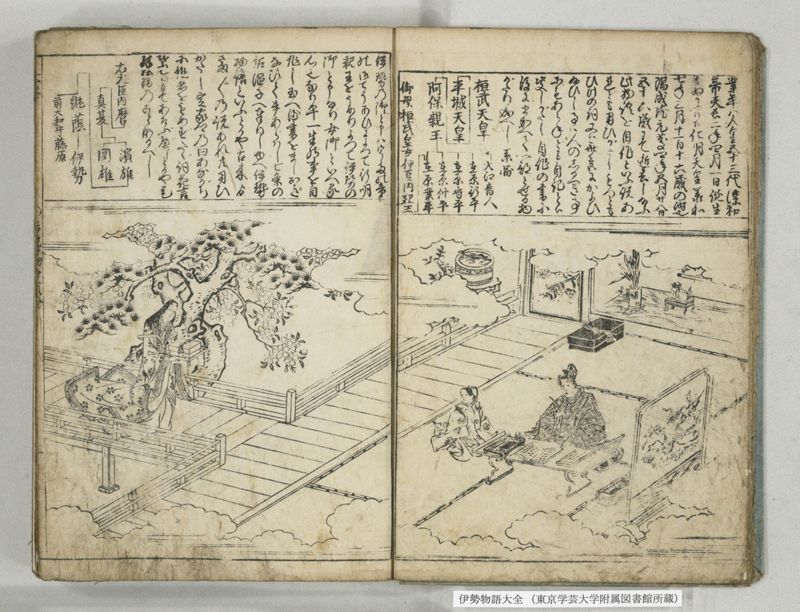
翻刻
【右丁・上段】
業平は人皇五十三代淳和
帝天長二年四月一日誕生
うゐかふりは仁明天皇承和
七年三月十一日十六歳の時也
陽成院元慶四年五月廿八日
五十六歳にて逝去し給ふ
此物語を自作といふ説あ
れども用ひがたしもつとも
ひけの詞又は斎宮にかよひ
給ひし事は人のしるへき事
にもあらねども自記とは
決しがたし自作の書に
後に書かへて一部とせる物
がたり成へし 系図
桓武天皇 大江音人
在原行平
平城天皇 在原守平
在原仲平
阿保親王 在原業平
御母 ̄ハ桓武皇女 伊豆内親王
【左丁・上段】
伊勢の御と申は宇多の帝
の御てうあひによつて行明
親王をうめりよつて伊勢の
御と申なり女御といへる
心也なり平一生の事を自
作し玉へる書をましおぎ
なひて書あらはし七条の
后温子へ奉りしゆへ伊勢
物語といふとかや古来より
さま〴〵の説あれ共用ひ
かたし定家郷の曰あながち
に作者をもめずたゞ詞花言
葉をもてあそぶべしとかや是
殊勝のことなるべし
右大臣内麿 浜雄
真夏 関雄
継蔭 伊勢
前大和守藤原
現代語訳
【右丁・上段】
業平は、第五十三代・淳和天皇の御代、天長二年(825年)四月一日に誕生した。元服(成人の儀式)は、仁明天皇の御代、承和七年(840年)三月十一日、十六歳の時であった。陽成院の御代、元慶四年(880年)五月二十八日、五十六歳にてお亡くなりになった。
この物語(伊勢物語)を業平自身が作ったとする説もあるが、採用しがたい。とりわけ、秘め事の言葉や、斎宮に通われた事などは、他人が知りうることではないけれども、だからといって自記(自分で記したもの)とも断定しがたい。自作の書をもとに、後に書き改めて一部の物語としたものであろう。
【系図】
桓武天皇 大江音人
在原行平
平城天皇 在原守平
在原仲平
阿保親王 在原業平
御母は桓武天皇の皇女・伊豆内親王
---
【左丁・上段】
「伊勢の御」と申し上げるのは、宇多天皇の御寵愛によって、行明親王をお産みになったことから「伊勢の御」と申し上げるのである。「女御」という意味である。(伊勢は)平生の出来事を自ら書き記された書物を補い足して書き現し、七条の后・温子へ献上したことから「伊勢物語」というのだとか。古来よりさまざまな説があるが、採用しがたい。定家卿の曰く、「むやみに作者を詮索せず、ただ言葉・詞花を楽しむべきである」とのこと。これはもっともなことであろう。
【系図】
右大臣内麿 浜雄
真夏 関雄
継蔭 伊勢
前大和守・藤原(氏)
英語訳
**[Right folio, upper section]**
Narihira was born on the first day of the fourth month of the second year of Tenchō (825 CE), during the reign of Emperor Junna, the fifty-third sovereign. He underwent his coming-of-age ceremony (genpuku) on the eleventh day of the third month of the seventh year of Jōwa (840 CE), at the age of sixteen, during the reign of Emperor Nimmyō. He passed away on the twenty-eighth day of the fifth month of the fourth year of Gangyō (880 CE), at the age of fifty-six, during the reign of the Retired Emperor Yōzei.
There is a theory that Narihira himself authored this tale (the Ise Monogatari), but this is difficult to accept. In particular, the intimate words and the accounts of his visits to the Saigū (the Ise Vestal) are not the sort of things others would know; however, this alone is insufficient to conclude that it was a personal record. It is likely that a text originally composed by Narihira was later revised and compiled into a single narrative by others.
**Genealogy:**
Emperor Kanmu — Ōe no Otondo
— Ariwara no Yukihira
Emperor Heizei — Ariwara no Morihira
— Ariwara no Nakahira
Prince Abo — Ariwara no Narihira
*(Narihira's mother was Princess Izu, a daughter of Emperor Kanmu)*
---
**[Left folio, upper section]**
The lady known as "Ise no Go" (Lady Ise) is called by this name because she gave birth to Prince Yukiakira through the favor of Emperor Uda. The title "Ise no Go" carries the meaning of "Imperial Consort" (nyōgo). It is said that Lady Ise supplemented and compiled the writings that recorded her life, and presented this work to the Empress of Shichijō, Atsuko, which is why the work came to be called the "Ise Monogatari." Various theories on this matter have existed since ancient times, but they are difficult to accept. Lord Teika (Fujiwara no Teika) is said to have remarked: "One should not obsessively seek out the author, but simply enjoy the words and literary flowers of the text." This is indeed a most admirable sentiment.
**Genealogy:**
Minister of the Right Uchimaro — Hamao
Manatsū — Sekio
Tsugukage — Ise
*(Former Governor of Yamato, of the Fujiwara clan)*