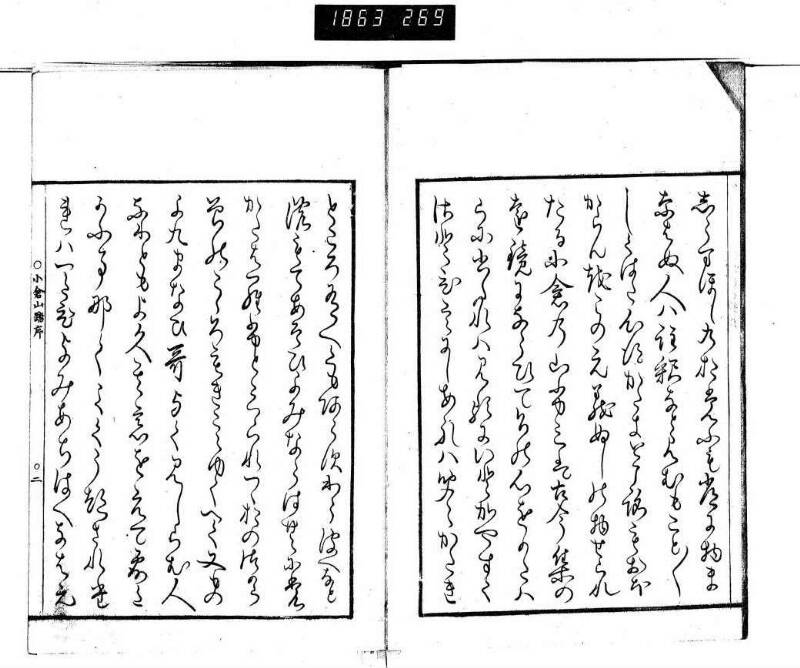
翻刻
しらまほしくおもふも常に物ま
なはぬ人は註釈なと見むもこと〳〵
しくはた心得かたきところもおほ
からんをこの元義ぬしの物せられ
たる小倉の山ふみは古今集の
遠鏡にならひてその心をかたは
らに書たれは見るにいとかやすく【「か易し」=容易である】
さとひ【里び】言にしあれは聞々かたき
ところ有へくもあらすわらはへなと
のもてあそひよみならはむにも
かたはらふとみられつゝおのつから
そのこゝろもきこえゆくへく又もの
よくまなひ哥よく見しらむ人
なりともよく其意をえて露た
かふ事なくよくうつされた
れは一たひよみあちはへなはえ
現代語訳
知りたいと思っても、普段学問をしない人は注釈などを見ようとしても難解で、また理解し難いところも多いであろう。この元義殿が著された『小倉の山ふみ』は、『古今集の遠鏡』に倣って、その心を傍らに書かれているので、見るのにとても易しく、里言(俗語)で書かれているので、聞いて理解し難いところもないはずである。子供などが遊びとして詠み習うのにも、傍らでふと見られつつ、自然とその心も理解できるようになるであろう。また学問をよく学び、歌をよく見知った人であっても、よくその意を得て、少しも違うことなく、よく写し取られているので、一度読み通してしまえば
英語訳
Those who wish to know more but do not usually engage in learning would find commentaries and such difficult to read, and there would be many parts that are hard to understand. However, this "Ogura no Yamafumi" written by Master Motoyoshi follows the model of "Kokinshū no Tōkyō" and has the heart [meaning] of the poems written alongside, making it very easy to read. Since it is written in colloquial language, there should be no parts that are difficult to understand when heard. Even when children learn to recite these as play, they can glance at the explanations beside the text and naturally come to understand their meaning. Moreover, even for those who are well-learned and well-versed in poetry, the meanings are captured so accurately without any deviation and so well transcribed that once one reads through it completely...