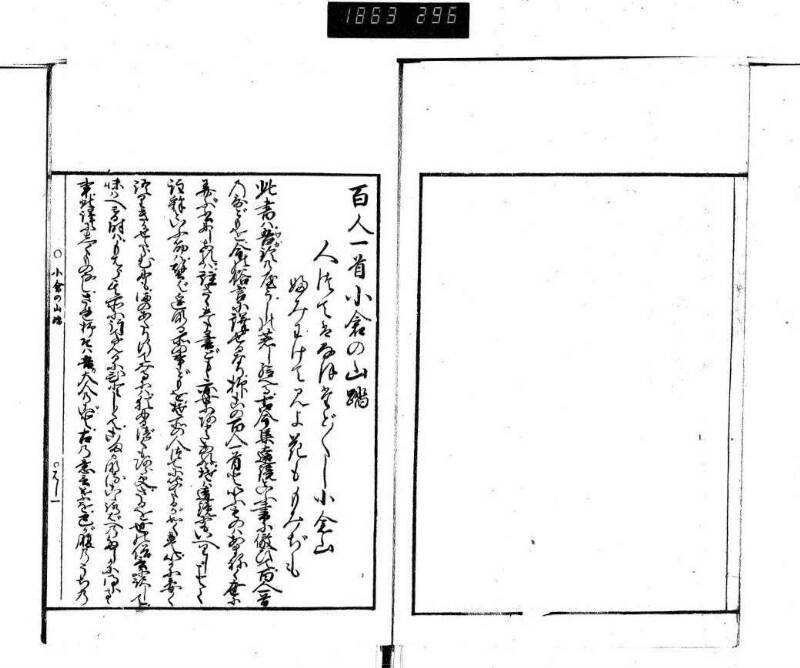
翻刻
百人一首小倉の山踏
人つてはなほたど〳〵し小倉山
ふみわけて見よ花ももみぢも
此書は。 吾(わが)鈴の屋うし【鈴屋大人】の著し給へる。古今集遠鏡といふ書に倣ひて。百人一首
の哥どもを。今の俗言に訳せるなり。抑【そもそも】古の百人一首といふものはあまねく世に。
弄ぶ書にしあれば。註さくしたる書どもゝ亦世にあまたあれど。そは遠鏡にもいへりしごとく
註釈といふ筋は。譬えば遥なる所の事どもをそ【指示・教示の助詞「そ(ぞ)だと思います。】所の人つてにかたるが如くに聞たるが如くえいかに委く【くわしく】
語りきかせたらむにも。まのあたり行てみるには。猶にるべくもあらず。さるを世の俗言に訳して。
味はへ云る時は。もはら其所に行て【「て」と「見」が一部重なっている】見るにひとしくて。こまかなるこゝろばへのたしかに侍らるゝ
事。此訳にしくものなし。されど【「杼」は万葉仮名で「ど」の音字】そは吾 ̄カ大人のごと。古の意言葉を。己が腹のうちの
現代語訳
百人一首小倉の山踏
人づてはなお頼りない小倉山
踏み分けて見よ花も紅葉も
この書は、わが鈴屋大人【本居宣長】の著された『古今集遠鏡』という書に倣って、百人一首の歌どもを今の俗語に訳したものである。そもそも古の百人一首というものは広く世に親しまれる書物であるから、注釈した書物も世に多くあるけれど、それは遠鏡にも言われたように、注釈というやり方は、たとえば遥か遠い所の事柄をその土地の人づてに語るように聞いたようなもので、いかに詳しく語り聞かせたとしても、直接そこに行って見るのには、到底及ばない。ところが世の俗語に訳して味わい深く言う時は、まさにその場所に行って見るのと等しくて、細やかな心情が確かに理解されることは、この訳に勝るものはない。しかしながら、それはわが大人のように古の意味や言葉を、自分の心の内の
英語訳
One Hundred Poems by One Hundred Poets: Treading the Paths of Mount Ogura
Word of mouth remains unreliable still—
Tread through Mount Ogura yourself to see both flowers and autumn leaves
This book follows the example of the work called "Kokinshū Tōkyō" (Mirror of the Kokinshū) authored by our Master of Suzunoya [Motoori Norinaga], translating the poems of the One Hundred Poems by One Hundred Poets into contemporary colloquial language. Now, the ancient One Hundred Poems by One Hundred Poets is a book widely cherished throughout the world, so there are many annotated books about it in existence. However, as was said in the Tōkyō, the method of annotation is like hearing about affairs of distant places through local intermediaries—no matter how detailed the explanation, it cannot compare to going there and seeing for oneself. When translated into contemporary language and expressed with deep appreciation, it is equivalent to going and seeing the place directly, and nothing surpasses this translation for ensuring that subtle emotions are clearly understood. However, this requires someone like our Master who can internalize the ancient meanings and words within their own heart...