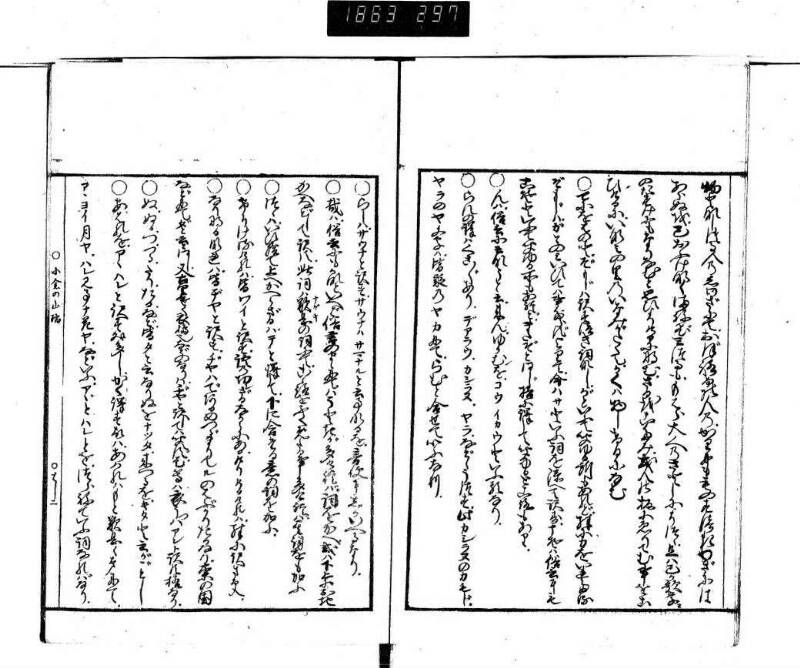
翻刻
物となしつる人のしわざにて。おぼろけの人の。かりにもものすべきわざには
あらぬを。己おふけなくまねびみつるも。もはら大人のさとしによりつく是は己が歌学に
のたすけにもなりなむと思ひよりけるになむ。さるをこたみ。或人の板にゑりてむ事をこ
ひけるに。いなみの里のいなみがたくて。かくは物しけるになむ
◯てにをはのと。ぞもじは訳すべき詞なし。がといふて聞ゆる所もあれど。殊に力を入れたる
ぞもじは。がとのみいひては事たらずよりて。今はサといふ詞を添へて訳す。こそは俗言にも
こそといふて聞ゆる所もあれど。またぞと同じ様【「格」では】に訳して聞ゆるところもあり。
◯んは。俗言にみなうと云。来ん。ゆかむ【右脇にレ?】を。コウ イカウといふ類なり。
◯らんの訳はくさ〴〵あり。デアラウ。カシラヌ。ヤラ。などゝうつす。此カシラヌ。のカもじ。
ヤラのヤ文字は。皆疑のヤカにて。らむと合せていふなり。
◯らしは。サウナと訳す。サウナはサマナルと云事なるを。音便にしかいへるなり。
◯哉は。俗言にもかなといへば俗言のまゝにてはうときが多ければ。詞をかへ。あるいは下上におき
かへなどして訳す。此詞は 歎息(ナゲキ)の詞にて。こゝろをふくめたる事多けれは。其詞をも加ふ
◯つゝはいひ続て上へかへらざるは。テと訳して。下に含たる意の詞を加ふ。
◯けりけるけれは皆ワイと訳す。語の切レざるなからにある。けりけるけれは。殊に訳さず。
◯なりなるなれは。皆ヂヤと訳す。ヂヤはであるのつゞまりてル
のはぶかりたるなり。東の国
などにてダと云と同し。又古里寒く衣搗也などのなりはヂヤと訳しては聞えず。是等は衣うつはアレト訳す様なり。
◯ぬ。ぬる。つ。つる。たり。たる。など。皆タと云 なりぬをナツタ。来つるを。キタと云がごとし
◯あはれを。アゝハレと訳す処多し。かく訳す故は。あはれはもと歎息く声にて。
アゝヨイ月ヤ。ハレ見事ナ花ヤ。などいふ。アゝとハレとを。つらねていふ詞なればなり。
現代語訳
自分の物として身につけた人の仕業であって、普通の人が軽々しく手を出すべき仕事ではないのに、自分は未熟にもこれを真似してみたのも、ひとえに大人(本居宣長)の教えによるもので、これは自分の歌学の助けにもなろうと思ったからである。ところで今回、ある人が板木に彫って出版することを望んだので、辞退するのも困難で、このようにしたのである。
◯てにをはの「と」や「ぞ」文字は訳すべき言葉がない。「が」といって理解される場合もあるが、特に力を入れた「ぞ」文字は、「が」とだけ言っては不十分なので、今は「サ」という言葉を添えて訳す。「こそ」は俗語でも「こそ」といって理解される場合もあるが、また「ぞ」と同じように訳して理解される場合もある。
◯「ん」は、俗語でみな「う」と言う。「来ん」「ゆかむ」を「コウ」「イカウ」というような類である。
◯「らん」の訳はさまざまある。「デアラウ」「カシラヌ」「ヤラ」などと移す。この「カシラヌ」の「カ」文字、「ヤラ」の「ヤ」文字は、皆疑問の「ヤカ」であって、「らむ」と合わせて言うのである。
◯「らし」は「ソウナ」と訳す。「ソウナ」は「サマナル」ということであるのを、音便にそのように言うのである。
◯「哉」は、俗語でも「かな」と言えば俗語のままでは聞き苦しいことが多いので、言葉を変え、あるいは語順を変えたりして訳す。この言葉は嘆息の言葉で、心を込めたことが多いので、その言葉をも加える。
◯「つつ」は言い続けて上に戻らないものは「テ」と訳して、下に含まれる意味の言葉を加える。
◯「けり」「ける」「けれ」は皆「ワイ」と訳す。語の切れ目のない中にある「けり」「ける」「けれ」は、特に訳さない。
◯「なり」「なる」「なれ」は、皆「ヂヤ」と訳す。「ヂヤ」は「である」の縮まったもので「ル」を省いたものである。東国などで「ダ」と言うのと同じ。また「古里寒く衣搗也」などの「なり」は「ヂヤ」と訳しては理解できない。これらは「衣うつ」は「アレト」訳すような感じである。
◯「ぬ」「ぬる」「つ」「つる」「たり」「たる」など、皆「タ」と言う。「なりぬ」を「ナッタ」、「来つる」を「キタ」と言うようなものである。
◯「あはれ」を「アァハレ」と訳する場合が多い。このように訳す理由は、「あはれ」はもと嘆息する声で、「アァヨイ月ヤ」「ハレ見事ナ花ヤ」などという「アァ」と「ハレ」とを連ねて言う言葉だからである。
英語訳
This is the work of someone who has made the ancient meanings and words their own, and it is not a task that ordinary people should attempt lightly. That I have immaturely tried to imitate this is entirely due to the teachings of our Master [Motoori Norinaga], as I thought this would also help with my own study of poetry. Now, when someone requested that this be carved on woodblocks for publication, it was difficult to decline, so it has come to be in this form.
◯ For particles like "to" and "zo," there are no suitable words for translation. Sometimes they can be understood as "ga," but particularly emphatic "zo" particles cannot be adequately expressed with "ga" alone, so now I add the word "sa" in translation. "Koso" can sometimes be understood as "koso" even in colloquial language, but it can also be translated in the same manner as "zo."
◯ The auxiliary "n" is expressed as "u" in colloquial language. "Kon" (will come) and "yukamu" (will go) become "kou" and "ikou," respectively.
◯ "Ran" has various translations: "dearou," "kashiranu," "yara," etc. The "ka" in "kashiranu" and the "ya" in "yara" are both interrogative particles that combine with "ramu."
◯ "Rashi" is translated as "sou na." "Sou na" comes from "sama naru," contracted through sound change.
◯ "Kana" - while colloquial language also uses "kana," using the colloquial form directly often sounds harsh, so I change the wording or alter the word order in translation. This is an exclamatory word that often contains deep emotion, so I add words to express that feeling.
◯ "Tsutsu" that continues without returning to the preceding clause is translated as "te," and words expressing the implied meaning are added.
◯ "Keri," "keru," "kere" are all translated as "wai." When "keri," "keru," "kere" appear within unbroken phrases, they are not specifically translated.
◯ "Nari," "naru," "nare" are all translated as "jya." "Jya" is a contraction of "de aru" with the "ru" omitted. This is the same as saying "da" in eastern regions. However, "nari" in phrases like "furusato samuku kinu utsu nari" cannot be understood when translated as "jya." In such cases, "kinu utsu" should be translated something like "aredo."
◯ "Nu," "nuru," "tsu," "tsuru," "tari," "taru," etc., are all expressed as "ta." Like translating "nari nu" as "natta" and "ki tsuru" as "kita."
◯ "Ahare" is often translated as "aa hare." The reason for this translation is that "ahare" originally represents an exclamatory voice, combining "aa" and "hare" as in expressions like "aa yoi tsuki ya" (ah, what a fine moon!) or "hare migoto na hana ya" (how splendid these flowers are!).