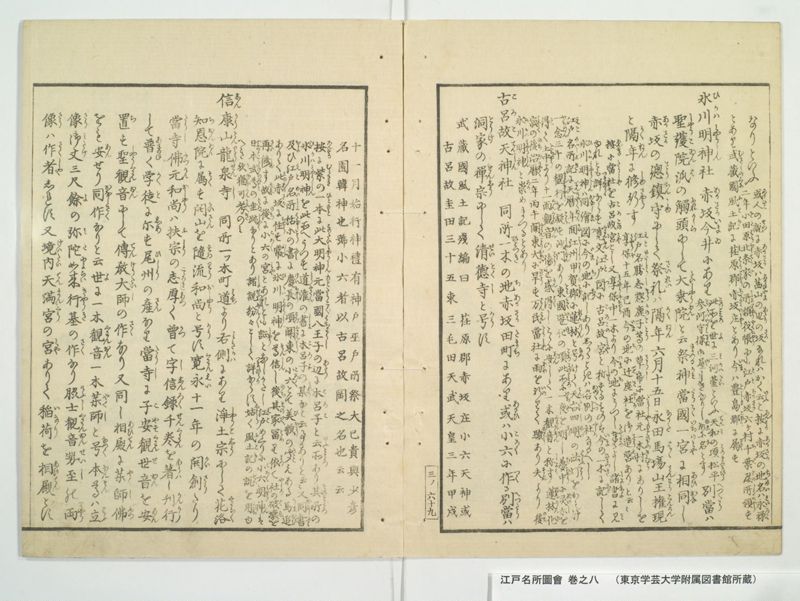
翻刻
【右丁】
なりといふ《割書:或人(あるひと)の説(せつ)に赤坂(あかさか)は茜山(あかねやま)の辺(あたり)の坂(さか)なれはかく云(いふ)と按(あんする)に赤坂(あかさか)の地名(ちめい)は永禄(えいろく)|二年 小田原(おたはら)北条家(ほうてうけ)の所領役帳(しよりやうやくちやう)にも江戸(えと)赤坂(あかさか)六ヶ村 千葉殿(ちはとの)所領(しよりやう)す》
《割書:とあり武蔵國風土記(むさしのくにふとき)に荏原郡(えはらこほり)赤坂庄(あかさかのしやう)とあり今(いま)は豊島郡(としまこほり)に属(そく)す|》
氷川明神(ひかはみやうしん)社 赤坂今井(あかさかいまゐ)にあり《割書:此所(このところ)を世(よ)に三河臺(みかはたい)といふ天和(てんわ)の頃(ころ)松平(まつたひら)|参河守様(みかはのかみさま)御 屋(や)しきなりし故(ゆゑ)に名(な)とす》別當(へつたう)は
聖護院派(しやうこゐんは)の觸頭(ふれかしら)にして大乗院(たいしやうゐん)と云 祭神(まつるかみ)當國一宮(たうこくいちのみや)に相同(あひおな)し
赤坂(あかさか)の總鎮守(さうちんしゆ)にして祭礼(さいれい)は隔年(かくねん)六月十五日 永田馬場(なかたはゝ)山王権現(さんわうこんけん)
と隔年(かくねん)に修行(しゆきやう)す《割書:江戸名勝志(えとめいしようし)惣鹿子(そうかのこ)等(とう)の草帋(さうし)は當社(たうしや)元(もと)一木村(ひとつきむら)にありしを|享保(きやうほ)十五年己酉 今(いま)の地(ち)に迁座(せんさ)社(やしろ)を御 造営(さうえい)ありと云々》
《割書:按(あんする)に當社(たうしや)を古呂故宮(ころこのみや)とし又 享保中(きやうほちやう)一木より今(いま)の地(ち)にうつし奉(たてまつ)るよし諸書(しよしよ)に見(み)|ゆれとも詳(つまひらか)ならす寛文江戸図(くわんふんえとつ)に古呂故宮(ころこのみや)と称(しよう)するものは今(いま)の一木(ひとつき)に記(しる)して》
《割書:氷川明神(ひかはみやうしん)は同(おなし)繪図(ゑづ)に今(いま)の地(ち)に記(しる)しありしかるときは各(おの〳〵)別(へつ)の社(やしろ)なるへし|》
《割書:江戸名所記(えとめいしよき)に天暦年間(てんりやくねんかん)江州(こうしう)甲賀郡(かうかこほり)に蓮林(れんりん)と号(なつ)けて天台四明(てんたいしめい)の法灯(はふとう)をかゝけ|《振り仮名:一念|いち■ん》#1三千の観行(くわんきやう)を凝(こら)す沙門(しやもん)あり東國遊化(とうこくいうけ)の頃(ころ)此所(このところ)に一夜(いちや)を明(あか)し夢中(むちゆう)に灵尓(れいし)を》
《割書:得(え)て土中(とちゆう)より十一 面観音(めんくわんおん)の像(さう)を感得(かんとく)しこゝに安(あん)して一木 観音(くわんおん)と称(しよう)す蓮林(れんりん)化(け)|寂(しやく)の後(のち)治暦(ちりやく)二年丙午 關東(くわんとう)大(おほい)に旱(ひてり)す万民(はんみん)當社(たうしや)に雨(あめ)を祈(いの)りて驗(しるし)あり夫(それ)より後(のち)》
《割書:氷川明神(ひかはみやうしん)と崇(あか)めまつるとあり|》
古呂故天神(ころこてんしん)社 同所 一木(ひとつき)の地(ち)赤坂田町(あかさかたまち)にあり或(あるひ)は小六(ころく)に作(つく)る別當(へつたう)は
洞家(とうけ)の禪宗(せいしう)にして清德寺(せいとくし)と号(かう)す
武蔵國風土記殘編曰 荏原郡赤坂庄小六天神或
古呂故圭田三十五束三毛田天武天皇三年甲戌
【左丁】
十一月始行神禮有神戸巫戸所祭大巳貴與少彦
名園韓神也號小六者以古呂故岡之名也云云
《割書:按(あんする)に紫(むらさき)の一本(ひともと)に此(この)大明神(たいみやうしん)元(もと)當國(たうこく)八王子(はちわうし)の辺(あたり)に木呂子(ころこ)と云所(いふところ)あり其所(そのところ)の|氷川明神(ひかはみやうしん)を此所へうつす道灌(たうくわん)の書(しよ)に木呂子(ころこ)の某(それかし)なと云事ありと云々又 同書(おなしふみ)》
《割書:及(およ)ひ江戸名所話等(えとめいしよはなしとう)の書(ふみ)に慶長(けいちやう)の頃(ころ)關東(くわんとう)の小六(ころく)とて美貌(ひほう)の聞(きこ)えある馬追(うまおひ)|ありて此(この)赤坂(あかさか)に住(ちゆう)す常(つね)に氷川明神(ひかはみやうしん)を尊信(そんしん)し後(のち)其家(そのいへ)冨(とめ)り依(よつ)て社(やしろ)の破壊(はゑ)を》
《割書:再修(さいしゆ)す故(ゆゑ)に後(のち)に|小六(ころく)の宮(みや)とあれとも証(しやう)となしかたし江戸(えと)めくりに小六明神(ころくみやうしん)は|日本武尊(やまとたけのみこと)の垂跡(すゐしやく)なりとあり諸説(しよせつ)紛々(ふん〳〵)として詳(つまひらか)ならす姑(しはら)く風土記(ふとき)の説(せつ)を用(もち)ゆ》
《割書:へき歟(か)猶(なほ)可考(かんかふへき)のみ|》
信康山龍泉寺(しんかうさんりうせんし) 同所一ッ木町 道(みち)より右側(みきかは)にあり淨土宗(しやうとしう)にして花洛(くわらく)
知恩院(ちおんゐん)に属(そく)す開山(かいさん)を隨流和尚(すゐりうおしやう)と号(かう)す寛永(くわんえい)十一年の開創(かいさう)たり
當寺(たうし)佛元和尚(ふつけんおしやう)は扶宗(ふしう)の志(こゝろさし)厚(あつ)く曾(かつ)て字信録千巻(ししんろくせんくわん)を著(あらは)し刊行(かんかう)
して普(あまね)く学徒(かくと)に尓(しめ)す尾州(ひしう)の産(さん)なり當寺(たうし)に子安観世音(こやすくわんせおん)を安(あん)
置(ち)す聖観音(しやうくわんおん)にして傳敎大師(てんけうたいし)の作(さく)なり又同し相殿(あひてん)に薬師佛(やくしぶつ)
をも安(あん)せり同作(おなしさく)なりと云 世(よ)に一木 観音(くわんおん)一木 薬師(やくし)と号(なつく)本尊(ほんそん)は立(りふ)
像(さう)御丈(みたけ)三尺 餘(よ)の弥陀如来(みたによらい)行基(きやうき)の作(さく)なり脇士(けふし)観音(くわんおん)㔟至(せいし)の両(りやう)
像(さう)は作者(さくしや)しらす又 境内(けいたい)天満宮(てんまんくう)の宮(みや)ありて稲荷(いなり)を相殿(あひてん)とす
現代語訳
【右丁】
と言われている。《註:ある人の説によれば、赤坂は茜山の辺りの坂なのでこのように言うと考察するが、赤坂の地名は永禄十二年の小田原北条家の所領役帳にも「江戸赤坂六ヶ村 千葉殿所領」とある》
《註:武蔵国風土記には荏原郡赤坂庄とあるが、今は豊島郡に属する》
氷川明神社 赤坂今井にある。《註:この場所を世間では三河台と言う。天和の頃、松平三河守様の御屋敷があったからこの名前がついた》別当は
聖護院派の触頭で大乗院という。祭神は当国一宮(武蔵国氷川神社)と同じである。
赤坂の総鎮守で、祭礼は隔年の六月十五日に、永田馬場の山王権現と
隔年で執行する。《註:江戸名勝志や惣鹿子などの書物では、当社はもと一木村にあったが、享保十五年己酉に今の地に遷座し、社殿を御造営されたとある》
《註:考察すると、当社を古呂故宮とし、また享保中に一木から今の地に移したとする記述が諸書に見られるが詳細は不明である。寛文江戸図に古呂故宮と称するものは今の一木に記されており》
《註:氷川明神は同じ絵図に今の地に記されているので、それぞれ別の社であろう》
《註:江戸名所記によれば、天暦年間に近江国甲賀郡で蓮林と号して天台四明の法灯を掲げ、一念三千の観行を凝らす僧がいた。東国遊化の頃、この場所で一夜を明かし、夢中で霊示を得て土中より十一面観音の像を感得し、ここに安置して一木観音と称した。蓮林が入寂した後、治暦二年丙午に関東で大干ばつがあり、万民が当社に雨乞いをして霊験があった。それ以後氷川明神と崇めるようになったとある》
古呂故天神社 同所一木の地、赤坂田町にある。或いは小六と書く。別当は
洞家の禅宗で清徳寺と号する。
武蔵国風土記残編に曰く「荏原郡赤坂庄小六天神或古呂故圭田三十五束三毛田天武天皇三年甲戌
【左丁】
十一月始行神礼有神戸巫戸所祭大巳貴与少彦名園韓神也号小六者以古呂故岡之名也云云」
《註:考察すると、紫の一本という書物にこの大明神はもと当国八王子の辺りの木呂子という場所にあり、その場所の氷川明神をこの場所に移したとある。道灌の書に木呂子の某などという記述があるという。また同書および江戸名所話などの書物に、慶長の頃、関東の小六という美貌で知られる馬追いがいて、この赤坂に住んでいた。常に氷川明神を尊信し、後にその家が富み、そのため社殿の破損を再修した。故に後に小六の宮というが、確証がない。江戸めぐりに小六明神は日本武尊の垂迹であるとあるが、諸説紛々として詳細不明である。とりあえず風土記の説を用いるべきか、なお考察すべきことである》
信康山龍泉寺 同所一ッ木町、道より右側にある。浄土宗で京都
知恩院に属する。開山を随流和尚と号する。寛永十一年の開創である。
当寺の仏元和尚は扶宗の志が厚く、かつて字信録千巻を著し刊行
して広く学徒に示した。尾張国の出身である。当寺に子安観世音を安
置している。聖観音で伝教大師の作である。また同じ相殿に薬師仏
をも安置している。同作であると言う。世に一木観音、一木薬師と号する。本尊は立
像で御丈三尺余りの阿弥陀如来、行基の作である。脇士の観音・勢至の両
像は作者不明である。また境内に天満宮があって稲荷を相殿とする。
英語訳
【Right page】
it is said. 《Note: According to one person's theory, Akasaka is named after the slope near Mount Akane, but the place name Akasaka appears in the Odawara Hojo family's domain register from Eiroku 12 (1571) as "Edo Akasaka Six Villages, Lord Chiba's domain"》
《Note: The Musashi Province Gazetteer mentions Akasaka-sho in Ebara District, but now it belongs to Toshima District》
Hikawa Myojin Shrine Located in Akasaka Imai. 《Note: This place is commonly called Mikawa-dai. During the Tenwa era, it was the estate of Lord Matsudaira Mikawa-no-kami, hence the name》 The betto (temple administrator) is
the head of the Shugoin sect called Daishoin. The enshrined deity is the same as the provincial first shrine (Musashi Province Hikawa Shrine).
It serves as the general tutelary shrine of Akasaka, with festivals held every other year on June 15th, alternating with Sanno Gongen at Nagata Baba.
《Note: According to documents like Edo Meisho-shi and Sokanoko, this shrine was originally in Hitotsugi Village but was relocated to its current location in Kyoho 15 (1730), when new shrine buildings were constructed》
《Note: Upon examination, while various documents mention that this shrine was called Koroko-no-miya and was moved from Hitotsugi to its current location during the Kyoho period, the details are unclear. In the Kanbun Edo map, what is called Koroko-no-miya is recorded at present-day Hitotsugi》
《Note: Hikawa Myojin is recorded at its current location in the same map, so they appear to be separate shrines》
《Note: According to Edo Meisho-ki, during the Tenryaku era (947-957), there was a monk called Renrin in Koga District of Omi Province who upheld the Tendai Shiming dharma lamp and concentrated on the meditation practice of "three thousand realms in a single thought." During his pilgrimage to the eastern provinces, he spent a night at this location, received a divine revelation in a dream, and discovered an eleven-faced Kannon statue from the earth, which he enshrined here, calling it Hitotsugi Kannon. After Renrin's death, in Jiryaku 2 (1066), there was a great drought in Kanto, and when the people prayed for rain at this shrine with miraculous results, it came to be revered as Hikawa Myojin》
Koroko Tenjin Shrine Located in the same area, in the Hitotsugi district of Akasaka Tamachi. Sometimes written as Koroku. The betto is
of the Soto Zen sect called Seitokuji.
The remnant of Musashi Province Gazetteer states: "Ebara District Akasaka-sho Koroku Tenjin or Koroko, sacred rice fields thirty-five bundles, three-mow rice fields, Emperor Tenmu 3rd year Kinoe-inu
【Left page】
November began divine rituals, having shrine households and shrine maiden households, enshrining Onamuchi and Sukunahikona, Korean deities, called Koroku after the name of Koroko Hill"
《Note: Upon examination, according to a book called "Murasaki no Hitomoto," this great deity was originally located at a place called Kiroko near Hachioji in this province, and the Hikawa Myojin from that location was moved to this place. Dokan's writings mention something about "Kiroko no soregashi." Also, the same book and others like "Edo Meisho Hanashi" mention that during the Keicho era, there was a horseman called Koroku in Kanto, known for his beauty, who lived in this Akasaka. He constantly revered Hikawa Myojin, and later his family became wealthy, leading to the restoration of the deteriorated shrine buildings. Hence it came to be called Koroku-no-miya, though there is no solid evidence. "Edo Meguri" states that Koroku Myojin is a manifestation of Prince Yamato Takeru, but various theories abound and the details remain unclear. For now, it may be best to follow the gazetteer's account, though further investigation is needed》
Shinkosan Ryusenji Temple Located in the same area, Hitotsugi-cho, on the right side from the road. It belongs to the Jodo sect
under Kyoto's Chion-in. The founding priest is called Zuiryu Osho. It was established in Kanei 11 (1634).
The temple's Butsugen Osho had a deep commitment to supporting the sect and once authored and published the thousand-volume "Jishin-roku,"
widely distributing it to students. He was from Owari Province. The temple enshrines Koyasu Kanzeon (Child-bearing Kannon),
a Sho-kannon statue said to be carved by Dengyo Daishi. In the same hall, a Yakushi Buddha
is also enshrined, also said to be by the same maker. They are popularly known as Hitotsugi Kannon and Hitotsugi Yakushi. The main Buddha is a standing
statue of Amida Nyorai, over three feet tall, carved by Gyoki. The flanking statues of Kannon and Seishi
are by unknown makers. There is also a Tenmangu shrine within the temple grounds with Inari as a co-enshrined deity.