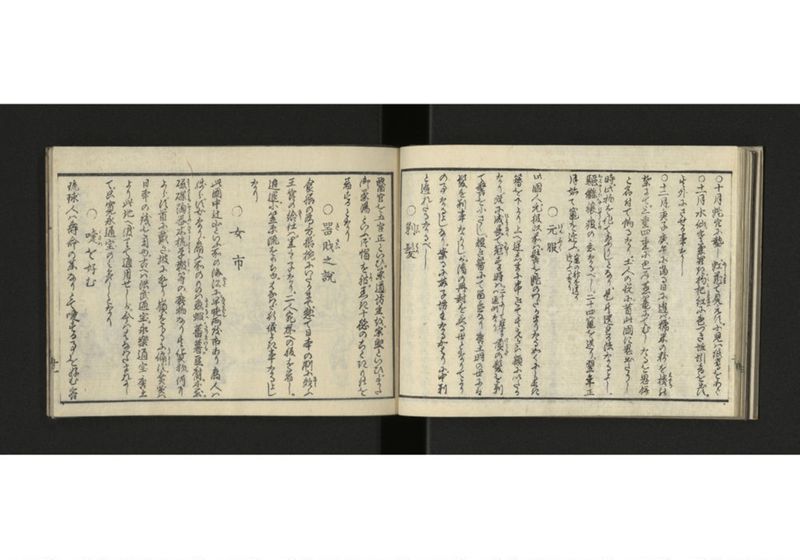
翻刻
【右丁】
○十月蛇穴に墊【蟄ヵ】し。虹蔵(にしかくれ)て見えす。小児は紙鳶をあぐ
○十一月水仙。寒菊開き。枸杷(くこ) 紅(くれない)に色づき蚯蚓音を出す。
其外にさせる事なし
○十二月。庚子庚午に当る日に逢ば。糯米の粉を椶(しゆろ)の
葉にて。三重四重に包み蒸籠にてむしたるを鬼餅
と名付て餉るなり。土人の説に。昔此国に鬼出たりし
時此物を作て祭りしとなり。是其遺れる法なるよし。
驅儺(おにやらひ)。禳疫(や[く]ひやうよけ)の意なるべし。二十四竃を送り。翌年正
月始て竃を迎ふ。《割書:竃の神を送り|迎ふ事なり》
○元服(げんふく)
此国人。元服以前は。髻を蛇のわだかまりたる如くにし長き
簪を下より上へ逆しまに串きて其先きは額にいたる
なり。既に成長(ひとゝなり)て冠(かむり)する時は。《割書:二十にして冠する|は通例なり》頂(いたゝき)の髪を剃
て髻を小さくし。短き簪にて留置なり唐土明の世には
髪を剃事なかりしが。清の冊封を受る世となりてより
の事なるよしなり。案るに芥子坊主なるかはりに。中剃
と遁れたるなるべし
○剃髪(ていはつ)
【左丁】
医官を五宦正といひ。茶道坊主を。宗叟といひ。また
御茶湯といふ。片帽を被(かふる)。黒き十徳のこときものを
着するとなり
○器財(きさい)之説
食膳の為方。膳椀にいたるまで。惣て日本の制に效(なら)ふ
王宮の給(きう)仕は。里之子なり。二人宛揃への服を着し。
進退。小笠原流をもちゆ。はなはだ行儀よき事なるよし
なり
○女市
此国中辻山といふ所の海 沿(ばた)に。早晩(あさばん)両度市あり商人は
残らず女なり。商ふ所のものは魚蝦(きよるい)。蕃薯(さつまいも)。豆腐。木器。
礠(さら)碟(さはち)陶器(せともの)。木梳(きぐし)草(さうり)靸(わらじ)等の。麤物なり其貨物。何に
よらず首に戴き。坡に登り嶺を下るに偏(かたよら)ず。売買は
日本の銭を用ゆ。古へは洪武通宝。永楽通宝唐土
より此地へ渡りて通用せしが。今ははなはたまれにし
て。只寛永通宝のみ多しとなり
○嚏(くさめ)を好む
琉球人は寿命の薬なりとて嚏する事を好む客
現代語訳
【右丁】
○十月、蛇は穴に潜み、虹は隠れて見えない。小児は凧を揚げる。
○十一月、水仙、寒菊が開き、枸杞が赤く色づき、蚯蚓が音を出す。その他に特にすることはない。
○十二月、庚子庚午に当たる日に逢えば、糯米の粉を棕櫚の葉で三重四重に包み、蒸籠で蒸したものを鬼餅と名付けて贈るのである。土人の説によると、昔この国に鬼が出た時、この物を作って祭ったという。これはその遺された法であるという。追儺、禳疫の意味であろう。二十四日に竃神を送り、翌年正月にはじめて竃神を迎える。
○元服
この国の人は、元服以前は髻を蛇がとぐろを巻いたようにし、長い簪を下から上へ逆さまに刺してその先は額に至るのである。既に成長して冠する時は(二十歳で冠するのが通例である)、頭頂の髪を剃って髻を小さくし、短い簪で留めるのである。唐土明の世には髪を剃ることはなかったが、清の冊封を受ける世となってからのことであるという。思うに、坊主頭になる代わりに、中剃として逃れたのであろう。
○剃髪
【左丁】
医官を五宦正といい、茶道坊主を宗叟といい、また御茶湯という。片帽を被り、黒い十徳のようなものを着するという。
○器財の説
食膳の仕方、膳椀に至るまで、すべて日本の制に倣う。王宮の給仕は里之子である。二人ずつ揃いの服を着し、進退は小笠原流を用いる。はなはだ行儀の良いことであるという。
○女市
この国中の辻山という所の海沿いに、朝晩両度市がある。商人は残らず女である。商う物は魚介類、薩摩芋、豆腐、木器、皿鉢、陶器、木櫛、草履、草鞋等の粗物である。その貨物は何によらず首に載せ、坂を登り峰を下るのに偏らない。売買は日本の銭を用いる。古くは洪武通宝、永楽通宝が唐土よりこの地へ渡って通用していたが、今ははなはだ稀で、ただ寛永通宝のみが多いという。
○嚏を好む
琉球人は寿命の薬なりとして嚏することを好む。客
英語訳
【Right page】
○In October, snakes hibernate in holes, rainbows hide and are not seen. Children fly kites.
○In November, narcissus and winter chrysanthemums bloom, wolfberries turn red, and earthworms make sounds. There is nothing else particular to do.
○In December, on days that fall on gēngzǐ or gēngwǔ, they wrap glutinous rice flour in palm leaves in three or four layers and steam it in a steamer, calling it "demon rice cake" and giving it as gifts. According to local explanation, long ago when demons appeared in this country, they made this item to offer in worship. This is said to be the surviving custom from that time. It likely has the meaning of exorcism and warding off epidemics. On the 24th they send off the kitchen god, and in the first month of the following year they welcome the kitchen god for the first time.
○Coming of Age
The people of this country, before coming of age, arrange their topknots like coiled snakes and insert long hairpins upside down from bottom to top, with the tips reaching their foreheads. When they have already grown up and receive the cap (it is customary to receive the cap at age twenty), they shave the hair on top of their heads to make the topknot smaller and fasten it with short hairpins. In Tang China during the Ming period there was no hair shaving, but this practice began from the time they received investiture from the Qing. I surmise that instead of becoming completely bald like monks, they escaped with this partial shaving.
○Hair Shaving
【Left page】
Medical officials are called gokangen, and tea ceremony monks are called sōsō, also called ochayu. They wear single caps and dress in black garments like jittoku.
○Explanation of Utensils and Furnishings
The manner of dining, down to the trays and bowls, all follows Japanese custom. The palace attendants are satonoko. They wear matching clothing in pairs, and their movements follow the Ogasawara school. This is said to be extremely well-mannered.
○Women's Market
In this country at a place called Tsujiyama along the coast, there is a market twice daily, morning and evening. The merchants are all women without exception. The goods they sell are fish and shellfish, sweet potatoes, tofu, wooden vessels, plates and bowls, ceramics, wooden combs, sandals, straw sandals and other rough goods. Whatever their merchandise, they carry it on their heads, going up slopes and down peaks without tilting. For buying and selling they use Japanese coins. In ancient times, Hongwu and Yongle coins from Tang China circulated in this place, but now these are extremely rare, and only Kan'ei coins are numerous.
○Fondness for Sneezing
Ryukyu people, considering it medicine for longevity, are fond of sneezing. Guests