翻刻
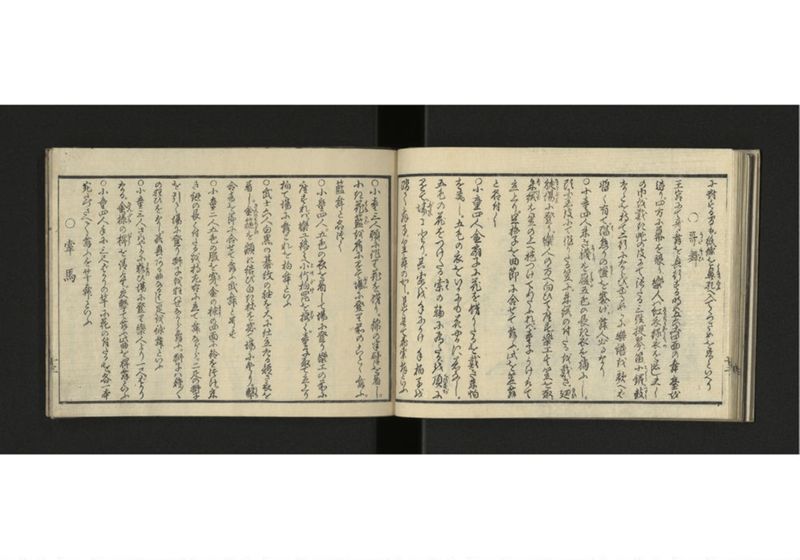
【右丁】
に対する間も。紙条を鼻孔(はなのあな)へ入てくつさめを為すといへり
○哥舞(うたまひ)
王宮にて哥舞を興行する時は。五六丈四面の舞台を
造り。四方に幕を張り。楽人は紅衣(くれないのきぬ)緑(みとりの)衣を着し夫〳〵
の巾を戴き蛇の皮にて張たる三弦。提琴。笛。小鑼(こどら)。鼓(つゞみ)
なとを持て二行にならび。ゆるやかに楽譜を歌へば
暫く有て。階(はし)懸りの幔(まく)を褰げ。舞人出るなり
○小童四人朱き襪(したうづ)を履(はき)。五色の長き衣を襠にし。
頭に黒皮にて作りたる笠に。朱纓の付たるを戴き。廻(まひ)
旋(なから)場(ぶたい)に登り。楽人の方へ向ひて座す。楽工其笠を取。
朱纓(あかひも)を笠の上へ捲つけてあたふれば。童子うけ取て
立上り。足拍子を曲節に合せて舞ふ。此を笠舞
と名付く
○小童四人金扇子に花を餝りたるを戴き朱帕
を為し。五色の衣をいかにも花やかに着なし。
五色の花をつけたる索(なは)の輪に為たるを頂(くびすぢ)に
懸て。場(ぶたい)に登り。其索を手にかけ手拍子を
踏て舞事。笠舞の如し。是を号て花索舞といふ
【左丁】
○小童三人頭に作り花を餝り。錦の半臂を着し。
小き花籃(はなかご)を肩に懸て場(ぶたい)に登り前のことく舞ふ。
籃舞と名つく
○小童四人。五色の衣を着して場に登り楽工の前に
座すれば。楽工銘々へ小竹拍(よつだけ)四片を授(さづ)く。童子取て立上り
拍て場に舞これを拍舞といふ
○武士六人白黒の綦紋の袖を大に仕立たる短き衣を
着し。金箍(きんのはちまき)を額に結び白き杖を突て場に登り。撃(うち)
合音を節に合せて舞ふ武舞と号す
○小童二人五色の服を穿(き)。金の毬(まり)の四面に鈴をつけ。朱
き紐の長く付たるを持左右に立て舞ながら。二疋の獅子
を引て場に登り獅子を狂はせなから舞ふ。獅子は種〳〵
の狂ひをなし。其興ある曲なるはし是を球舞といふ
○小童三人さはやかに粧(よそほ)ひ場に登り楽人より一尺ばかり
なる。金様(きんだみ)の桿(ぼう)を請取り。交撃て舞ふ此曲を桿舞といふ
○小童四人手に三尺ばかりの竿に花の付たるを。各一本
宛たづさへて舞ふを竿舞といふ
○牽馬
現代語訳
【右丁】
に対する間も、紙を鼻の穴に入れてくしゃみをするという。
○歌舞(うたまい)
王宮で歌舞を興行する時は、五、六丈四面の舞台を
造り、四方に幕を張り、楽人は紅色の衣や緑色の衣を着て、それぞれ
の頭巾をかぶり、蛇の皮で張った三線、提琴、笛、小鑼、鼓
などを持って二列に並び、ゆるやかに楽譜を歌うと、
しばらくして、階段脇の幕を上げ、舞人が出てくる。
○小童四人が朱色の足袋を履き、五色の長い衣を着て、
頭に黒い皮で作った笠に朱色の纓(ひも)の付いたものをかぶり、回り
ながら舞台に上がり、楽人の方を向いて座る。楽工がその笠を取り、
朱い纓を笠の上に巻き付けて与えると、童子が受け取って
立ち上がり、足拍子を曲調に合わせて舞う。これを笠舞
と名付ける。
○小童四人が金扇子に花を飾ったものを持ち、朱色の布
を身に付け、五色の衣をたいそう華やかに着飾り、
五色の花を付けた縄を輪にしたものを首筋に
掛けて舞台に上がり、その縄を手にかけ手拍子を
踏んで舞うこと、笠舞のようである。これを花索舞という。
【左丁】
○小童三人が頭に造花を飾り、錦の半臂を着て、
小さな花籠を肩に掛けて舞台に上がり、前のように舞う。
籃舞と名付ける。
○小童四人が五色の衣を着て舞台に上がり、楽工の前に
座ると、楽工がめいめいに小竹拍四片を授ける。童子が取って立ち上がり、
打って舞台で舞う。これを拍舞という。
○武士六人が白黒の縞模様の袖を大きく仕立てた短い衣を
着て、金の鉢巻を額に結び、白い杖を突いて舞台に上がり、打ち
合う音を節に合わせて舞う。武舞と号する。
○小童二人が五色の服を着て、金の毬の四面に鈴を付け、朱
色の紐の長く付いたものを持ち、左右に立って舞いながら、二匹の獅子
を引いて舞台に上がり、獅子を躍らせながら舞う。獅子は種々
の動きをなし、その興味ある曲である。これを球舞という。
○小童三人がさわやかに装って舞台に上がり、楽人より一尺ほど
の金色の棒を受け取り、打ち合わせて舞う。この曲を桿舞という。
○小童四人が手に三尺ほどの竿に花の付いたものを、各自一本
ずつ携えて舞うのを竿舞という。
○牽馬
英語訳
【Right page】
Even during intervals, they insert paper into their nostrils to induce sneezing.
○Song and Dance (Utamai)
When song and dance performances are held at the royal palace, a stage of five or six jō square is
constructed, with curtains hung on all four sides. The musicians wear red and green robes, each
wearing their respective headbands, and hold three-stringed instruments covered with snakeskin, fiddles, flutes, small gongs, drums,
and other instruments, arranged in two rows. They slowly sing the musical score,
and after a while, the curtains at the side of the steps are raised and the dancers appear.
○Four young boys wear vermillion tabi (split-toe socks), don long robes of five colors,
and wear caps made of black leather with red tassels attached. They ascend
the stage while turning and sit facing the musicians. When the musicians take their caps
and wind the red tassels around the tops of the caps before giving them back, the boys receive them,
stand up, and dance with foot beats matching the melody. This is called
the Hat Dance.
○Four young boys hold golden fans decorated with flowers, wear red cloth
sashes, dress most gorgeously in five-colored robes,
and hang rope rings adorned with five-colored flowers around their necks.
They ascend the stage, hold the ropes in their hands, and
dance with hand claps, similar to the Hat Dance. This is called the Flower Rope Dance.
【Left page】
○Three young boys decorate their heads with artificial flowers, wear brocade sleeveless jackets,
hang small flower baskets on their shoulders, ascend the stage, and dance as before.
This is called the Basket Dance.
○When four young boys wear five-colored robes and ascend the stage, sitting before the musicians,
the musicians give each of them four pieces of small bamboo clappers. The boys take them, stand up,
and dance on stage while clapping. This is called the Clapper Dance.
○Six warriors wear short robes with large sleeves in black and white striped patterns,
tie golden headbands around their foreheads, carry white staffs, ascend the stage, and dance
with the sound of striking in rhythm with the beat. This is called the Martial Dance.
○Two young boys wear five-colored garments, hold golden balls with bells attached to four sides and long
red cords attached, stand left and right dancing while leading two lions
onto the stage and dance while making the lions frolic. The lions perform various
movements, making it an entertaining piece. This is called the Ball Dance.
○Three young boys dress refreshingly, ascend the stage, receive golden staffs about one shaku long
from the musicians, and dance while striking them together. This piece is called the Staff Dance.
○Four young boys each carry bamboo poles about three shaku long with flowers attached
and dance. This is called the Pole Dance.
○Horse Leading