翻刻
【右丁】
馬は日本と替る事なし。山坂または石原を行に蹶(つまづか)
ず。山に上り。水を渉(わた)れば馳(はす)。是自然に其土地に馴た
れはなり此地四季ともに暖気にして。冬も草の枯る事
なきによりて終歳春草を食ふかるかゆへに豆を食はす
るに及ばす民家にて馬の入用なる時は。野より牽入用事
過れば野へ放すとなり鞍鐙其外とも日本の馬具に
かはる事なし。唯小紐の下と。むなかひに紅の糸にて
作りたる。丸き房を付るなり
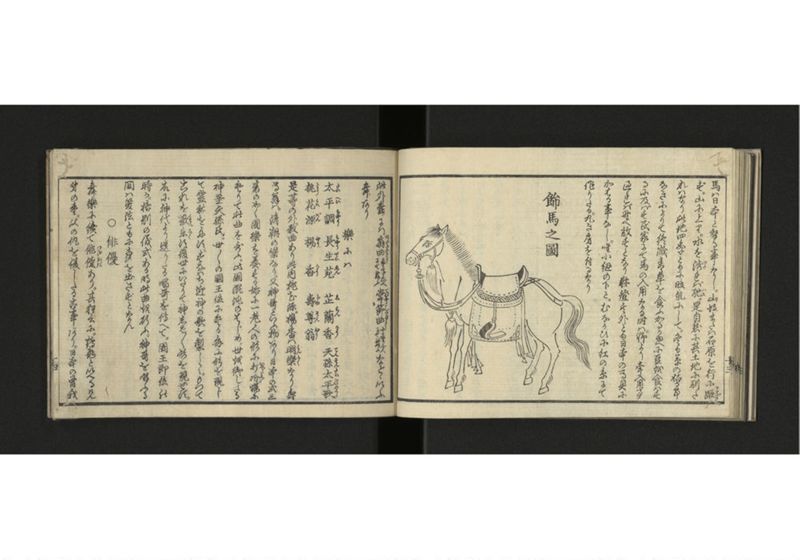
飾馬之図
【左丁】
此外舞には。扇曲(あふきのきよく)《割書:童子六人|にて舞ふ》掌節曲(てびやうしのきよく)《割書:小童三人|にて舞ふ》などゝいふ
舞あり
楽には
太平調(たいへいちやう) 長生苑(ちやうせいゑん) 芷蘭香(しらんかう) 天孫太平歌(てんそんたいへいのうた)
桃花源(とうくはげん) 楊(やう) 香(かう) 寿尊翁(じゆそんおう)
是等の外。数曲あり此内桃花源。楊香は明楽(みんかく)なり寿
尊翁は。清朝の楽なり。又神哥といふ物あり日本の式三
番の如く国楽を奏する始に一老人の形に打扮(いでたち)。場に
登りて此曲を哥ふ。此国混沌のはじめ。世を御したる
神垩天孫氏。世〳〵の国王位に登る毎に形を現じ
て霊祐を示す。すなはち迎神の歌を製して。もつて
これを歓楽(くわんらく)す後世にいたりて神しば〳〵形を現ぜず。
故に神代より送りたる唱哥を伝へて。国王即位の
時か。格別の儀式ある時此曲を行ふ。神哥を唱ふる
間は管弦ともに声を出さずとなん
○俳優
舞楽に続て俳優(わざおぎ)あり。其狂言に。鶴亀といへる兄
弟の童。父の仇を復したる古事あり。日本の曽我
現代語訳
【右丁】
馬は日本と変わることがない。山坂や石原を行くのに躓か
ず、山に登り、水を渡ると駆ける。これは自然にその土地に慣れた
からである。この地は四季ともに暖気で、冬も草が枯れることが
ないため、年中春草を食べるので、豆を食べさせる
必要がない。民家で馬が入用な時は、野から引いて来て、用事が
済むと野へ放すのである。鞍・鐙その他も日本の馬具と
変わることがない。ただ小紐の下と、胸当てに紅の糸で
作った丸い房を付けるだけである。
飾馬之図
【左丁】
この他の舞には、扇曲(童子六人で舞う)、掌節曲(小童三人で舞う)などという
舞がある。
楽には
太平調 長生苑 芷蘭香 天孫太平歌
桃花源 楊香 寿尊翁
これらの他に数曲ある。この内、桃花源・楊香は明楽(中国明朝の音楽)で、寿
尊翁は清朝の楽である。また神歌というものがあり、日本の式三
番のように、国楽を奏する始めに一老人の姿に身を装い、舞台に
登ってこの曲を歌う。この国の混沌の始め、世を治めた
神聖天孫氏が、代々の国王が位に就く度に姿を現して
霊験を示した。すなわち迎神の歌を作って、これを
歓楽した。後世に至って神がしばしば姿を現さなくなったため、
神代より伝えられた歌を伝えて、国王即位の
時や格別の儀式がある時にこの曲を行う。神歌を唱える
間は管弦ともに音を出さないという。
○俳優
舞楽に続いて俳優(芸能者)がある。その狂言に、鶴亀という兄
弟の童が父の仇を討った古事がある。日本の曽我
英語訳
【Right page】
Horses are no different from those in Japan. They do not stumble when traveling over mountain slopes or rocky plains,
climb mountains, and gallop when crossing water. This is because they have naturally become accustomed to that land.
This region has warm climate in all four seasons, and since grass does not wither even in winter,
horses eat spring grass year-round, so there is no need to feed them beans.
When common households need horses, they bring them from the fields, and
when their business is finished, they release them back to the fields. Saddles, stirrups, and other equipment are no
different from Japanese horse gear. Only beneath the small cords and on the breast strap do they attach
round tassels made of red thread.
Illustration of Decorated Horse
【Left page】
Besides these dances, there are dances called Fan Music (danced by six boys) and Hand-clapping Music (danced by three small boys).
As for music:
Taihei-chō, Chōsei-en, Shiran-kō, Tenson Taihei-no-uta,
Tōka-gen, Yō-kō, Juson-ō
There are several other pieces besides these. Among these, Tōka-gen and Yō-kō are Ming music (music from China's Ming dynasty), and
Juson-ō is music from the Qing dynasty. There is also something called Divine Song, which, like Japan's Shiki-sanban,
is performed at the beginning of national music. An old man in costume ascends the stage
and sings this piece. At the beginning of chaos in this country, the divine
Sacred Heavenly Grandson who ruled the world would appear whenever
successive kings ascended to the throne, showing divine protection.
They composed welcoming songs for the gods and celebrated with them.
In later generations, when gods ceased to frequently appear,
they preserved the songs transmitted from the age of gods, performing this piece during royal enthronements
or special ceremonies. During the chanting of Divine Songs,
neither wind nor string instruments make any sound.
○Actors
Following the court music and dance, there are actors (performers). In their plays, there is an ancient story
of brothers named Tsuru-kame (Crane-Turtle) who avenged their father. Like Japan's Soga