翻刻
【上段右】
関東
類焼
大
地
震
【上段左】
御救御小
屋三ヶ所
浅草広小路
深川海辺大工町
幸橋御見附外
【下段】
乾坤和順せざるときは陰地中に満て一時に発す是地上に地震といひ海上に津浪といふ山中に発する時は洞のぬけたるなど
皆風雨不順の為す所にして恐るべきの大事なり于茲安政二年乙卯冬十月二日夜四ッ時過るころ関東の国には
地震のとゝかさることなく一時に舎房を崩し人命を絶こと風前のともしびの如し其中に先御府内焼亡の地は千住小塚原
不残焼け千住宿は大半崩れ山谷橋はのこらず崩れ今戸橋きは数十軒やける新吉原は五丁共不残焼死人おびたゞしく
田丁壱丁目弐丁目山川町浅草竹門北馬道聖天横町芝居町三町北谷中谷の寺院南馬道ゟ花川戸半町程やける山の宿町
聖天町は崩る浅草寺は無事にて雷門の雷神ゆるぎ出す広小路並木辺残らす崩れ駒形町中頃ゟ出火諏訪町黒船町御馬や
河岸にてやけどまる御蔵前茅町辺冨坂町森下辺大破東門跡恙なし菊屋橋きは新寺町新堀共少しやける大音寺より
三の輪金杉辺崩れ坂本は三丁目やける山崎町東坂広徳寺前通り崩多し又は山本仁太夫矢来内死人多く家不残崩る其外寺院は
大破損亡おびたゞし〇谷中三崎千駄木駒込は崩少し根津門前は大半崩池の端茅町弐丁目境いなり向よりやけ同壱丁目不残
木戸際にて留る切通し坂下大崩仲町は片側丁崩多く両かは丁すくなし御すきや町は大崩広小路東がは中程より伊東松坂屋角迄
上野町より長者町辺やける御徒町近辺より三味せん堀七まがりは大名方組屋敷共崩るといへとも多分のことなし御成通より明神下
破れ多く外神田町家の分崩少し湯島天神は崩少し門前町崩多く妻恋町少しも不崩稲荷の社無事也本郷台破
少し筋違御門より日本橋通り左右神田東西共崩多し小川町本郷様松平紀伊守様板倉様戸田様やける榊原様外かは
焼神田橋内酒井雅樂頭様同御向やしき龍之口角森川出羽守様又下口は八代洲河岸植村但馬守様因州様御火消屋敷
等なり和田倉御門内は松平肥後守様松平下総守様やける近所崩れ其外丸の内御大名方所々崩多し鍋嶋様御上屋敷
不残やける山下御門内阿部様のこらす大崩となり夫より幸橋内松平甲斐守様伊東様亀井様共やける薩州様装束屋敷崩る
露関は諸家様大半くづれ黒田様御物見のこる永田町三間家かうじ町辺は崩少し四ッ谷市ヶ谷牛込小日向小石川番町辺
何れも損亡おほし赤坂青山麻布渋谷白銀品川高輪台町共崩少し赤羽根三田飯倉西ノ久保は崩多し増上寺無事
〇北本所は中の郷松平周防守様やける此辺大崩にて所々より出火あり同所番場丁弁天小路辺やける其外寺院損亡多し法恩寺橋
町家やける亀戸町二ヶ所やける又竪川通りは桐生町緑町三ッめ花町迄やける又御船蔵前町より黒八名川町六間堀森下町高橋にて
留る又下口は深川相川町より黒江町大嶋町はまぐ里町永代寺門前町八幡宮鳥居きはにて止る又乙女橋向角大川端少しやける
本所深川おしなへて地震つよく損亡おびたゝし〇日本橋より南東西中通り河岸通り共大崩にて南伝馬町弐ヶ月三丁目左右川岸
京橋川通り迄やける銀座町三十間堀尾張町辺少したるみ新橋向築地木挽町桜田久保町あたご下崩れ多し芝口通り少し
露月丁崩れ柴井町やける神明町三島町大崩怪我人多し神明宮恙なし浜手御屋敷残すいたむ中門前片門前浜松町金杉本
芝辺崩少し田町大木戸品川宿格別の崩なし翌三日より七日迄明日すこしづゝふるひけれ共別にさはることなく追々静鑑におよひ下々へは
御救を被下置御救小屋三ヶ所へ御立被下御仁徳の御国恩を拝謝し奉らん人こそなかりけれあらありがたき
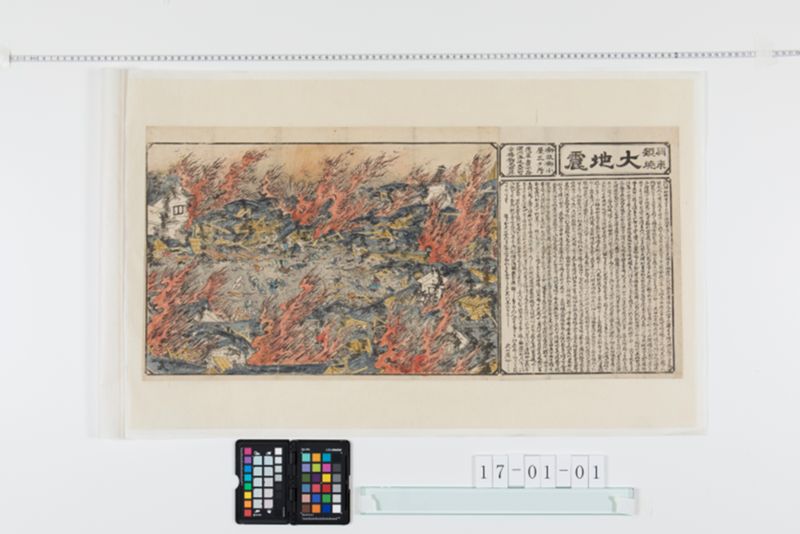
事共なり 但し出火のせつわ三十二口なれともやけるところは図のことし 火の用心〳〵
現代語訳
【上段右】
関東
類焼
大
地
震
【上段左】
救済小屋三ヶ所
浅草広小路
深川海辺大工町
幸橋御見附外
【下段】
天地の調和が保たれないとき、陰気が地中に満ちて一時に発するのが、地上では地震といい、海上では津波という。山中に発するときは洞窟が抜けるなど、皆風雨不順のためであり、恐るべき大事である。ここに安政二年乙卯冬十月二日夜四つ時過ぎ頃、関東の国には地震が激しく起こり、一時に家屋を崩し、人命を絶つこと風前の灯火のようであった。その中でまず江戸府内焼失の場所は千住小塚原が残らず焼け、千住宿は大半が崩れ、山谷橋は全て崩れ、今戸橋際は数十軒が焼ける。新吉原は五丁とも残らず焼け、死人が非常に多く、田町一丁目二丁目、山川町、浅草竹門、北馬道、聖天横町、芝居町三町、北谷中谷の寺院、南馬道から花川戸まで半町ほど焼ける。山の宿町、聖天町は崩れる。浅草寺は無事であったが雷門の雷神が揺れ出す。広小路並木辺は残らず崩れ、駒形町中頃から出火、諏訪町、黒船町、御馬屋河岸で焼け止まる。御蔵前、茅町辺、富坂町、森下辺は大破、東門跡は無事。菊屋橋際は新寺町、新堀とも少し焼ける。大音寺より三ノ輪、金杉辺は崩れ、坂本は三丁目が焼ける。山崎町東坂、広徳寺前通りは崩れが多い。また山本仁太夫屋敷内は死人が多く、家は残らず崩れる。その他寺院は大破損が非常に多い。○谷中、三崎、千駄木、駒込は崩れが少ない。根津門前は大半崩れ、池の端茅町二丁目境稲荷向かいから焼け、同一丁目は残らず木戸際で止まる。切通し坂下は大崩、仲町は片側町の崩れが多く、両側町は少ない。御数寄屋町は大崩、広小路東側中程より伊藤松坂屋角まで、上野町より長者町辺が焼ける。御徒町近辺より三味線堀、七曲がりは大名方組屋敷とも崩れるといっても大した事はない。御成通りより明神下は破れが多く、外神田町家の分は崩れが少ない。湯島天神は崩れが少ないが門前町は崩れが多く、妻恋町は少しも崩れず、稲荷の社は無事である。本郷台は破れが少ない。筋違御門より日本橋通り左右神田東西とも崩れが多い。小川町本郷様、松平紀伊守様、板倉様、戸田様が焼ける。榊原様外側が焼け、神田橋内酒井雅楽頭様、同御向屋敷、龍ノ口角森川出羽守様、また下口は八代洲河岸植村但馬守様、因州様御火消屋敷等である。和田倉御門内は松平肥後守様、松平下総守様が焼ける。近所は崩れ、その他丸の内御大名方は所々崩れが多い。鍋島様御上屋敷は残らず焼ける。山下御門内阿部様は残らず大崩となり、それより幸橋内松平甲斐守様、伊東様、亀井様とも焼ける。薩摩様装束屋敷は崩れる。露地関は諸家様大半崩れ、黒田様御物見が残る。永田町三間家、麹町辺は崩れが少ない。四谷、市ヶ谷、牛込、小日向、小石川、番町辺はいずれも損失が多い。赤坂、青山、麻布、渋谷、白銀、品川、高輪、台町とも崩れが少ない。赤羽根、三田、飯倉、西久保は崩れが多い。増上寺は無事。○北本所は中の郷松平周防守様が焼ける。この辺は大崩で所々より出火がある。同所番場町、弁天小路辺が焼ける。その他寺院損失が多い。法恩寺橋町家が焼ける。亀戸町二ヶ所が焼ける。また竪川通りは桐生町、緑町、三ツ目、花町まで焼ける。また御船蔵前町より黒江町、名川町、六間堀、森下町、高橋で止まる。また下口は深川相生町より黒江町、大島町、蛤町、永代寺門前町、八幡宮鳥居際で止まる。また乙女橋向角大川端少し焼ける。本所深川はおしなべて地震が強く、損失が非常に多い。○日本橋より南東西中通り、河岸通りとも大崩で、南伝馬町二ヶ所三丁目左右川岸、京橋川通りまで焼ける。銀座町三十間堀、尾張町辺は少し緩む。新橋向築地、木挽町、桜田、久保町、愛宕下は崩れが多い。芝口通りは少し、露月町崩れ、柴井町焼ける。神明町、三島町は大崩、怪我人が多い。神明宮は無事。浜手御屋敷は残らず痛む。中門前、片門前、浜松町、金杉、本芝辺は崩れが少ない。田町、大木戸、品川宿は格別の崩れはない。翌三日より七日まで毎日少しずつ揺れたが別に差し障ることなく、次第に静寂になり、庶民へは救済を下され、救済小屋三ヶ所を設置され、御仁徳の御国恩を拝謝し奉らない人はいなかった。ありがたいことである。ただし出火の箇所は三十二ヶ所であったが、焼けるところは図の通りである。火の用心。
英語訳
【Upper right】
Kanto
Great Fire and
Great
Earthquake
【Upper left】
Relief huts at three locations:
Asakusa Hirokoji
Fukagawa Umibe Daikucho
Outside Saiwai-bashi Omitsuke
【Lower section】
When the harmony of heaven and earth is disturbed, negative energy fills the underground and erupts all at once - on land this is called an earthquake, and on the sea it is called a tsunami. When it occurs in the mountains, caves collapse and such - all are caused by unfavorable wind and rain, and are fearsome great disasters. On the night of the second day of the tenth month of winter in the second year of Ansei (1855), around four o'clock, a great earthquake struck the Kanto region, instantly collapsing houses and taking lives like candles flickering before the wind. First, among the burned areas in Edo, Senju Kozukahara burned completely, most of Senju post town collapsed, Sanya Bridge collapsed entirely, and dozens of houses near Imado Bridge burned. All five districts of Shin-Yoshiwara burned completely with an enormous number of deaths. Ta-cho 1st and 2nd districts, Yamakawa-cho, Asakusa Takemon, Kita-Umamichi, Shoden-yokocho, the three theater districts, temples in Kita-tani and Naka-tani, and about half a block from Minami-Umamichi to Hanakawado burned. Yama-no-yado-cho and Shoden-cho collapsed. Sensoji Temple was safe but the thunder god of Kaminarimon shook loose. Hirokoji and the tree-lined area completely collapsed. Fire broke out from the middle of Komagata-cho, burning through Suwa-cho, Kurofune-cho, and stopping at Oumaya riverbank. Okura-mae, Kaya-cho area, Tomisaka-cho, and Morishita area suffered major damage, while Higashi-mon ruins were safe. Near Kikuya Bridge, Shinstera-cho and Shinbori burned partially. From Daion-ji to Minowa and Kanasugi area collapsed, and Sakamoto's 3rd district burned. Yamazaki-cho Higashi-saka and the street in front of Kotoku-ji had many collapses. Also, many died within Yamamoto Nitayu's estate and all houses collapsed. Other temples suffered extensive major damage. ○ Yanaka, Misaki, Sendagi, and Komagome had few collapses. Most of Nezu Monzen collapsed. From Ike-no-hata Kaya-cho 2nd district boundary toward Inari shrine, fire spread, burning all of the 1st district and stopping at the gate. Kiridoshi slope bottom suffered major collapse. In Naka-cho, one side had many collapses while both sides had few. Osukiya-cho suffered major collapse. From the middle of Hirokoji east side to Ito Matsusakaya corner, and from Ueno-cho to Choja-cho area burned. From near Okachi-cho to Shamisen-bori and Nanamagari, daimyo residences and group estates collapsed, though not severely. From Onaritori to Myojin-shita had much damage, while outer Kanda townhouses had few collapses. Yushima Tenjin had few collapses but Monzen-cho had many. Tsumagoicho didn't collapse at all and Inari shrine was safe. Hongo plateau had little damage. From Sujichigai gate to Nihonbashi street, both left and right sides of Kanda east and west had many collapses. In Ogawa-cho, the Hongo residence, Matsudaira Kii-no-kami, Itakura, and Toda residences burned. Outside Sakakibara residence burned. Inside Kanda bridge, Sakai Ugaku-no-kami and the residence opposite, Tatsuno-kuchi corner Morikawa Dewa-no-kami, and at the lower mouth, Yashiro-su riverbank Uemura Tajima-no-kami, Inshu residence, fire brigade estates, etc. Inside Wadakura gate, Matsudaira Higo-no-kami and Matsudaira Shimosa-no-kami burned. The neighborhood collapsed, and elsewhere in Marunouchi, various daimyo residences had many collapses. Nabeshima's upper residence burned completely. Inside Yamashita gate, Abe residence completely collapsed, and from there inside Saiwai bridge, Matsudaira Kai-no-kami, Ito, and Kamei residences all burned. Satsuma's costume estate collapsed. In the alley area, most noble houses collapsed, with Kuroda's watchtower remaining. Nagata-cho Sanken-ya and Koji-cho area had few collapses. Yotsuya, Ichigaya, Ushigome, Kohinata, Koishikawa, and Bancho areas all had much damage. Akasaka, Aoyama, Azabu, Shibuya, Shirogane, Shinagawa, and Takanawa Daicho all had few collapses. Akabane, Mita, Iikura, and Nishi-no-kubo had many collapses. Zojoji Temple was safe. ○ In North Honjo, Matsudaira Suwo-no-kami in Naka-no-go burned. This area had major collapses with fires breaking out in various places. Banba-cho and Benten-koji area burned. Other temples had much damage. Houses on Hoon-ji bridge burned. Two places in Kameido burned. Along Tatekawa street, from Kiryu-cho, Midori-cho, to Mitsume and Hana-cho burned. From Ofunagura-mae-cho to Kuroe-cho, Na-gawa-cho, Rokken-bori, Morishita-cho, stopping at Takahashi. At the lower mouth, from Fukagawa Aioi-cho to Kuroe-cho, Oshima-cho, Hamaguri-cho, Eitai-ji Monzen-cho, stopping at Hachiman shrine torii. Also, Otome bridge opposite corner Okawa-bata burned slightly. Throughout Honjo and Fukagawa, the earthquake was strong with enormous damage. ○ From Nihonbashi south, east-west main street and riverbank street all suffered major collapse, with Minami-Tenma-cho two places, 3rd district left and right riverbank, burning to Kyobashi river street. Ginza-cho Sanjukken-bori and Owari-cho area loosened slightly. Opposite Shinbashi at Tsukiji, Kobiki-cho, Sakurada, Kubo-cho, and Atago-shita had many collapses. Shibaguchi street had few, Rogatsu-cho collapsed, Shibai-cho burned. Shinmei-cho and Mishima-cho had major collapses with many injured. Shinmei shrine was safe. All waterfront estates were damaged. Naka-monzen, Kata-monzen, Hamamatsu-cho, Kanasugi, and Honshiba area had few collapses. Tamachi, Okido, and Shinagawa post town had no particular collapses. From the following 3rd to the 7th day, there were small tremors daily but nothing particularly troublesome, gradually becoming calm. Relief was provided to the common people, with relief huts established at three locations. There was no one who did not express gratitude for this benevolent national grace. How grateful this was. However, there were thirty-two locations where fires broke out, but the burned areas are as shown in the diagram. Fire prevention!