翻刻
【右丁上段】
高巓(かうてん)ともいふ
○坂(さか)は坡(は)坂(はん)なり山中(さんちう)の高(たか)
くけはしき所なり小坂(こさか)を嶝(とう)
といふ磴(とう)同し
○嶽(だけ)はけはしき高山(かうざん)をいふ
山城(やましろ)如意嶽(によゐがたけ)近江(あふみ)の比良(ひら)の
が嶽なとなり
○谷(たに)は両山(りやうさん)の中(なか)の流水(りうすい)なり
渓(けい)谿(けい)同し水(みつ)谿(けい)にそゝくを谷(たに)
といふ山(やま)の間(あいた)に水あるを澗(かん)と
いふたにがはとよめり
○丘(おか)は土(つち)の高(たか)き所(ところ)をいふ又 四方(しはう)
たかくして中央ひろきを丘(きう)といふ
ともあり阜(ふ)同 狐(きつね)死(し)するとき
は丘(をか)を枕(まくら)とす
○盤(ばん)は大石(たいせき)なり盤石(ばんじやく)ともいふ
俗(ぞく)に大磐石(たいばんじやく)といふは重言(ぢうごん)
【左丁上段】
なるべし
○巌(かん)はいはほなりさゞれ石(いし)
のいはほとなりてとよめるなり
石窟(せきく[つ])を巌(がん)といふ石(いし)のするど
にしてたかくそびへたるをいふ
詩経(しきやう)に維石(これいし)巌々(がん〳〵たり)といへり
岩(がん)同
○崖(かけきし)は山辺(さんへん)なり山(やま)の一 片(へん)に
そはだちのそみたるをいふ厓(かい)
同し又 懸崖(けんかい)ともいふかけぎし
補 俗(ぞく)にがけといふなり
○瀑(はく)は滝(ろう)とも書(かく)なりながれ
おつる色(いろ)白(しろ)くして布(ぬの)を瀑(さらす)が如(ごと)
くなるによつて瀑布(はくふ)とも云
日本にも布引(ぬのびき)のたきといふ
ありもろこしには盧山(ろさん)【廬の誤】に名(な)
高(だか)き滝(たき)あり又 滝(たき)を飛泉(ひせん)
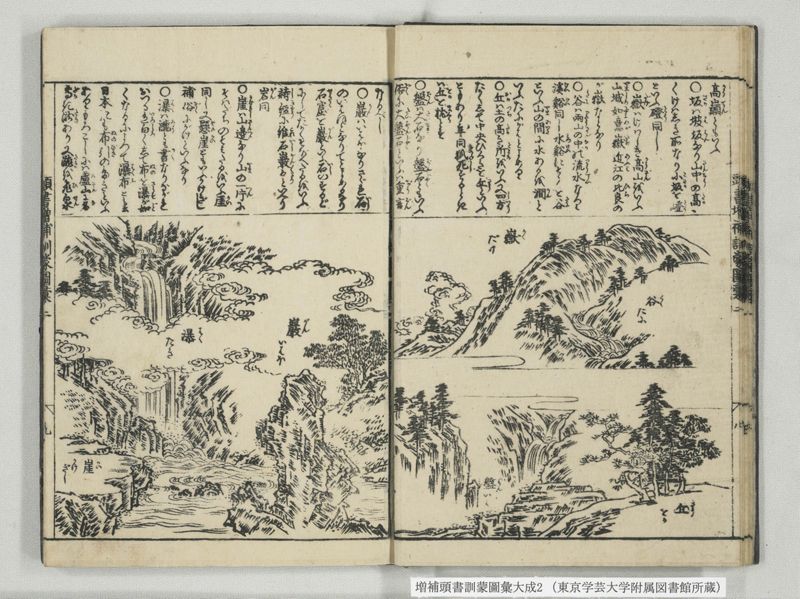
【右丁下段挿絵】
丘(きう)
《割書:をか|》
谷(こく)
《割書:たに|》
嶽(かく)
《割書:だけ|》
【左丁下段挿絵】
巌(がん)
《割書:いはほ|》
瀑(はく)
《割書:たき|》
現代語訳
【右丁上段】
高巓(こうてん)とも言う。
○坂は坡坂のことである。山中の高く険しい所である。小坂を嶝(とう)と言う。磴(とう)も同じである。
○嶽は険しい高山を言う。山城の如意ヶ嶽、近江の比良ヶ嶽などである。
○谷は両方の山の中の流水である。渓・谿も同じである。水が渓に注ぐのを谷と言う。山の間に水があるのを澗(かん)と言い、「たにがわ」と読む。
○丘は土の高い所を言う。また四方が高くして中央が広いのを丘と言うこともある。阜(ふ)も同じである。狐は死ぬときは丘を枕とする。
○盤は大石である。盤石とも言う。俗に「大盤石」と言うのは重言(同じ意味の語の重複)
【左丁上段】
である。
○巌は岩のことである。さざれ石の岩となりてと詠まれるものである。石窟を巌と言う。石が鋭くして高くそびえ立っているものを言う。『詩経』に「これ石、巌々たり」とある。岩も同じである。
○崖(がけきし)は山辺である。山の一方に切り立って険しくなっているものを言う。厓も同じである。また懸崖とも言う。俗に「がけ」と言う。
○瀑は滝とも書く。流れ落ちる色が白くて布をさらすようになることによって瀑布とも言う。日本にも布引の滝と言うものがある。中国には廬山に名高い滝がある。また滝を飛泉
英語訳
【Right page, upper section】
It is also called kōten (high summit).
○Saka (slope) refers to steep inclines. These are high and precipitous places in mountains. Small slopes are called tō. Tō (stone steps) is the same.
○Dake refers to steep high mountains, such as Nyoigadake in Yamashiro and Hiragadake in Ōmi.
○Tani (valley) is flowing water between two mountains. Kei and kei are the same. Water flowing into a ravine is called tani. Water between mountains is called kan, read as "tanigawa" (valley river).
○Oka (hill) refers to high ground. It also refers to areas that are high on four sides with a broad center. Fu is the same. When foxes die, they use hills as pillows.
○Ban refers to large stones. Also called banjaku (bedrock). The common expression "daibanjaku" (great bedrock) is redundant language.
【Left page, upper section】
○Gan refers to rock formations. These are what is sung of as "pebbles becoming boulders." Stone caves are called gan. It refers to stones that are sharp and tower high. The Book of Songs states "these stones are towering." Gan (rock) is the same.
○Gake (cliff) refers to mountainsides. It describes one side of a mountain that rises steeply and precipitously. Gai is the same. It is also called kengai (hanging cliff). Commonly called "gake."
○Baku is also written as taki (waterfall). Because the falling water appears white like cloth being bleached, it is also called bakufu (waterfall). Japan also has what is called Nunobiki Falls. China has famous waterfalls at Mount Lu. Waterfalls are also called hisen (flying springs).