翻刻
【右丁上段】
けだものをやしなふ所を苑
といひ垣(かき)あるを園(ゑん)といふいづ
れもそのと訓(くん)ず補【▢囲み】園(その)は今 俗(そく)
にうらせどなとゝいふ
○圃(ほ)は菜(さい)をうゆる所をいふ也
又 果(このみ)瓜(うり)をうゆるを圃(ほ)といふと
もいへり又はたけなり我(われ)不(ず)
_レ如(しか)_二老圃(らうほに)_一と孔子(こうし)ものたまへる事
論語(ろんご)に見(み)へたり
○閭(りよ)は里門(りもん)なり今(いま)いふ在所(ざいしよ)
の惣門(さうもん)なり又 家(いゑ)二十五 軒(けん)
ほどある在所(さいしよ)を閭(りよ)といふ又 閭(りよ)
巷(こう)といふ
○郊外(かうぐはい)を野(の)といふなり野(の)は
ひろくして平(たいらか)なるをいふ
高(たか)くして平(たいらか)なるを原(げん)と云
これをあはせて野原(のはら)といふ
【左丁上段】
埜(や)同し墅と書はあやまり也
○道(とう)は道路(どうろ)なり途(と)同し
径(けい)はこみちなり
用明天皇(ようめいてんわう)のとき五 畿(き)七 道(どう)に
わかつ文武天皇(もんむてんわう)のとき六十六
箇国(かこく)をわかつ
○畷(てつ)は田(た)の間(あいた)のみちなりなは
てなり俗(ぞく)に縄手(なはて)と書(かく)は縄(なは)を
引(ひき)たるがごとく直(なを)けれはなり
○衢(ちまた)は四 達(たつ)の道(みち)なりよつて
十 字街(じかい)といふちまたなり俗(ぞく)
に辻(しう)の字(じ)を書(かき)てつじと読(よむ)
街衢洞達(かいくのとうたつ)とあり
○城(しろ)は黄帝(くはうてい)つくりはじめ
たまふとも又 鯀(こん)といふ人つくり
はじめ給ふともいふ内(うち)を城(せい)と
いひ外(ほか)を郭(くはく)といふ天守(てんしゆ)狭間(さま)
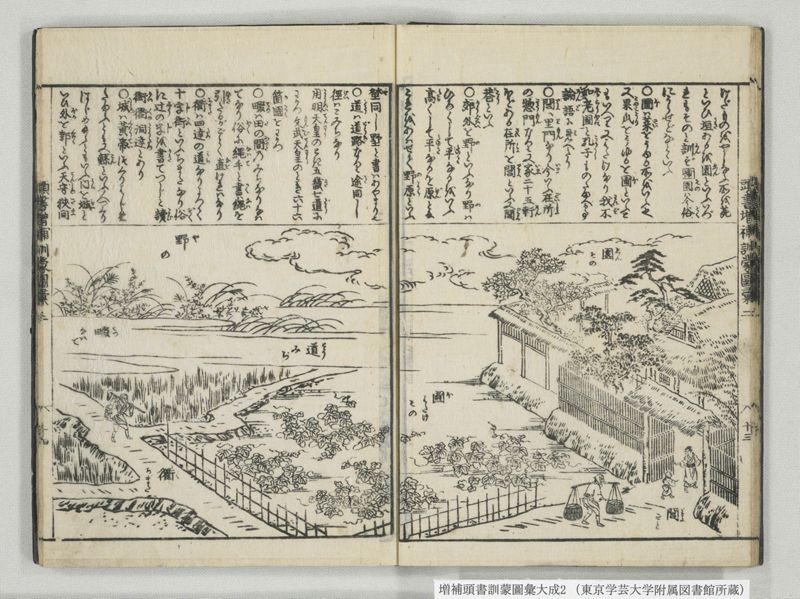
【右丁下段挿絵】
閭(りよ)
《割書:さと|》
園(ゑん)
《割書:その|》
圃(ほ)
《割書:はたけ| その》
【左丁下段挿絵】
道(とう)
《割書:み| ち》
野(や)
《割書:の|》
衢(く)
《割書:ちまた|》
畷(てつ)
《割書:なは| て》
現代語訳
【右丁上段】
獣を飼う所を苑といい、垣があるものを園という。いずれも「その」と読む。【補】園(その)は今俗に「うらせど」などという。
○圃(ほ)は野菜を植える所をいう。また果物や瓜を植えるところを圃というともいう。また畑である。「我、老圃に如かず」と孔子もおっしゃった事が論語に見える。
○閭(りょ)は里門である。今でいう在所の総門である。また家二十五軒ほどある在所を閭という。また閭巷という。
○郊外を野という。野は広くて平らなことをいう。高くて平らなものを原という。これを合わせて野原という。
【左丁上段】
埜(や)は同じ。墅と書くのは間違いである。
○道(とう)は道路である。途と同じ。径は小道である。
用明天皇の時、五畿七道に分けた。文武天皇の時、六十六か国に分けた。
○畷(てつ)は田の間の道である。縄手である。俗に縄手と書くのは、縄を引いたように真っ直ぐだからである。
○衢(ちまた)は四方に通じる道である。よって十字街という。ちまたである。俗に辻の字を書いて「つじ」と読む。街衢洞達とある。
○城(しろ)は黄帝が作り始めたともいい、また鯀という人が作り始めたともいう。内を城といい、外を郭という。天守、狭間
英語訳
【Right page, upper section】
A place for raising animals is called en (garden), and one with fences is called en (garden). Both are read as "sono." [Supplement] En (sono) is now commonly called "urasedo" and such.
○Ho refers to a place for growing vegetables. It is also said that a place for growing fruits and melons is called ho. It is also a field. "I am not as good as an old gardener" - this saying of Confucius appears in the Analects.
○Ryo is a village gate. It is what we now call the main gate of a locality. Also, a locality with about twenty-five houses is called ryo. It is also called ryoko.
○The suburbs are called no (field). No refers to what is wide and flat. What is high and flat is called gen (plain). Combining these gives nohara (field and plain).
【Left page, upper section】
Ya is the same. Writing it as sho is incorrect.
○Do means road or pathway. It is the same as to. Kei is a small path.
During Emperor Yomei's time, it was divided into five provinces and seven circuits. During Emperor Monmu's time, it was divided into sixty-six provinces.
○Tetsu is a path between rice fields. It is nawate. Writing it commonly as nawate is because it is straight like a pulled rope.
○Chimata is a road that leads in four directions. Hence it is called a crossroads. It is chimata. Commonly the character tsuji is written and read as "tsuji." It says "streets and crossroads connect everywhere."
○Shiro (castle) - some say the Yellow Emperor first built them, others say a person named Gun first built them. The inside is called jo (castle) and the outside is called kaku (outer wall). Tenshu (keep), sama (loopholes)