翻刻
【右丁上段】
○墓(ぼ)は慕(ぼ)の字(じ)の意(こゝろ)にて
したふといふ事なり子孫(しそん)か
先祖(せんぞ)を思慕(しぼ)するなり塚(ちよ)も
同し天子(てんし)のはかを陵(みさゞき)といふ
塋(ゑい)同し壙(くはう)つかあななり
補【▢囲み】沼(ぬま)は池(いけ)の大(おほい)なるものをいふ
又 水(みづ)少(すくな)く泥土(でいど)なるものなり池(いけ)
沢(さは)沼(ぬま)は同じたぐひなり山(やま)
城国(しろのくに)伏見(ふしみ)に大沼(おほぬま)あり葦(よし)芦(あし)
など多(おゝ)くはへ水鳥(みづとり)の住所(すみどころ)也
補【▢囲み】籔(やぶ)は竹林(ちくりん)なり若竹(まだけ)淡竹(はちく)の
二 種(しゆ)を用(もち)ひて其性(そのじやう)かたくよつて
籔となして造作(さうさく)又は器財(きざい)に用(もち)
ゆる事かぞへがたし
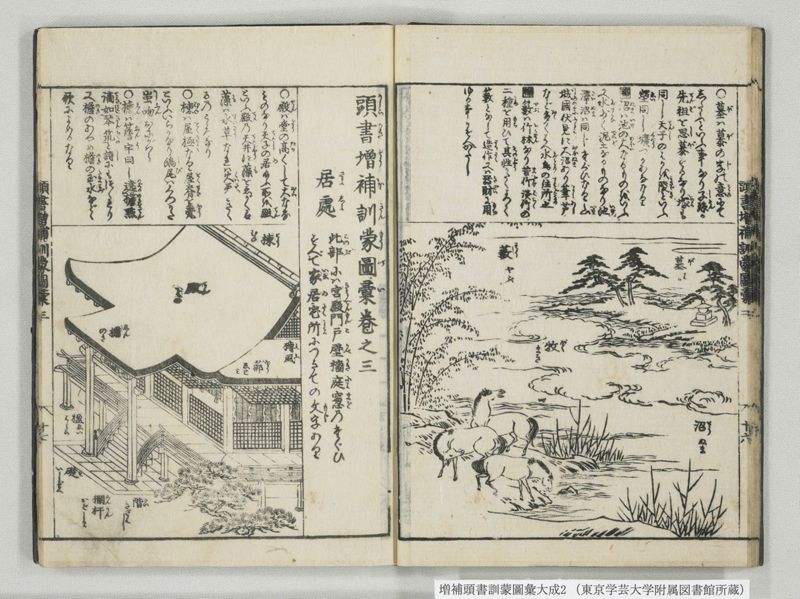
【右丁下段挿絵】
沼(せう)《割書:ぬま|》
墓(ぼ)《割書:は| か》
牧(ぼく)
《割書:まき|》
薮(すう)《割書:やぶ|》
【左丁】
《題:頭書増補訓蒙図彙(かしらかきぞうほきんもうづい)巻之三》
居処(きよしよ)《割書:此部(このぶ)には宮殿(きうでん)門戸(もんこ)壁(かべ)檣(かき)庭(には)窓(まど)のたぐひ|すべて家居(いゑゐ)宅所(たくしよ)につきての文字(もじ)あり》
○殿(てん)は堂(だう)の高(たか)くして大(おゝい)なる
ものなり天子(てんし)の居(ゐ)給ふ所を殿(てん)
といふ殿(てん)の天井(てんじやう)に藻(も)をゑがくは
藻(も)は木草(すいさう)なれは火災(くはさい)□【を】さく
るのこゝろなり
○棟(むね)は屋極(をくきよく)なり屋脊(をくせき)を甍(ほう)
といふいらかなり鴟尾(しび)はくつかた
蚩吻(しふん)おにがはら
○檐(えん)は簷宇(ゑんう)同し遶(めぐる)_レ■(のきを)【注】点(てん)
滴(てき)如(ごとし)_二琴筑(きんちくの)_一と詩(し)にもつくれり
又 檐(のき)のあやめ檐(のき)の玉水(たまみづ)などゝ
歌によめるなり
【■は「木+簷」・「檐」の誤ヵ】
【左丁下段挿絵】
榑風(はふ)【搏ヵ】
棟(とう)
《割書:むね|》 蔀(ほう)
《割書:しと| み》
殿(てん)
《割書:との|》
階(かい)
《割書:きざは| し》
檐(えん)
《割書:のき|》 欄杆(らんかん)
《割書:おばしま|》
楹(ゑい)
《割書:はしら|》 礎(そ)
《割書:いしずへ》
現代語訳
【右丁上段】
○墓(ぼ)は慕(ぼ)の字の意味で、慕うということである。子孫が先祖を思慕するのである。塚(つか)も同じである。天子の墓を陵(みささぎ)という。塋(えい)も同じ。壙(こう)は墓穴のことである。
【補】沼(ぬま)は池の大きなものをいう。また水が少なく泥土のようなものである。池・沢・沼は同じ類である。山城国伏見に大沼があり、葦や芦などが多く生え、水鳥の住処である。
【補】薮(やぶ)は竹林のことである。真竹・淡竹の二種を用いて、その性質が硬いので薮として、建築や器具に用いることは数え切れない。
【左丁】
《見出し:頭書増補訓蒙図彙 巻之三》
居処(きょしょ)《この部には宮殿・門戸・壁・垣・庭・窓の類、すべて家居・住宅についての文字がある》
○殿(てん)は堂の高くて大きなものである。天子がお住まいになる所を殿という。殿の天井に藻を描くのは、藻は水草なので火災を避けるという意味である。
○棟(むね)は屋根の頂上部分である。屋脊を甍(いらか)という。鴟尾(しび)は沓形、蚩吻(しふん)は鬼瓦のことである。
○檐(えん)は簷宇(えんう)と同じで、軒を巡らすことで、「点滴琴筑の如し」と詩にも作られている。また「軒の菖蒲」「軒の玉水」などと歌に詠まれている。
【挿絵部分】
沼(しょう)・ぬま、墓(ぼ)・はか、牧(ぼく)・まき、薮(すう)・やぶ
棟(とう)・むね、殿(てん)・との、檐(えん)・のき、楹(えい)・はしら、礎(そ)・いしずえ、階(かい)・きざはし、欄干(らんかん)・おばしま、蔀(ほう)・しとみ
英語訳
【Right page, upper section】
○Grave (bo) has the meaning of the character "bo" (to yearn for), which means to long for something. It represents descendants yearning for their ancestors. Mound (tsuka) has the same meaning. The grave of an emperor is called "misasagi" (imperial mausoleum). "Ei" means the same thing. "Ko" refers to a grave pit.
【Supplement】Swamp (numa) refers to a large pond. It also refers to something with little water and muddy soil. Ponds, marshes, and swamps belong to the same category. There is a large swamp in Fushimi, Yamashiro Province, where many reeds grow and waterbirds dwell.
【Supplement】Thicket (yabu) refers to a bamboo grove. Two types are used: madake (timber bamboo) and hachiku (henon bamboo). Because of their hard nature, they are made into thickets and used countless times for construction and utensils.
【Left page】
《Title: Kashiragaki Zoho Kinmo Zui, Volume 3》
Dwellings (kyosho) 《This section contains characters related to palaces, gates, walls, fences, gardens, windows, and all matters concerning homes and residences》
○Palace (ten) is a hall that is high and large. The place where the emperor resides is called a palace. Drawing seaweed on the ceiling of a palace represents the intention to ward off fires, since seaweed is an aquatic plant.
○Ridge (mune) is the peak of a roof. The roof ridge is called "iraka." Shibi (ornamental roof tiles) are shoe-shaped, and shifun (onigawara) are demon tiles.
○Eaves (en) is the same as "enu," referring to the encircling eaves. It has been written in poetry as "dripping like the sound of koto and chiku (musical instruments)." It is also sung about in poems as "iris of the eaves" and "jeweled water of the eaves."
【Illustration section】
Swamp, grave, pasture, thicket
Ridge, palace, eaves, pillar, foundation stone, stairs, railing, lattice shutter