翻刻
【右丁上段】
○楹(はしら)は殿門(てんもん)の両方(りやうはう)にありよつ
て両楹(りやうゑい)といふ柱(はしら)同じ短柱(たんちう)は
つかばしらなり
○欄杆(らんかん)は階除(きざはし)の木(き)句欄(こうらん)なり
闌干(らんかん)とも書(かく)なり干(かん)又 檻(かん)に作(つく)
るおばしまなり直欄(ちよくらん)横杆(わうかん)
○階(きざはし)は砌(みぎり)なり堂(だう)に昇(のぼ)る道(みち)也
階級(かいきう)階除(かいじよ)《振り仮名:階𬄏|かいてい》ともいふ俗(ぞく)
にきざはしといふ堦(かい)につくるは
あやまりなり
○搏風(はふ)は風(かぜ)を搏(うつ)とよむ火災
をさくる為(ため)の名(な)なり▢【注①】是(これ)を
懸魚(げんぎよ)といふ魚(うを)は水に住(すむ)もの
なれば火災(くはさい)をさくるの名也
○蔀(しとみ)は屋(いへ)の檐(のき)につりあげ
て光明(あかり)をさゝへおほふものなり
俗(ぞく)にうはしとみといふつれ〴〵
【左丁上段】
草(ぐさ)にもやり戸(ど)は蔀(しとみ)の間よ
りもあかしといへり蔀はうは
あかりなり
○礎(いしずへ)は柱(はしら)の下の石(いし)なり詩(し)を
作(つく)るに韻字(ゐんじ)をふむを礎(そ)と云
磉(さう)礩(しつ)并(ならび)に同し
○庭(には)は門屏(もんへい)の内(うち)を庭(には)と云
又 砌(みぎり)といふも庭(には)なり
○門(もん)は両戸(りやうと)あはするを門(もん)と云
楣(まくさ)閾(しきみ)棖(ほうたて)みな門(もん)にあり
○廊(ほそどの)は殿下(てんか)の外屋(ぐはいをく)なりと
ありわたりどの共云 廊下(らうか)廻(くわい)
廊(らう)などなり本殿(ほんでん)へかよふ
ひさしなり
○牆(かき)は墻(しやう)垣(ゑん)墉(よう)並(ならひ)に同又門
屏(へい)を蕭墻(しやう〳〵)といふ蕭(しやう)”々【注②】言(こと)は
肅(しゆく)なり君臣はあひまみゆる
【注① ▢は○を逆向きの⌂で囲まれている】
【注② 々+濁点】
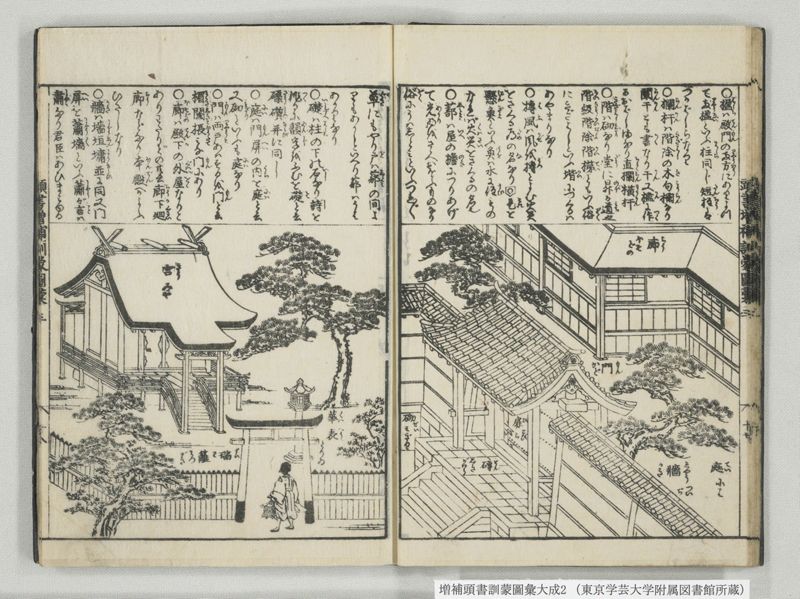
【右丁下段挿絵】
庭(てい)《割書:には|》
牆(しやう)《割書:つい| ぢ》
《割書:かき|》
廊(らう)
《割書:ほそ| どの》
門(もん)
《割書:かど|》
扉(ひ)《割書:とび| ら》
磚(せん)
《割書:しき|がはら》
砌《割書:せい| みぎり》
【左丁下段挿絵】
華表(くはへう)
《割書:とりゐ|》
瑞(ずい)
籬(り)
《割書:みつ|がき》
宮(きう)《割書: |みや》
現代語訳
【右丁上段】
○楹(えい)は殿門の両方にあるので、両楹という。柱と同じである。短柱は束柱のことである。
○欄干(らんかん)は階段の木の句欄である。闌干とも書く。干はまた檻に作ることもある。おばしまのことである。直欄・横杆がある。
○階(きざはし)は砌(みぎり)のことである。堂に昇る道である。階級・階除・階庭ともいう。俗にきざはしという。「堦」に作るのは間違いである。
○搏風(はふう)は風を搏つと読む。火災を避けるための名称である。これを懸魚(げんぎょ)という。魚は水に住むものなので、火災を避けるという名前である。
○蔀(しとみ)は家の軒に吊り上げて、光を遮り覆うものである。俗に上蔀という。徒然草にも「遣り戸は蔀の間よりも明かし」とある。蔀は上の明かりのことである。
【左丁上段】
○礎(いしずえ)は柱の下の石である。詩を作るときに韻字を踏むことを礎という。磉・礩も同じである。
○庭(にわ)は門屏の内を庭という。また砌というのも庭のことである。
○門(もん)は両戸を合わせるのを門という。楣(まぐさ)・閾(しきい)・棖(ほうだて)はみな門にある。
○廊(ほそどの)は殿下の外屋であるとある。渡殿ともいう。廊下・回廊などである。本殿へ通う庇のことである。
○牆(かき)は墻・垣・墉と同じである。また門屏を蕭墻という。蕭々の言葉は粛(しゅく)である。君臣が相見える場所のことである。
【挿絵部分】
庭(てい)・には、牆(しょう)・ついじ・かき、廊(ろう)・ほそどの、門(もん)・かど、扉(ひ)・とびら、磚(せん)・しきがわら、砌(せい)・みぎり
華表(かひょう)・とりい、宮(きゅう)・みや、瑞籬(ずいり)・みずがき
英語訳
【Right page, upper section】
○Pillars (ei) are located on both sides of palace gates, hence called "ryoei" (twin pillars). They are the same as regular pillars. Short pillars are bundle pillars.
○Railings (rankan) are wooden sentence railings of stairs. They are also written as "rankan." "Kan" is also written as "ori" (cage). They refer to "obashima." There are straight railings and horizontal bars.
○Stairs (kizahashi) are "migiri." They are the path to ascend to the hall. They are also called "kaikyu," "kaijo," or "kaitei." Commonly called "kizahashi." Writing it as "kai" is incorrect.
○Wind boards (hafu) are read as "striking the wind." The name comes from their purpose of preventing fires. These are called "gengyo" (suspended fish). Since fish live in water, the name signifies preventing fires.
○Lattice shutters (shitomi) are hung from house eaves to block and cover light. Commonly called "ue-shitomi." Even in Tsurezuregusa, it says "sliding doors are brighter than between lattice shutters." Shitomi refers to upper lighting.
【Left page, upper section】
○Foundation stones (ishizue) are stones under pillars. In poetry composition, following rhyme patterns is called "so." "So" and "shitsu" mean the same thing.
○Gardens (niwa) refer to the interior of gate screens. "Migiri" also refers to gardens.
○Gates (mon) refer to joining two doors together. Lintels, thresholds, and doorposts are all part of gates.
○Corridors (hosodono) are outer buildings below the main hall. Also called "wataridono." They include "roka" and "kairo." They are eaves that lead to the main hall.
○Walls (kaki) are the same as "sho," "en," and "yo." Gate screens are called "shosho." The word "shosho" means "shuku" (solemn). It refers to places where lords and retainers meet.
【Illustration section】
Garden, wall/fence, corridor, gate, door, brick tiles, stone pavement
Torii gate, shrine, sacred fence