翻刻
【右丁上段】
の礼(れい)は門屏(もんへい)にいたりて肅(しゆく)
敬(けい)をくはふるなり
○扉(とびら)は木(き)にて作(つく)るを扉(ひ)といふ
竹(たけ)にてつくるを扇(せん)といふ門扉(もんひ)
戸扉(こひ)柴扉(さいひ)竹扉(ちくひ)などいふ
○磚(せん)はしきがはらなり又 㼾(ろく)
甎(せん)ともいふ又 壁磚(へきせん)ともいふ
塼(せん)甎(せん)並同 禅堂(せんたう)などに有
○砌(みぎり)は階甃(かいしう)なりいしだゝみ俗(ぞく)
にいふいしかき通(つう)して庭(には)の
事なり
○宮(みや)は唐(もろこし)にては至尊(しそん)の居所(ゐどころ)
を宮(きう)といふ和朝(わてう)にては神(かみ)の
居(ゐ)たまふ所(ところ)を宮(きう)といふ又 社(しや)
とも祠(し)ともいふなり
○華表(とりゐ)は神前(しんせん)にたつる鳥(とり)
井なりとりゐといふ事は神(しん)
【左丁上段】
門なりともいふ又 天(てん)の字(じ)のかた
ちなりともいふ鳥井(とりゐ)と名づくる
事 火災(くはさい)をさくるのこゝろの
名なり
○瑞籬(みづがき)は神前(しんぜん)社前(しやせん)のかき也
玉垣(たまがき)ともいふ不浄(ふじやう)の人これ
より内(うち)へ入(いる)べからず
○楼(たかどの)は重屋(ちやうをく)なり高(たか)くかさね
上(あげ)て物見(ものみ)をするなり今(いま)俗(ぞく)
にちんといふ
○櫺(れい)は隔子(かうし)なり櫺子(れんじ)なり俗(ぞく)
にむしこといふ木(き)のまどを櫺子(れんじ)
といふ土のまどを土窓(つちまど)といふ
○雪打(ゆた)は仏殿(ぶつでん)楼閣(ろうかく)又は二 階(かい)
などに有物なり雨(あめ)雪(ゆき)などの
打(うち)かゝるをうくるものなり俗(ぞく)
にあま戸(ど)といふなり
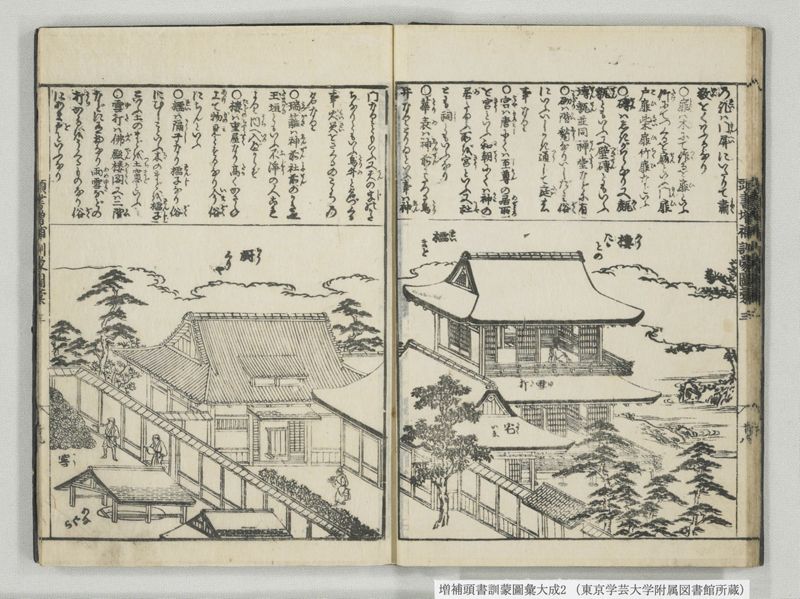
【右丁下段挿絵】
楼(ろう)
《割書:たか| との》
雪(ゆ)
打(た)
宅(たく)
《割書:いゑ》
櫺(れい)
《割書:まど》
【左丁下段挿絵】
厨(ちう)
《割書:くり| や》
窖(かう) 《割書:あな| ぐ| ら》
現代語訳
【右丁上段】
の礼は門屏に至って粛敬を加えるのである。
○扉(とびら)は木で作るものを扉という。竹で作るものを扇という。門扉・戸扉・柴扉・竹扉などという。
○磚(せん)は敷瓦のことである。また㼾(ろく)・甎(せん)ともいう。また壁磚ともいう。塼・甎も同じである。禅堂などにある。
○砌(みぎり)は階甃のことで、石畳を俗にいう。石垣を通して庭のことである。
○宮(みや)は、唐(中国)では至尊(天子)の居所を宮という。日本では神の居られる所を宮という。また社とも祠ともいう。
○華表(とりい)は神前に立てる鳥居である。鳥居というのは神門であるともいう。また「天」の字の形であるともいう。鳥井と名づけるのは、火災を避けるという意味の名前である。
【左丁上段】
○瑞籬(みずがき)は神前・社前の垣である。玉垣ともいう。不浄の人はこれより内へ入ってはならない。
○楼(たかどの)は重屋である。高く重ね上げて物見をするものである。今俗に「ちん」という。
○櫺(れい)は隔子である。櫺子である。俗に「むしこ」という。木の窓を櫺子という。土の窓を土窓という。
○雪打(ゆた)は仏殿・楼閣または二階などにあるものである。雨・雪などが打ちかかるのを受けるものである。俗に雨戸という。
【挿絵部分】
楼(ろう)・たかどの、雪打(ゆた)、宅(たく)・いえ、櫺(れい)・まど
厨(ちゅう)・くりや、窖(こう)・あなぐら
英語訳
【Right page, upper section】
The ritual involves adding solemn respect upon reaching the gate screen.
○Doors (tobira) made of wood are called "hi." Those made of bamboo are called "sen." There are gate doors, house doors, brushwood doors, and bamboo doors.
○Bricks (sen) are floor tiles. They are also called "roku" or "sen." They are also called wall bricks. "Sen" and "sen" are the same. They are found in Zen halls and such places.
○Stone pavement (migiri) refers to stone steps, commonly called stone paving. It refers to gardens through stone walls.
○Shrines (miya): In China, the residences of the supreme sovereign are called "kyu." In Japan, places where gods reside are called "kyu." They are also called "sha" or "shi."
○Torii gates are bird perches erected in front of shrines. Torii are also called divine gates. They are also said to be in the shape of the character "ten" (heaven). The name "torii" comes from the meaning of avoiding fires.
【Left page, upper section】
○Sacred fences (mizugaki) are fences in front of shrines. They are also called "tamagaki." Impure people must not enter beyond this point.
○Towers (takadono) are multi-story buildings. They are built high and stacked for observation purposes. Today they are commonly called "chin."
○Latticed windows (rei) are partitions. They are latticed windows. Commonly called "mushiko." Wooden windows are called latticed windows. Earth windows are called earth windows.
○Snow boards (yuta) are found on Buddhist halls, towers, or second floors. They receive rain and snow that strike against them. They are commonly called rain doors.
【Illustration section】
Tower/tall building, snow board, house, latticed window
Kitchen, cellar/underground storage