翻刻
【右丁上段】
○宅(たく)は択(たく)なりよき所(ところ)を択(えらん)
でいとなみたつるゆへなり又
人の詫(たく)【「託」の誤ヵ】する所といふ義も有
舎(しや)家(か)屋(をく)ともに同又は第宅(だいたく)
○厨(くりや)は烹飪(かうじん)【「はうじん」の誤】する所なり今云
料理所(れうりどころ)なり又 庖厨(はうちう)といふ略(りやく)
してくりともいふ補【▢囲み】俗(ぞく) ̄ニ名付て
台所(たいどころ)といふなり
○窖(あなぐら)は地蔵(ぢざう)なり丸(まるき)を竇(とう)と云
方(けた)なるを窖(かう)といふともにあな
ぐらなり地(ぢ)をほりて穴をこし
らへ家財(かざい)を入 置(をく)所(ところ)なり
○寺(てら)はもと官人(くはんにん)の居(ゐ)る所(ところ)の
名なり天竺(てんぢく)より仏経(ぶつきやう)を白(はく)
馬(ば)におほせて鴻臚寺(こうろし)といふ
官人(くはんにん)の居(ゐる)所へ来りしより仏氏(ぶつし)
の居所(ゐどころ)の名(な)とす
【左丁上段】
○塔(とう)はもろこしの長安(ちやうあん)に慈(じ)
恩寺(をんじ)といふ寺あり塔(とう)あり鴈(がん)
塔(とう)といふ進士(しんじ)名(な)をその下に
題(たい)す塔婆(とうば)浮図(ふと)同じ
○亭(あばらや)は道路(だうろ)の舎(やどる)所(ところ)なり亦(また)
行旅(かうりよ)宿会(しゆくくはい)の館(やどる)ところなり
ともいへり俗(そく)にひとやどりまた
はたごやなり高(たか)く立(たて)たる楼(ろう)
をも亭(ちん)といふ
○屋(をく)は舎(しや)なり大屋(たいをく)を廈屋(かをく)と
いふ又まやともいふ家(いゑ)の真中(まんなか)を
母屋(もや)といふ四方面(しはうめん)の家(いへ)を四阿(あづま)
屋(や)といふ俗(ぞく)に屋(や)をやねといふ
○廬(いほり)は田(た)の中の屋(いゑ)なり稲(いね)など
かり入る所なり草(くさ)にてやね
をふきたる屋(いゑ)をいふ菴(いほ)同
かりほの廬(いほ)のといふに廬(いほ)の字(じ)
【右丁下段挿絵】
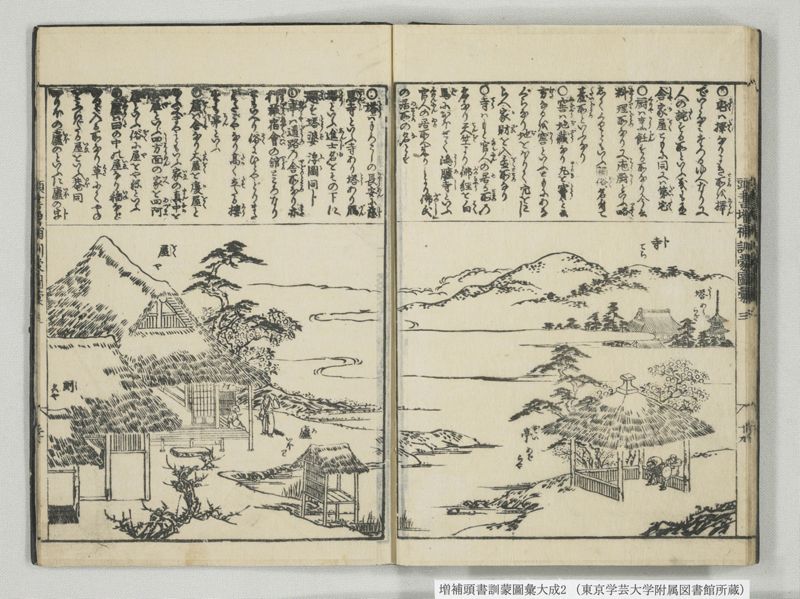
塔(たう)《割書:あら| らぎ》
寺(じ)
《割書:てら|》
亭(てい)《割書:あば| らや》
【左丁下段挿絵】
盧(ろ)
《割書:いほ| り》
屋(をく)《割書:や|》
厠(し)
《割書:かはや|》
現代語訳
【右丁上段】
○宅(たく)は択(たく)である。良い所を選んで営み建てるためである。また人が託する所という意味もある。舎・家・屋ともに同じで、第宅ともいう。
○厨(くりや)は調理をする所である。今でいう料理所である。また庖厨という。略してくりともいう。俗に名付けて台所という。
○窖(あなぐら)は地蔵である。丸いものを竇(とう)といい、方形のものを窖(こう)という。ともに穴蔵である。地を掘って穴を作り、家財を入れ置く所である。
○寺(てら)はもと官人の住む所の名前である。天竺(インド)から仏経を白馬に負わせて鴻臚寺という官人の住む所へ来たことから、仏教徒の住居の名前とした。
【左丁上段】
○塔(とう)は中国の長安に慈恩寺という寺があり、塔がある。雁塔という。進士がその下に名前を題する。塔婆・浮図と同じである。
○亭(あばらや)は道路の宿泊所である。また行旅・宿会の館であるともいう。俗に人宿またははたごやである。高く建てた楼も亭という。
○屋(おく)は舎である。大屋を廈屋という。また「まや」ともいう。家の真ん中を母屋という。四方面の家を四阿屋という。俗に屋を「やね」という。
○廬(いおり)は田の中の家である。稲などを刈り入れる所である。草で屋根を葺いた家をいう。菴と同じである。「刈穂の廬」というときの廬の字である。
【挿絵部分】
塔(たう)・あられぎ、寺(じ)・てら、亭(てい)・あばらや
盧(ろ)・いおり、屋(おく)・や、厠(し)・かわや
英語訳
【Right page, upper section】
○Houses (taku) derive from "taku" (to choose). This is because people choose good locations to establish and build their dwellings. It also has the meaning of a place where people entrust themselves. "Sha," "ka," and "oku" all have the same meaning, and it is also called "daitaku."
○Kitchens (kuriya) are places for cooking. In modern terms, they are cooking areas. They are also called "hōchū." Abbreviated as "kuri." Commonly named "daidokoro" (kitchen).
○Cellars (anagura) are underground storage. Round ones are called "tō," and square ones are called "kō." Both are underground storages. They are made by digging into the ground to create holes where household goods are stored.
○Temples (tera) were originally names for places where government officials resided. When Buddhist scriptures were brought from India (Tenjiku) on white horses to the Kōroshi (a government office where officials resided), Buddhist residences came to be called by this name.
【Left page, upper section】
○Pagodas (tō): In Chang'an, China, there is a temple called Jion-ji with a pagoda called the Wild Goose Pagoda, where successful examination candidates (shinshi) inscribe their names below it. It is the same as "tōba" and "futo."
○Inns (abaraya) are lodging places along roads. They are also places for travelers to stay and meet. Commonly called "hitoyadori" or "tagoya." Tall buildings are also called "tei."
○Buildings (oku) are dwellings. Large buildings are called "kaoku." Also called "maya." The center of a house is called "moya." Four-sided houses are called "azumaya." Commonly, "ya" refers to roofs.
○Huts (iori) are houses in rice fields, places where rice is harvested and stored. They refer to houses with grass-thatched roofs. Same as "io." This is the character "ro" used in phrases like "kariho no io."
【Illustration section】
Pagoda/tower, temple, inn
Hut/hermitage, building, toilet