翻刻
【右丁上段】
を書(かき)たり
○廁(し)は圊(せい)なり溷(こん)なり俗これ
を雪隠(せつちん)といふ古は清(せい)といふ不(ふ)
潔(けつ)を清(きよめ)除(のぞく)をもつての名なり
釈名(しやくめう)に雑(ざう)なり人そのうへに
雑厠(ざうし)するなり
○坊(まち)は邑里(ゆうり)の名ちまたなり
町(まち)なり京(きやう)二 条通(でうとをり)を銅駝坊(どうたばう)と
いふがことし又は別屋(べつをく)を坊(はう)と
いふ憎坊(そうはう)寺坊(じばう)などなり
○店(いちくら)は物(もの)をひさく所なりたな
なり茶店(さてん)酒店(しゆてん)などいふなり
店屋物(てんやもの)などゝもいふ肆(し)廛(てん)
舗(ほ)同し心(こゝろ)なり
○槅子(かうし)は格子(かうし)とも書(かく)なり組(くみ)
入(いれ)槅子(かうし)狐槅子(きつねかうし)釣槅子(つりかうし)台槅(だいかう)
子なとあり禁裏(きんり)又は寺社(ししや)など
【左丁上段】
にあるは狐槅子(きつねかうし)なり
○倉(くら)は五 穀(こく)を入(いる)るを倉(さう)といふ
米を入るを廩(りん)といふ財宝(ざいほう)を
いるゝを蔵(さう)といふ書物(しよもつ)を入るを
庫(こ)といふ上庫(とこ)【注①】はぬりごめなり
府(ぶ)もくらなり
○斎(さい)は潔(けつ)なり心(こゝろ)を洗(あらふ)を斎(さい)と
いふ学文所(がくもんじよ)をいふ又 燕居(ゑんきよ)の室(しつ)
なり学文(がくもん)をする人 斎号(さいがう)を
付(つく)ことは我(わが)学文所(がくもんじよ)の号(な)をつく
なり
○廡(ひさし)は堂下(たうか)の周廊(しうらう)なり大屋(たいをく)
の四 辺(へん)の重檐(かさなるのき)なり
○窓(まど)は釈名(しやくめう)に窓(さう)は聡(さう)なり
内(うち)より外(ほか)をうかゞひてもつて
聡(きゝとき)【注②】をなすの義なり牕牖(さうよう)【注③】並
に同し紙窓(しさう)紗窓(しやさう)
【注① 「上庫(とこ)」は「土庫」の誤ヵ】
【注② 「聡(きゝとき)」は「聞解き」の意ヵ】
【注③ 牕は窻に同じ。かつ窻は窗の俗字。窗は窓の本字。牗は牖の俗字】
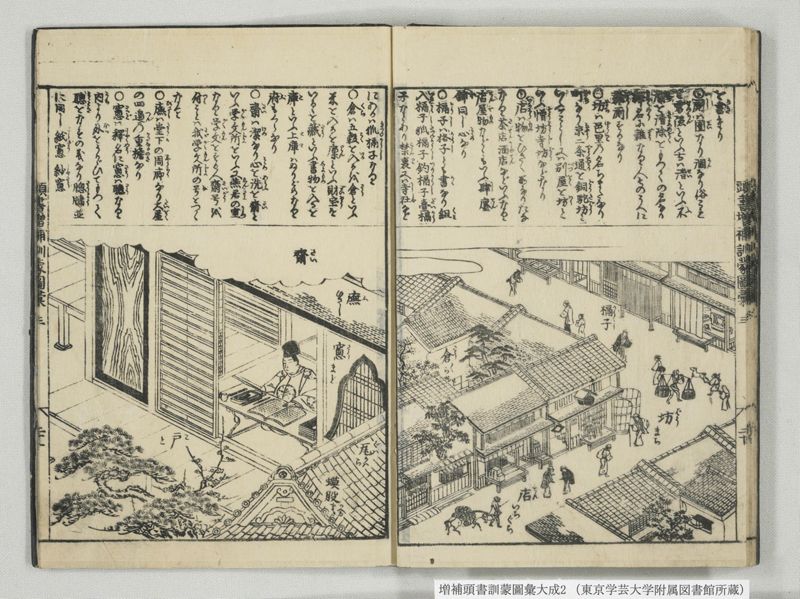
【右丁下段挿絵】
坊(ばう)
《割書:まち|》
槅子(かうし)
店(てん)
《割書:いち| ぐら》
倉(さう)《割書:く| ら》
【左丁下段挿絵】
瓦(ぐは)《割書: |かは| ら》
廡(ふ)
《割書:ひさし|》
窓(さう)《割書: |まど》 蟆股《割書:かへる|また》
斎(さい)
戸(こ)
《割書:と|》
現代語訳
【右丁上段】
を書いたものである。
○厠(し)は圊(せい)であり、溷(こん)である。俗にこれを雪隠(せっちん)という。古くは清(せい)という。不潔を清め除くという意味での名前である。『釈名』に「雑(ざつ)である。人がその上に雑厠(ざっし)する」とある。
○坊(まち)は邑里(ゆうり)の名前で、街である。町である。京都の二条通りを銅駝坊(どうだぼう)というのがこれである。また別屋を坊という。僧坊・寺坊などである。
○店(いちくら)は物を売る所である。店である。茶店・酒店などという。店屋物などともいう。肆(し)・廛(てん)・舗(ほ)は同じ意味である。
○槅子(こうし)は格子とも書く。組み入れ槅子・狐槅子・釣槅子・台槅子などがある。禁裏または寺社などに
【左丁上段】
あるのは狐槅子である。
○倉(くら)は、五穀を入れるものを倉(そう)という。米を入れるものを廩(りん)という。財宝を入れるものを蔵(ぞう)という。書物を入れるものを庫(こ)という。土庫は塗り籠めである。府(ふ)も倉である。
○斎(さい)は潔(けつ)である。心を洗うことを斎という。学問所をいう。また燕居の室である。学問をする人が斎号を付けることは、自分の学問所の号を付けることである。
○廡(ひさし)は堂下の周廊である。大屋の四辺の重なった軒である。
○窓(まど)は、『釈名』に「窓(そう)は聡(そう)である。内より外をうかがって聡明さを得る」という意味である。牕牖(そうゆう)はいずれも同じである。紙窓・紗窓
【挿絵部分】
坊(ぼう)・まち、槅子(こうし)、店(てん)・いちぐら、倉(そう)・くら
瓦(が)・かわら、廡(ふ)・ひさし、窓(そう)・まど、蟆股・かえるまた、斎(さい)、戸(こ)・と
英語訳
【Right page, upper section】
were written.
○Toilets (shi) are also called "sei" or "kon." Commonly called "secchin" (privy). In ancient times called "sei" (pure). The name comes from the meaning of purifying and removing impurities. In "Shakumei" it says "zō (miscellaneous) - people perform miscellaneous functions above it."
○Districts (machi) are names for village communities, streets, and towns. Kyoto's Nijō-dōri is called Dōdabō. Also, separate buildings are called "bō," such as monk quarters and temple buildings.
○Shops (ichikura) are places where goods are sold - stores. Examples include tea shops and sake shops. Also called "ten'yamono." The characters "shi," "ten," and "ho" have the same meaning.
○Lattice work (kōshi) can also be written as "格子." Types include fitted lattice, fox lattice, hanging lattice, and platform lattice. Those found in the imperial palace or temples and shrines
【Left page, upper section】
are fox lattice.
○Storehouses (kura): Those for storing five grains are called "sō." Those for storing rice are called "rin." Those for storing treasures are called "zō." Those for storing books are called "ko." Earth storehouses are plastered structures. "Fu" is also a type of storehouse.
○Study rooms (sai) mean purity. Purifying the heart is called "sai." It refers to places of learning. Also private living quarters. When scholars give names to their studies, they are naming their places of learning.
○Eaves (hisashi) are the surrounding corridors under the hall. They are the overlapping eaves on all four sides of large buildings.
○Windows (mado): In "Shakumei," "window (sō)" means "intelligent (sō)" - the meaning of gaining intelligence by observing the outside from within. "Sōyō" has the same meaning. Paper windows, gauze windows.
【Illustration section】
District/street, lattice work, shop/store, storehouse
Roof tiles, eaves, window, frog-leg brackets, study room, door