翻刻
【右丁上段】
○戸(と)は一 枚(まい)とびらの門(もん)を戸(と)
といふ又 内(うち)を戸(と)といひ外(ほか)を門
といふともいへり民家(みんか)ならび
つらなるを編戸(へんこ)といふ
○瓦(かわら)は唐(もろこし)夏(か)の昆吾(こんご)といふ人つ
くり始(はしめ)しなりめかわらを瓪(はん)といふ
おかわらを𤭆(とう)といふ又 魏(ぎ)の文帝(ぶんてい)
瓦(かわら)をちて鴛鴦(をしとり)となると夢(ゆめ)
見給ふといふ故事(こじ)ありよつて
鴛鴦瓦(ゑんあうぐは)といふ
○蟆股(かへるまた)は摶風(はふ)の下にあり蟆(かへる)
の股(また)に似(に)たればなり蟆(かへる)は水中(すいちう)に
住(すむ)ものなれば火災(くはさい)をさくる為(ため)
なり鴨居(かもゐ)といふも同(おなじ)意(こゝろ)也
○臥房(ぐはぼう)は寝室(しんしつ)ともいふ又 閨(けい)
房(ぼう)ともいふ天子(てんし)の御寝所(きよしんじよ)を
夜殿(よんのおとゞ)といふ
【左丁上段】
○揵(くはんのき)は限門木(かきるもんをき)なり今いふくは
んの木(き)なり𢩠(せん)閂(せん)並に同
○扄(とざし)は外(ほか)より閉(とづ)る関(くはん)なり又
門扉(もんのとびら)のうへの鐶(くはん)鈕なり又 関(くはん)
戸(こ)の木(き)なりくはんの木(き)又は鎖(じやう)也
○鋪首(ほしゆ)は今 按(あん)ずるに門(もん)又は
襖(ふすま)障子(しやうじ)などのひきて鐶(くはん)なり
鈕(ちう)はつほなり
○壁(かべ)は城(しろ)のかべを壘(るい)といふしらかへ
を粉壁(ふんへき)といふ又 画壁(ぐはへき)板壁(はんへき)など
あり室(しつ)の屏蔽(へいへい)なり
○廰(まんところ)は政(まつりこと)をきく所なり撿非(けび)
違使(ゐし)のゐる所なり公事(くじ)訴訟(そしやう)
をとりさばきする所をいふなり
庁(ちやう)同
○厩(むまや)は馬舎(ばしや)なり猿(さる)の異名(ゐみやう)を
馬(ば)父といふによつて厩(むまや)に猿(さる)
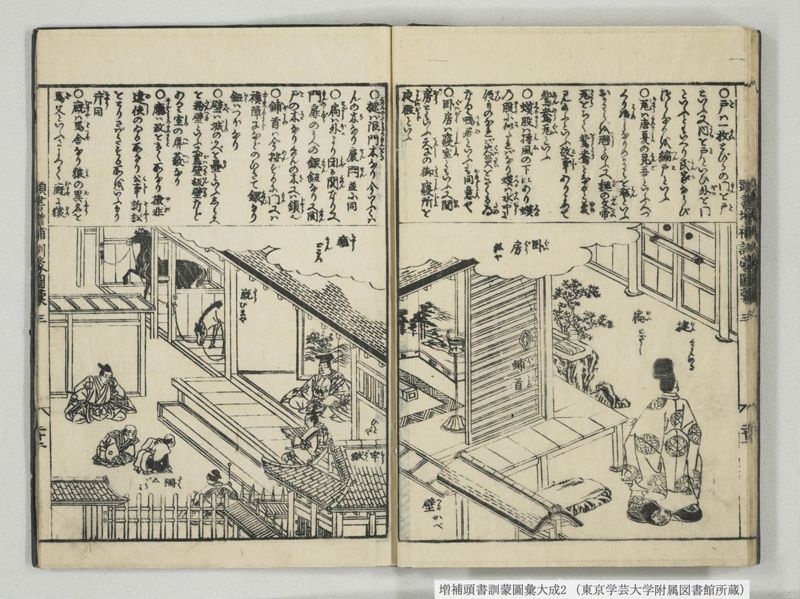
【右丁下段挿絵】
揵(けん)《割書:くわんのき》
扄(けい)《割書:とざし》
臥(ぐは)
房(ばう)
《割書:ねや》 鋪首(ほしゆ)
壁(へき)《割書:かべ》
【左丁下段挿絵】
《割書:ひと| や》牢(らう)
獄(ごく)
廰(ちやう)
《割書:まん| どころ》
厩(きう)《割書: |むまや》
柵(さく)
《割書:し|がら| み》
現代語訳
【右丁上段】
○戸(と)は一枚の扉の門を戸という。また内を戸といい、外を門というともいう。民家が並び連なっているものを編戸という。
○瓦(かわら)は中国の夏王朝の昆吾という人が作り始めたものである。雌瓦を瓪(はん)という。雄瓦を𤭆(とう)という。また魏の文帝が瓦を投げて鴛鴦(おしどり)になったという夢を見たという故事があり、そこから鴛鴦瓦という。
○蟆股(かえるまた)は斗栱(ときょう)の下にある。蛙の股に似ているからである。蛙は水中に住むものなので、火災を避けるためである。鴨居というのも同じ意味である。
○臥房(がぼう)は寝室ともいう。また閨房ともいう。天子の御寝所を夜殿(よんのおとど)という。
【左丁上段】
○揵(かんのき)は門を閉じる横木である。今いうかんの木である。𢩠(せん)・閂(せん)はいずれも同じである。
○扄(とざし)は外から閉める関である。また門扉の上の環鈕である。また関戸の木である。かんの木または鎖である。
○鋪首(ほしゅ)は、今考えるに門または襖・障子などの引き手の環である。鈕(ちゅう)は釣り手である。
○壁(かべ)は、城の壁を壘(るい)という。白壁を粉壁という。また画壁・板壁などがある。室の仕切りである。
○廰(まんどころ)は政治を聞く所である。検非違使のいる所である。公事・訴訟を取り裁きする所をいう。庁(ちょう)と同じ。
○厩(うまや)は馬舎である。猿の異名を馬父というので、厩に猿を
【挿絵部分】
揵(けん)・かんのき、扄(けい)・とざし、臥房・寝屋、鋪首、壁・かべ
廰・まんどころ、牢・ひとや、獄、厩・うまや、柵・しがらみ
英語訳
【Right page, upper section】
○Doors (to): Single-panel hinged gates are called "to" (doors). Also, the interior is called "to" and the exterior is called "mon" (gate). When private houses are lined up in rows, this is called "henko" (row houses).
○Roof tiles (kawara): These were first made by a person named Kongo during China's Xia Dynasty. Female tiles are called "han." Male tiles are called "tō." There is also a legend that Emperor Wen of Wei dreamed of throwing tiles that became mandarin ducks, hence the term "en'ō-gawara" (mandarin duck tiles).
○Frog-leg brackets (kaeru-mata): These are located under the bracket complexes. They are so named because they resemble a frog's legs. Since frogs live in water, these serve to ward off fire disasters. "Kamoi" (door header) has the same meaning.
○Bedchambers (gafubō): Also called sleeping quarters or private chambers. The emperor's sleeping quarters are called "yon-no-otodo" (night palace).
【Left page, upper section】
○Door bars (kan-no-ki): These are crossbars that secure gates. What we now call "kan-no-ki." "Sen" and "sen" are the same thing.
○Door bolts (tozashi): These are latches that close from the outside. Also the ring handles on top of gate doors. Also the wood for gate latches - either wooden bars or chains.
○Door knockers (hoshū): In my current understanding, these are ring handles for doors, sliding doors, or paper screens. "Chū" refers to pull rings.
○Walls (kabe): Castle walls are called "rui." White walls are called "funpeki." There are also painted walls and board walls. These serve as room partitions.
○Government offices (mandokoro): Places where government affairs are conducted. Where the kebiishi (imperial police) are stationed. Places where public matters and lawsuits are adjudicated. Same as "chō" (office).
○Stables (umaya): Horse shelters. Since an alternative name for monkeys is "bafū" (horse father), monkeys are kept in stables
【Illustration section】
Door bars, door bolts, bedchamber/bedroom, door knockers, walls
Government office, prison/jail, jail, stables, palisades/barriers