翻刻
【右丁上段】
といふ木火土金水(もくくはどごんすい)の五 行(きやう)の
星(ほし)めぐりて陰陽(いんやう)をなし歳(とし)
をわす此(この)五 星(せい)を五 緯(い)ともいふ
○太極(たいきよく)は天地(てんち)いまたわかれず
陰陽(いんやう)わかれざるとき渾沌(まろがれ)たる
事 鶏子(とりのこ)のごとし溟涬(くゞもり)て牙(きざし)
をふくめりこれを鴻毛(こうもう)の未判(びはん)
といふ其(その)清陽(すみあきらか)なるものは薄(たな)
靡(びき)て天(あめ)となり重濁(おもくにごる)ものは淹(とゞ)
滞(こほり)て地(つち)となるこゝにおゐて天(てん)
地開闢(ちかいひやく)して其間(そのあいだ)に万物(ばんぶつ)生(しやう)ず
開闢(かいひやく)以前(いぜん)を太極(たいきよく)といひ天地(てんち)
陰陽(いんやう)わかれたるを両儀(りやうぎ)といふ
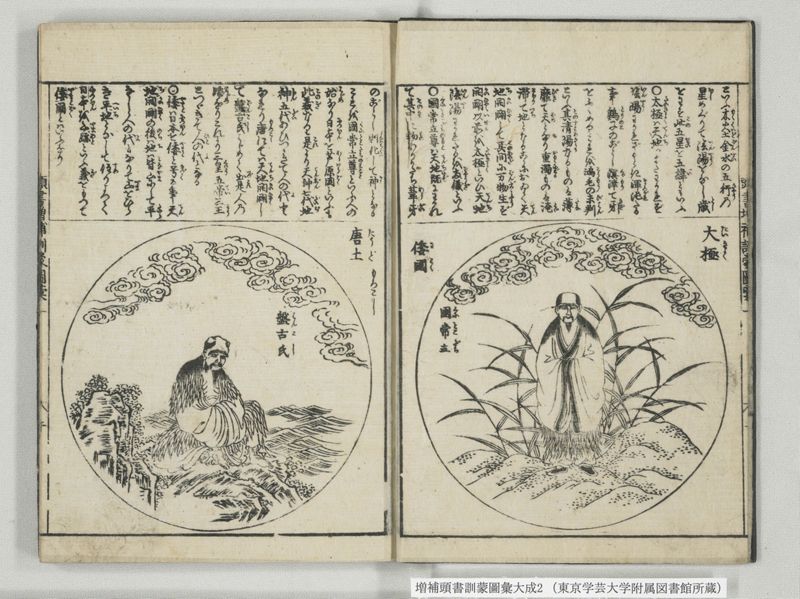
○国常立尊(くにとこだちのみこと)は天地(てんち)既(すで)にわかれ
て其中(そのなか)に物(もの)ありかたち葦牙(あしがい)
【左丁上段】
のごとし則(すなはち)化(くは)して神(かみ)となる
これを国常立尊(くにとこたちのみこと)といふ人の
始(はじめ)なり日本(につほん)を芦原国(あしはらごく)といふも
此義(このぎ)なり是(これ)より天神(てんじん)七 代(だい)地(ぢ)
神(じん)五 代(だい)あひつゝきて人の代(よ)と
なれり唐(もろこし)にては天地開闢(てんちかいひやく)し
て盤古氏(ばんこし)はじめて出(いづ)是(これ)人の
始(はじめ)なりこれより三 皇(くはう)五 帝(てい)三 王(わう)
とつゞきて人の代(よ)となる
○倭(やまと)は日本(につほん)を倭(やまと)と号(なづく)る事 天(てん)
地開闢(ちかいひやく)の後(のち)は地(ち)は皆(みな)山(やま)にして平(たいら)
なし人の代(よ)となりて山(やま)をひら
き平地(へいち)となして住(すめ)りよつて
日本(につほん)を山跡(やまあと)といふ義(ぎ)をもつて
倭国(やまとごく)とはいふなり
【右丁下段挿絵】
大極(たいきよく)
国常立(くにとこだち)
倭国(わこく)
【左丁下段挿絵】
唐土(たうど)《割書:もろこし|》
盤古氏(はんこし)
現代語訳
【右丁上段】
という。木火土金水の五行の星が巡って陰陽を成し、歳を分かつ。この五星を五緯ともいう。
○太極は天地がまだ分かれず、陰陽が分かれない時、混沌としていることが鶏の卵のようである。暗くて芽を含んでいる。これを鴻濛の未判という。その清く明らかなものは薄く広がって天となり、重く濁ったものは留まり滞って地となる。ここにおいて天地開闢して、その間に万物が生じる。開闢以前を太極といい、天地陰陽が分かれたのを両儀という。
○国常立尊は天地がすでに分かれて、その中に物があり、形が葦の芽のようである。
【左丁上段】
そのまま化して神となる。これを国常立尊という。人の始まりである。日本を芦原国というのもこの意味である。これより天神七代、地神五代と続いて人の世となった。中国では天地開闢して盤古氏が初めて出現した。これが人の始まりである。これより三皇五帝三王と続いて人の世となる。
○倭は日本を倭と号することについて、天地開闢の後は地は皆山であって平らでない。人の世となって山を開き、平地として住んだ。よって日本を山跡という意味をもって倭国というのである。
【右丁下段挿絵】
太極
国常立
倭国
【左丁下段挿絵】
唐土《割書:もろこし》
盤古氏
英語訳
【Right page, upper section】
These are called [the five planets]. The stars of the five elements - wood, fire, earth, metal, and water - revolve to create yin and yang and divide the years. These five planets are also called the Five Latitudes.
○Taiji (the Supreme Ultimate) refers to when heaven and earth had not yet separated and yin and yang were undivided - a chaotic state like a chicken egg. Dark and containing a sprout within. This is called the "undifferentiated primordial vastness." That which was pure and clear spread thinly to become heaven, while that which was heavy and turbid remained stagnant to become earth. Thus heaven and earth separated, and between them all things were born. The time before this separation is called Taiji, and when heaven and earth, yin and yang separated, it is called the Two Principles.
○Kunitokotachi-no-mikoto: After heaven and earth had already separated, there was something in between them, shaped like an ash sprout.
【Left page, upper section】
It transformed directly into a deity. This is called Kunitokotachi-no-mikoto, the beginning of humanity. Japan is called Ashihara-no-kuni (Land of Reed Plains) for this reason. From this point, seven generations of heavenly deities and five generations of earthly deities continued, leading to the age of humans. In China, after heaven and earth separated, Pangu emerged first. This was the beginning of humanity. From this point, the Three Sovereigns, Five Emperors, and Three Kings continued, leading to the human age.
○Yamato: Regarding calling Japan "Yamato," after heaven and earth separated, the land was all mountains with no flat areas. When the human age came, people opened up the mountains and made them into flat land to live on. Therefore, Japan is called Yamato-koku with the meaning of "mountain traces."
【Right page, lower section illustrations】
Taiji (Supreme Ultimate)
Kunitokotachi
Yamato Country
【Left page, lower section illustrations】
Tang Land《split writing: China》
Pangu