翻刻
【見出し】
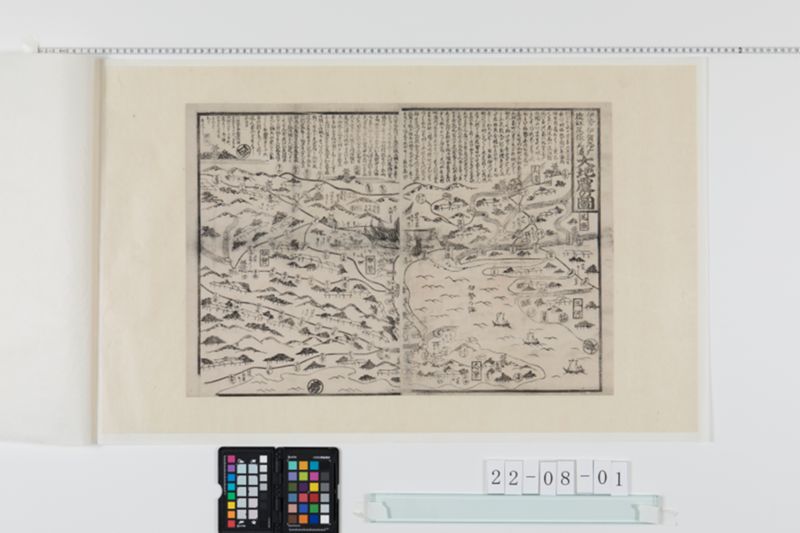
《割書:伊勢伊賀志摩|近江尾張美濃》大地震の図
【本文】
頃は嘉永七寅年六月十四日
夜八ツ時伊勢国は東海道
四日市宿をはしめとし
て東は尾張西は近江国
北は美濃南は伊賀志摩
の国にいたるまて大地しん
にて其ひゝき大かたならず
取わけ伊勢国四日市宿は
甚つよくしてまづ北町不残南川原
不残南町は半丁ほど打倒夫より
出火して砂けぶりをふきたてざん
し【暫時】に家数九十軒余焼失すはま
だ赤堀落合橋かはけばし【鹿化橋】長田
ばし加太夫ばし日永砂川うねめ
村つへつき村こと〴〵くあれ橋々は落流
れる也折から老若男女いかてあわてざらん
ものはなく各々にけ出さんとなせども大地
大にわれ心当べき方角だに定めがたく
してけが死亡の者凡五百人余となり牛
馬即死凡百六十疋余なりとかや又桑
名十一万石松平越中守様御領分在方【在所】甚つ
よく御城下やた【矢田】町屋敷〳〵大門やす永村
町屋川辺土蔵大にそんじあるひはつぶれ
春日の社八幡はづ明神社いたむ二重
つゞみかねいば村みやつかいそ川辺七ツや
みたき【三滝】川すへ土橋おちる也長島は二万石増山
河内守様御領分御城下大にそんじ在々【あちらこちらの村里】
こと〴〵くあれる石やくし【薬師】庄の【野】亀山は
六万石石川主殿頭【とのものかみ】様御城下并に在々
こと〴〵く【濁点の位置の誤記】大にそんじ又江近【ママ】路は関
坂の下すゞか【鈴鹿】山田村社そんじ土山
宿水口は二万五千石加藤越中守御城
下在々いしべ【石部】草津大津京都迄も
大方ならず相震中仙道はもり山
より大田辺迄都合十六宿間
大にふるう大垣高須御領分
尾張は津島佐や【屋】まんば【万場】みや【宮】
犬山辺迄伊せは神戸一万五千石
本多伊与【ママ】守様御領分甚しくふるう
白子津は卅二万三千石藤堂和泉守様
御領分御城下共いたつてつよく
所々そんじ夫より宿々山田近
辺大にそんずるといへども両宮
は別条なしあさま【朝熊】山大にあれ
田丸久居五万三千石藤堂佐
渡守様御領分八田辺つよく
してそんず近江は彦根三十
五万石井伊かもん頭様御領分
すべて湖水のめぐりは甚
しく相震よく【翌】十五
日の朝よう〳〵慎り
諸人あんどをなし
にける
○伊勢両宮近辺は殊
更あれるといへども両
御社はいさゝかも別
条なし御神
の尊こと是を
もつて
知り
給ふべし
現代語訳
【見出し】
伊勢・伊賀・志摩・近江・尾張・美濃大地震の図
【本文】
時は嘉永7年寅年(1854年)6月14日夜8時頃、伊勢国は東海道の四日市宿をはじめとして、東は尾張、西は近江国、北は美濃、南は伊賀・志摩の国に至るまで大地震となり、その響きは並大抵ではなかった。
とりわけ伊勢国四日市宿は甚だ強く、まず北町が残らず、南川原が残らず、南町は半町ほど倒壊し、それより出火して砂煙を吹き立て、短時間のうちに家屋90軒余りが焼失した。浜田、赤堀、落合橋、河化橋(鹿化橋)、長田橋、加太夫橋、日永、砂川、采女村、杖突村はことごとく荒れ、橋々は落ちて流れた。
折から老若男女でどうして慌てないでいられる者があろうか。各々逃げ出そうとするけれども大地が大きく割れ、心当たりの方角さえ定めがたく、怪我・死亡の者はおよそ500人余りとなり、牛馬の即死はおよそ160頭余りであったという。
また桑名11万石松平越中守様の御領分では、在所が甚だ強く、御城下の矢田町、屋敷々、大門、安永村、町屋川辺の土蔵が大いに損じ、あるいは潰れた。春日社、八幡、波豆明神社が傷み、二重堤、鐘鋳場村、宮司、磯川辺、七ツ矢、三滝川、須恵土橋が落ちた。
長島は2万石増山河内守様の御領分で、御城下が大いに損じ、在々がことごとく荒れた。石薬師、庄野。亀山は6万石石川主殿頭様で、御城下並びに在々がことごとく大いに損じた。また江州路は関、坂の下、鈴鹿、山田村社が損じ、土山宿。水口は2万5千石加藤越中守で、御城下、在々、石部、草津、大津、京都まで並大抵でなく相応に震動した。中山道は森山より太田辺まで都合16宿間が大いに震った。大垣、高須の御領分。尾張は津島、佐屋、万場、宮、犬山辺まで。伊勢は神戸1万5千石本多伊予守様の御領分が甚だしく震った。
白子・津は32万3千石藤堂和泉守様の御領分で、御城下とも至って強く、所々が損じた。それより宿々、山田近辺が大いに損ずるといえども、両宮(伊勢神宮)は別条なし。朝熊山が大いに荒れた。田丸・久居5万3千石藤堂佐渡守様の御領分、八田辺が強くて損じた。近江は彦根35万石井伊掃部頭様の御領分で、すべて湖水の周りは甚だしく相応に震動した。翌15日の朝ようやく静まり、諸人は安堵をなしたのであった。
○伊勢両宮近辺は殊更荒れるといえども、両御社は些かも別条なし。御神威の尊いことをこれをもって知りたまうべし。
英語訳
【Title】
Illustration of the Great Earthquake in Ise, Iga, Shima, Omi, Owari, and Mino
【Main Text】
The time was the 14th day of the 6th month of Kaei 7, Year of the Tiger (1854), around 8 o'clock at night. Starting with Yokkaichi post station on the Tokaido in Ise Province, a great earthquake struck from Owari in the east to Omi Province in the west, Mino in the north, and Iga and Shima provinces in the south. The reverberations were extraordinary.
Particularly in Yokkaichi in Ise Province, the shaking was extremely severe. First, the entire North Town and South Kawahara were destroyed, and about half of South Town collapsed. Fires then broke out, raising clouds of dust and smoke, and within a short time over 90 houses were consumed by flames. Hamada, Akahori, Ochiai Bridge, Kawake Bridge (Shikake Bridge), Nagata Bridge, Katabushi Bridge, Hinaga, Sunagawa, Uneme Village, and Tsuetsuki Village were all devastated, with bridges collapsing and being swept away.
How could anyone, young or old, male or female, not panic in such circumstances? Everyone tried to flee, but the earth split open greatly, making it difficult to determine even familiar directions. Approximately 500 people were injured or killed, and about 160 cattle and horses died instantly.
In the domain of Matsudaira Etchū-no-kami of Kuwana (110,000 koku), the rural areas were severely affected. In the castle town, Yada Town, various residences, Daimon, Yasunaga Village, and the storehouses along Machiya River were greatly damaged or collapsed. Kasuga Shrine, Hachiman, and Hazu Myōjin Shrine were damaged. The double embankment, Kaneba Village, shrine officials' quarters, Iso riverside, Nanatsuya, Mitaki River, and Sue earthen bridge all collapsed.
Nagashima, the 20,000-koku domain of Masuyama Kawachi-no-kami, saw great damage to the castle town and devastation throughout the countryside. Ishiyakushi and Shōno were affected. Kameyama, the 60,000-koku domain of Ishikawa Tonomo-no-kami, suffered extensive damage to both the castle town and rural areas. On the Ōmi route, Seki, Sakanoshita, Suzuka, and Yamada Village shrine were damaged, as was Tsuchiyama post station. Minakuchi, the 25,000-koku domain of Katō Etchū-no-kami, experienced significant trembling extending from the castle town and countryside to Ishibe, Kusatsu, Ōtsu, and even Kyoto. On the Nakasendō, from Moriyama to Ōtabe, a total of 16 post stations were severely shaken. The domains of Ōgaki and Takasu were affected. In Owari, the area from Tsushima, Saya, Manba, Miya, to Inuyama was affected. In Ise, the 15,000-koku domain of Honda Iyo-no-kami at Kanbe was severely shaken.
Shiroko and Tsu, the 323,000-koku domain of Tōdō Izumi-no-kami, experienced extremely strong shaking including the castle town, with damage in various places. From there, the post stations and areas near Yamada suffered greatly, though both shrines (of Ise Grand Shrine) suffered no damage. Mount Asama was greatly affected. Tamaru and Hisai, the 53,000-koku domain of Tōdō Sado-no-kami, experienced strong shaking and damage around Hattabe. In Ōmi, the 350,000-koku domain of Ii Kamon-no-kami at Hikone saw severe shaking all around Lake Biwa. By the morning of the 15th, things finally calmed down, and people felt relieved.
○Although the area around both Ise Shrines was particularly devastated, both sacred shrines suffered not the slightest damage. The divine majesty's sacred power should be recognized through this fact.