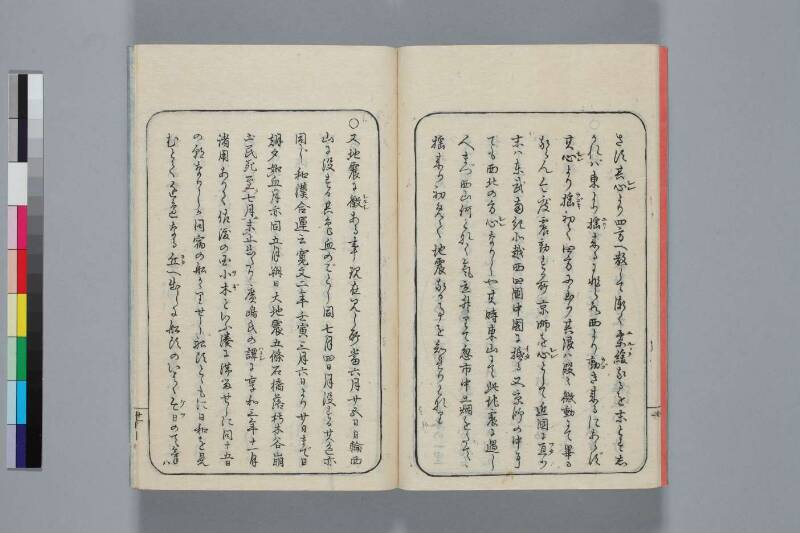
翻刻
さす其 心(しん)より四方へ散して漸く柔緩(ゆるく)なるを末とすし
かれば東より揺(ゆり)来るに非らす西より動(うご)き来るにあらず
其 心(しん)より揺(うごき)初て四方に至り其限は段々微動にて畢る
ならん今度震動する所京師を心(しん)として近国に亘(わた)り
末は東武南紀北越西四国中国に抵(いた)る又京師の中に
ても西北の方 心(しん)なりしや其時東山にて此地震に遇し
人まづ西山何となく気立升りて忽市中土煙をたてゝ
揺来り初めて地震なる事を知れりとなり
○又地震に徴(しるし)ある事現在見し所当六月廿五日日輪西
山に没する其色血のごとし同七月四日月没する其色亦
同じ和漢合運云寛文二年壬寅三月六日より廿日まで日
朝夕如_レ血月亦同五月朔日大地震五条石橋落朽-木-谷崩
土民死至_二 ̄ラ七月_一 ̄ニ未_レ止出たり広嶋氏の譚(はなし)に享和三年十一月
諸用ありて佐渡の国 小木(ヲギ)といふ湊に滞留せしに同十五日
の朝なりしか同宿の船かゝりせし船頭とゝもに日和を見
むとて近辺なる丘(をか)へ出しに船頭のいはく今日(けふ)の天気は
現代語訳
指す。その心(しん)より四方へ散って漸く柔らかく緩やかになるのを末とする。したがって東より揺れ来るのではなく、西より動き来るのでもなく、その心(しん)より揺れ始めて四方に至り、その限りは段々と微動にて終わるのであろう。今度震動する所は京師を心(しん)として近国に亘り、末は東武・南紀・北越・西四国・中国に至る。また京師の中においても西北の方が心(しん)であったか、その時東山にてこの地震に遭遇した人は、まず西山が何となく気立ち上がって忽ち市中が土煙を立てて揺れ来り、初めて地震なる事を知ったということである。
○また地震に前兆がある事は現在見た所では、当六月二十五日、日輪が西山に沈むその色が血のようであった。同七月四日、月が沈むその色もまた同じであった。和漢合運に言うには、「寛文二年壬寅三月六日より二十日まで、日が朝夕血のようであり月もまた同じ。五月朔日大地震があり、五条石橋が落ち、朽木谷が崩れ、土民の死は七月に至っても未だ止まず」と出ている。広島氏の話によると、享和三年十一月、諸用があって佐渡国小木という湊に滞留していたが、同十五日の朝であったか、同宿の船が係留していた船頭とともに日和を見ようとして近辺の丘へ出た時、船頭が言うには「今日の天気は
英語訳
It refers to how [the seismic force] spreads in all directions from that core (shin) and gradually becomes gentler and more relaxed at the periphery, which is called the "end." Therefore, it does not shake from the east nor move from the west, but rather begins to shake from that core (shin) and reaches all directions, with its limits gradually ending in minor tremors. The area that experienced seismic activity this time had Kyōshi (the capital) as its core (shin), extending to nearby provinces, with its periphery reaching Tōbu (eastern military region), Nanki (southern Kii), Hokuetsu (northern Echigo), western Shikoku, and the Chūgoku region. Even within Kyōshi itself, was the northwest the core (shin)? At that time, a person who encountered this earthquake at Higashiyama first noticed that Nishiyama somehow stirred up, then suddenly dust clouds rose in the city center as it began to shake, and only then did they realize it was an earthquake.
○Furthermore, regarding the signs that precede earthquakes, from what I have observed: on the 25th day of the 6th month of this year, when the sun set behind the western mountains, its color was like blood. On the 4th day of the 7th month, when the moon set, its color was also the same. According to the Wakan Gōun, "From the 6th day of the 3rd month through the 20th day of Kanbun 2, year of Mizunoe-Tora, the sun appeared blood-like morning and evening, and the moon was the same. On the 1st day of the 5th month, there was a great earthquake; Gojō Stone Bridge fell, Kuchiki Valley collapsed, and deaths among the common people continued until the 7th month without stopping." According to Hiroshima-shi's account, in the 11th month of Kyōwa 3, while staying at a port called Ogi in Sado Province on various business, on the morning of the 15th day of the same month, when he went out to a nearby hill with a ship captain whose vessel was moored at the same lodging to observe the weather, the captain said, "Today's weather is