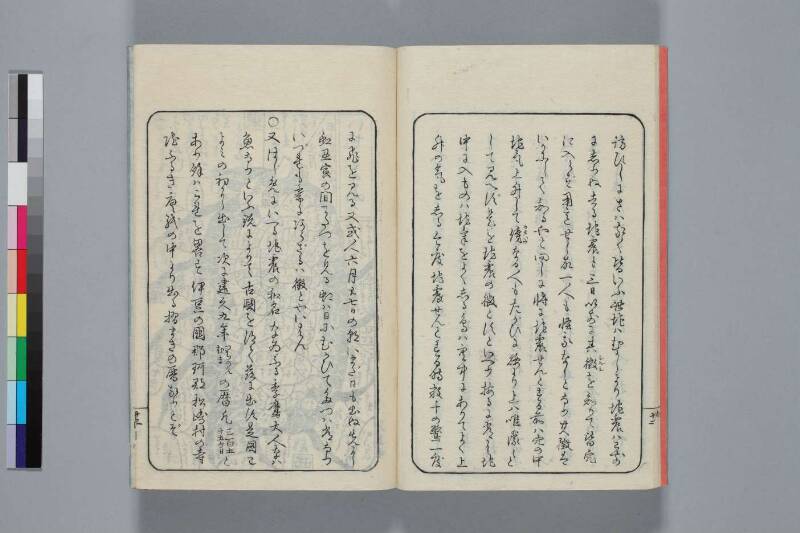
翻刻
訪ひしにさはなく皆いふ此地はむかしより地震は已前
にしりぬ去る地震も三日以前に其 徴(しるし)を知りて皆穴
に入らず用意せし故一人も怪我なしとなり其徴は
いかにして知るやと問しに将に地震せんとする前は穴の中
地気上升して傍(かたはう)なる人もたがひに腰より上は唯濛々と
して見へず是を地震の徴とすといへり按るに常に地
中に入ものは地気をよくしる鳥は空中にありてよく上
升の気をしる今度地震せんとする時数千の鷺一度
に飛を見る又或人六月廿七日の朝いまだ日も出ぬ先に
虹丑寅の間にたつを見る虹は日にむかひてたつは常なり
いづれも常にあらざるは徴とやいはん
○又はじめにいへる地震の和名なゐふる季鷹大人なは
魚なりといふ説によりて古図を得て茲に出す是図こ
よみの初に出して次に建久九年《割書:つちのえ|むま》の暦凡《割書:三百五|十五ヶ日》と
あり余はこれを略す伊豆の国那珂郡松崎村の寺
誠ふるき唐紙の中より出る摺まきの暦なりとぞ
現代語訳
訪ねてみたところそうではなく、皆が言うには「この地は昔から地震のことは以前から知っている。去る地震も三日以前にその前兆を知って、皆穴に入らず用意をしていたので、一人も怪我はしなかった」ということである。その前兆はどのようにして知るのかと問うと「まさに地震が起ころうとする前は、穴の中で地気が上昇して、傍にいる人も互いに腰より上は ただ濛々として見えない。これを地震の前兆とする」と言った。考えてみるに、常に地中に入る者は地気をよく知り、鳥は空中にいてよく上昇する気を知る。今度地震が起ころうとする時、数千の鷺が一度に飛ぶのを見た。
また、ある人が六月二十七日の朝、まだ日も出ない先に、虹が丑寅の間(北東の方角)に立つのを見た。虹は日に向かって立つのが普通である。いずれも普通ではないことは前兆と言うべきであろうか。
○また初めに言った地震の和名「なゐふる」について、季鷹大人は「なは魚なり」という説によって古図を得てここに出す。この図は暦の初めに出して、次に建久九年(戊午)の暦(全三百五十五ヶ日)とある。余はこれを略す。伊豆国那珂郡松崎村の寺の、誠に古い唐紙の中から出た摺巻きの暦であるということである。
英語訳
When I inquired about this, it was not so, and everyone said, "In this place, we have known about earthquakes from long ago. For that earthquake too, we knew the signs three days in advance and everyone prepared without entering the tunnels, so not one person was injured." When I asked how they knew these signs, they said, "Just before an earthquake is about to occur, earth vapors rise up in the tunnels, and people nearby cannot see each other from the waist up because everything becomes hazy and misty. We consider this a sign of earthquakes." Upon reflection, those who are constantly underground know earth vapors well, and birds in the sky know well the rising vapors. When this earthquake was about to occur, we saw several thousand herons take flight all at once.
Also, a certain person saw a rainbow appear in the northeast direction on the morning of the 27th day of the 6th month, before the sun had yet risen. Normally rainbows appear facing the sun. Should we not call all these unusual phenomena omens?
○ Regarding the Japanese name for earthquake, "naifuru," which I mentioned at the beginning, Master Kitaka says that according to the theory that "na is a fish," he obtained an ancient diagram and presents it here. This diagram appears at the beginning of a calendar, followed by a calendar for the 9th year of Kenkyū (year of the earth-horse, 355 days total). I have abbreviated this. It is said to be a printed scroll calendar that emerged from truly ancient Chinese paper at a temple in Matsuzaki village, Naka district, Izu province.