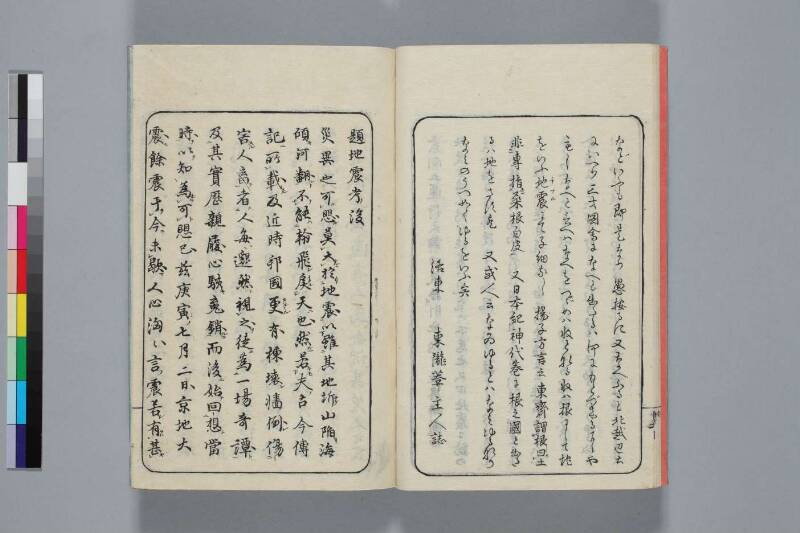
翻刻
などいふも即是なり愚按るに又なへふると北越辺土
にいへり三才図会になへと出たるは何にもとづけるにや
もしなへと言へはなへをつゞめはねとなるねは根にして地
をいふ地震(ちふる)にて子細なし楊子方言云東斉謂_レ根曰_レ ̄ク土
非_三専指_二 ̄スニ桑根白皮_一又日本紀神代巻に根之国と出た
るは地をさす歟又或人云なゐゆるとはなみゆるなり
なみのうへ如くゆるをいう矣
洛東 東隴庵主人誌
題地震考 ̄ノ後
災異之可_レ ̄ル愳【懼の異体字】 ̄ル莫_レ大_レ ̄ナルハ於_二 ̄リ地震_一以_下雖_二其地 折(さけ)山陥 ̄リ海
傾 ̄キ河翻_一 ̄ルト不_上_レ ̄ヲ能_二 ̄ハ翰飛 ̄シ戻(いたる)_一_レ 天 ̄ニ也然 ̄ルニ若_下 ̄キモ夫 ̄ノ古今伝
記 ̄ニ所_レ載 ̄スル及近時邦国 更(かはるみる)有棟壊 ̄レ■【牆カ】倒 ̄レ傷_二-
害 ̄スル人畜_一 ̄テ者_二 ̄ノ人毎 ̄ニ邈然 ̄ト視【一点脱】_レ之 ̄ヲ徒 ̄ニ為_二 一場竒譚_一 ̄ト
及_二其実歴親履心駮 ̄キ【駭ヵ】魂鎖_一 ̄ルニ而後 ̄ニ始 ̄テ回_二-想 ̄シ当
時_一 ̄ヲ以 ̄テ知_レ為_レ ̄ユルヲ可_レ ̄ト愳已茲庚寅 ̄ノ七月二日京地大
震 ̄ス余震于_レ ̄テ今 ̄ニ未_レ歇 ̄マ人心洶々言 ̄フ震若 ̄シ有_レ ̄ラハ甚_レ ̄キ
現代語訳
などと言うのも即ちこれである。愚考するに、また「なへふる」と北越辺土では言っている。『三才図会』に「なへ」と出ているのは何に基づいているのか。もし「なへ」と言えば、「なへ」を縮めれば「ね」となる。「ね」は根にして地をいう。地震(ちふる)にて道理が通る。『楊子方言』に言う「東斉では根を土と謂う。専ら桑根白皮を指すのではない」と。また『日本紀』神代巻に「根之国」と出ているのは地を指すのか。また或る人が言う「なゐゆる」とは「なみゆる」なり。波の上のように揺れることを言う。
洛東 東隴庵主人 誌
地震考の後に題す
災異の恐るべきものは地震より大なるはない。その地が裂け山が陥り海が傾き河が翻るといえども、飛んで天に至ることはできない。しかし、もしもあの古今の伝記に載せられた及び近時の邦国において、建物が壊れ牆が倒れて人畜を傷害した者について、人は皆遥かに之を視て、徒に一場の奇譚とするのみである。その実際を歴々と親しく履み、心駭き魂鎖るるに及んで、然る後に始めて当時を回想し、以て恐るべきものと知る。已に茲の庚寅の七月二日、京地大震す。余震今に至るまで未だ歇まず、人心洶々として言う、震もし甚だしきことあらば
英語訳
and so forth are exactly this. In my humble opinion, they also say "naefuru" in the northern border regions. What is the basis for "nahe" appearing in the "Sancai Tuhui"? If we say "nahe," when "nahe" is shortened it becomes "ne." "Ne" means root and refers to the earth. As "earthquake" (chifuru), this makes perfect sense. The "Yangzi Fangyan" states: "In Eastern Qi, they call roots 'earth.' This does not exclusively refer to mulberry root bark." Also, "ne-no-kuni" (root country) appearing in the Age of Gods volume of the "Nihon Shoki" probably refers to the earth. Another person says that "naiyuru" means "namiyuru" - referring to swaying like waves on water.
Rakutō [Eastern Capital area] - Written by the Master of Tōryōan
Composed after "Considerations on Earthquakes"
Among calamities and anomalies to be feared, none is greater than earthquakes. Even when the earth splits, mountains collapse, seas tilt, and rivers overturn, one cannot fly and reach heaven. However, regarding those mentioned in ancient and modern records as well as recent incidents in our country where buildings collapsed, walls fell, and people and livestock were injured, people all view these from afar and merely treat them as strange tales of a single occasion. Only after actually experiencing them firsthand with racing hearts and trembling souls do they begin to recall those times and realize how fearsome they truly are. Now, on the second day of the seventh month of this Kōin year [1770], the capital experienced a great earthquake. Aftershocks continue to this day without ceasing, and people's hearts are in turmoil, saying that if the shaking becomes severe...